GNU Health, the "Dok Champa" blooming in Lao

Tags

, , , , ,


National flower in Lao, the Dok Champa is a symbol of sincerity and the beauty of life. Likewise, the Center of Medical Rehabilitation (CMR) in Vientiane, capital city of Lao, is a pillar of pure honesty and compassion, dedicating their efforts and knowledge to promoting the best services for deaf, blind or otherwise disabled people. This week a team at CMR announced they will be incorporating GNU Health to their healthcare center. For the first stage of the project, the hospital will be implementing key modules such as Administration, Patient Registration, Accounting/Finances and Billing. 
Heading this enterprise will be the Director of the Center, Khamphet Manivong, along with Bounmy Sihaphom, Sisouvanh Sangbouaboulom and Anousak Souphavanh,
IT consultants from Calat.


This healthcare facility, formerly known as the National Rehabilitation Center, was established in 1964, comprised of the following departments:
  • Orthopedic workshop
  • Wheelchair workshop
  • Medical Rehabilitation
  • Community-based Rehabilitation
  • Special education for the deaf and the blind
  • Vocational school system for the disabled
However, it was not until March 29th, 1968, that the CMR officially opened its doors, providing physiotherapeutical treatment through an extended service across the country. It was originally the orthopedic workshop where prosthetic limbs for veterans and war victims were produced.

Nowadays, this center is rather renowned for its unique services for the unexploded ordenance (UXO) victims after the Vietnam War. The Hospital manages a total of 100 beds in different buildings and specializes in physical medicine, orthopedic surgery, prosthetic and orthotic fitting, as well as in physiotherapy and special education for blind and/or deaf children. Not only are they committed to the improvement of health conditions, but the center aims at changing the quality of life of every person they can reach. When it comes to their educational programs, this is what the hospital stated: “This is a significant step towards fulfilling the obligations of providing the fundamental rights of all our kids with disabilities to have equal access to mainstream education”.
 

It’s not over yet: the silent murderers attacking Lao

“The war is simply an obscenity, a depraved act by weak and miserable men, including all of us who have allowed it to go on and on with endless fury and destruction – all of us who would have remained silent had stability and order been secured. It is not pleasant to say such words, but candor permits no less”.


Noam Chomsky, in American Power and the New Mandarins (1969)


More than 30 years after Saigon’s fall, tipping point that ended the Vietnam War in 1975, the government of Lao is still asking the international community to sign a new agreement that forbids the use of cluster bombs.

During the Vietnam War, American airplanes dropped millions of bombs, many of which failed to explode when they hit the ground, but are yet still active today in the jungle. It is a war of the past that keeps murdering generations of the present.
 

5 things you should know about Lao

  • Capital city: Vientiane
  • Population: 6.5 mio (2012)
  • Government: Marxist-Leninist single-party state.
    • President: Choummaly Sayasone
    • Prime Minister: Thongsing Thammayong
  • Area: 236, 800 km2
  • Currency: Kip (LAK)
  • Official language: Lao


Laos Regions Map
View Larger Map


National Anthem of the Lao People’s Democratic Republic: “Pheng Xat Lao”

 
  1. Lao appoints 4.5% of its GDP to healthcare (2013)–more than Monaco, Saudi Arabia and India, for example. However,  there is one physician every 3000 people and one bed every 1000 people. Interestingly enough, one in every 10.9 jobs belongs to the tourism sector (2010).


  2. During the bellicose period from 1964 to 1973, 260 million bombs fell on Lao, making the country (on a per capita basis) the most heavily bombed civilian population ever. Of these, around 80 million cluster bombs failed to explode, so most villages have unexploded ordnance (UXO) on display salvaged from the forest and rice fields. Alas, thousands of Laotians die every year because of this unwanted war veteran.


  3. The internet domain for Lao is .la; there are 1,532 internet hosts (2012) and 300 thousand internet users. Moreover, there are 5.481 million mobile cellulars (2012) for a 6.5 million population
  4. Most of the basic words of Lao have only one syllable. Multi-syllable words are usually higher level and used in religion, academics or government. They were taken mainly from Sanskrit, the classical language of India, and are often the same as or similar to high-level vocabulary in Thai.
  5. The Mekong River runs like a major artery for the length of the country and its vast network of tributaries allow both locals and visitors to reach the remote interior. The WWF organization affirms that a new species is registered every two days in the Mekong area.


"Care for the world", for "People Like Us": GNU Health @MedInfo2013

Tags

, , , , , , , , , , ,

P { margin-bottom: 0.08in; }


Hundreds of researchers and practitioners from all around the world gathered in Copenhagen, Denmark, for the “14th World Congress on Medical Health and Informatics” (MedInfo 2013). A triennial event, MedInfo provides both a high quality scientific exchange, as well as an opportunity for formal meetings and networking.

This particular edition, jointly hosted by the International Medical Informatics Association (IMIA) and one of its Member Societies, targetted at a thorough debate on conducting medical informatics by converging technologies, conveying sciences and connecting people. As Prof. Antoine Geissbuhler, MD, President of the IMIA, said: “It is about leaders of the community charting the way forwards in the current challenging seas, about understanding how to blend diverse and advanced tools and techniques to provide better science and better services, about acquiring, sharing and disseminating state of the art knowledge, and about fostering useful synergies between people through smart information systems”.

GNU Health and Free Software in the spotlight

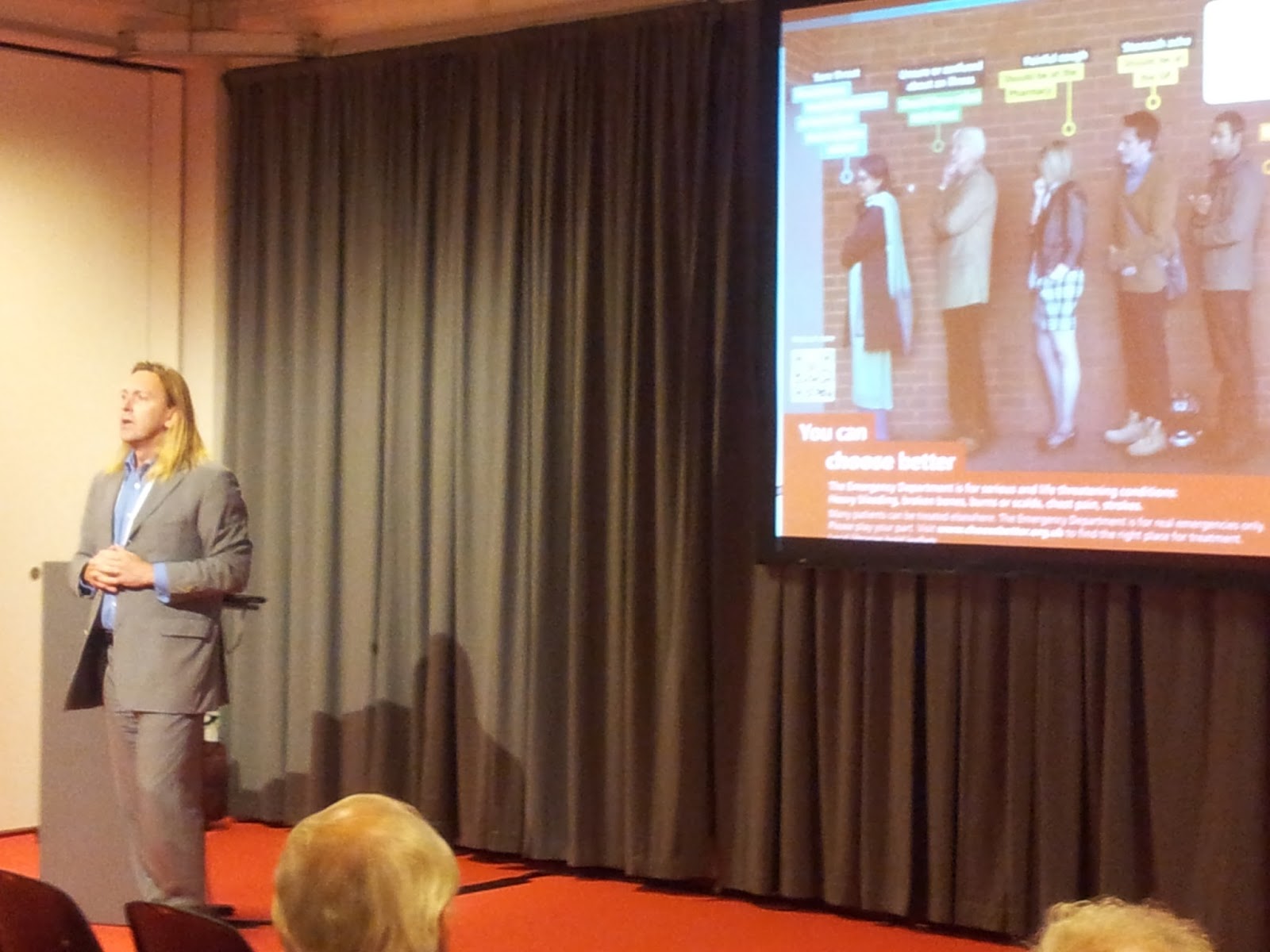
Luis discussing Social medicine and GNU Health
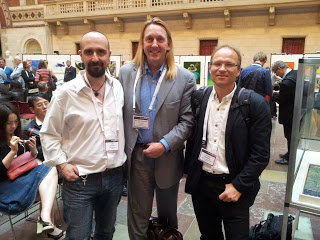
Ferrer-Roca, Kobayashi, Safie, Falcon, Aljunid, 
Demski, Karopka and Lisby at MedInfo 2013 (Denmark)

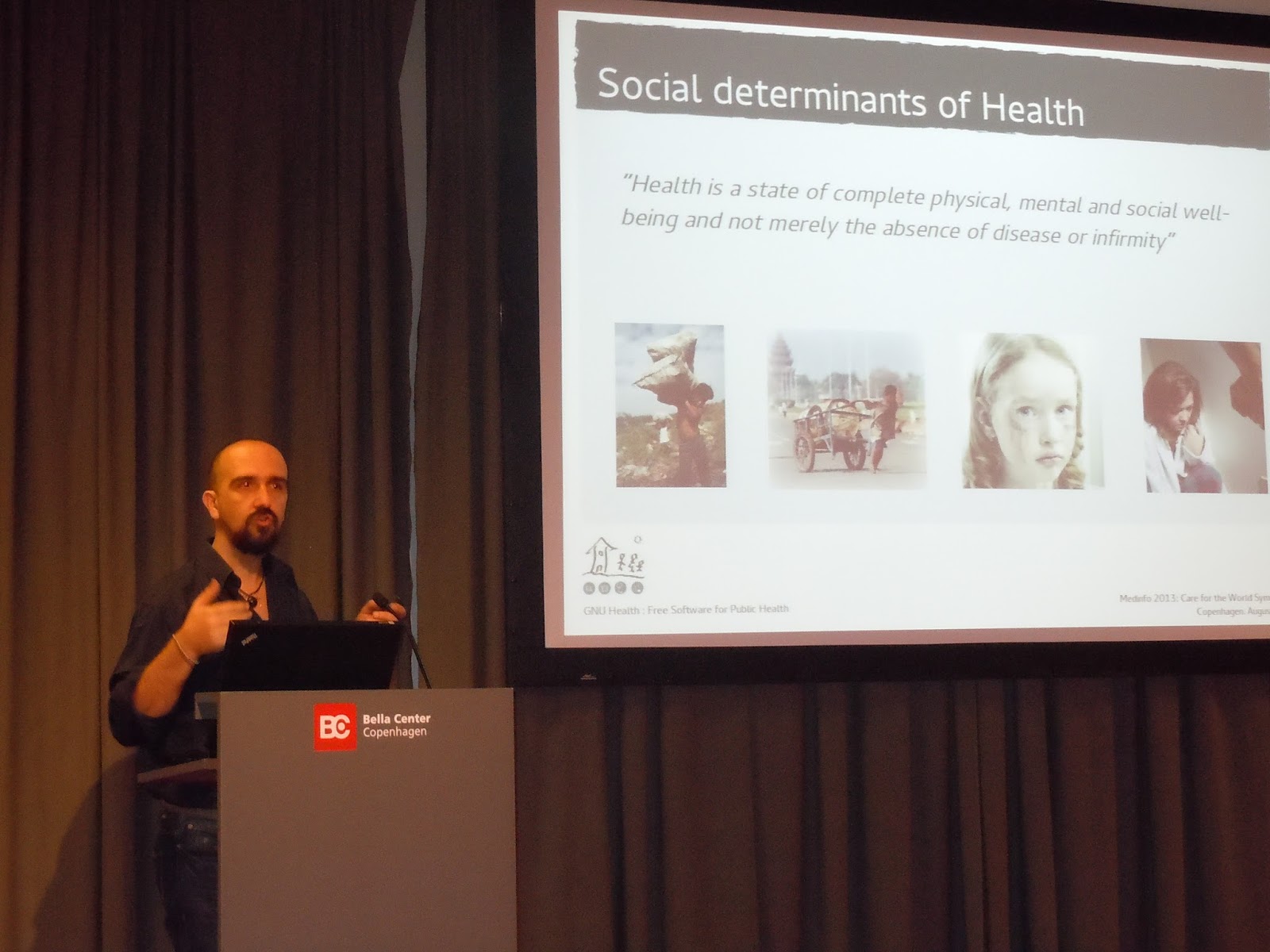
Luis Falcon from our very own GNU Solidario, attended the congress to present the GNU Health platform during the Mini-Symposium “Care for the World. Collaboration, Openness, Transparency and Trust as Prerequisite for High Quality, Effective and Efficient Health Care

Hans Demski presenting Medfloss


Among the authors of this presentation were also Thomas Karopka, Syed Mohamed Aljunid, Nurhizam Safie, Hans Demski and Kjeld Lisby.

 
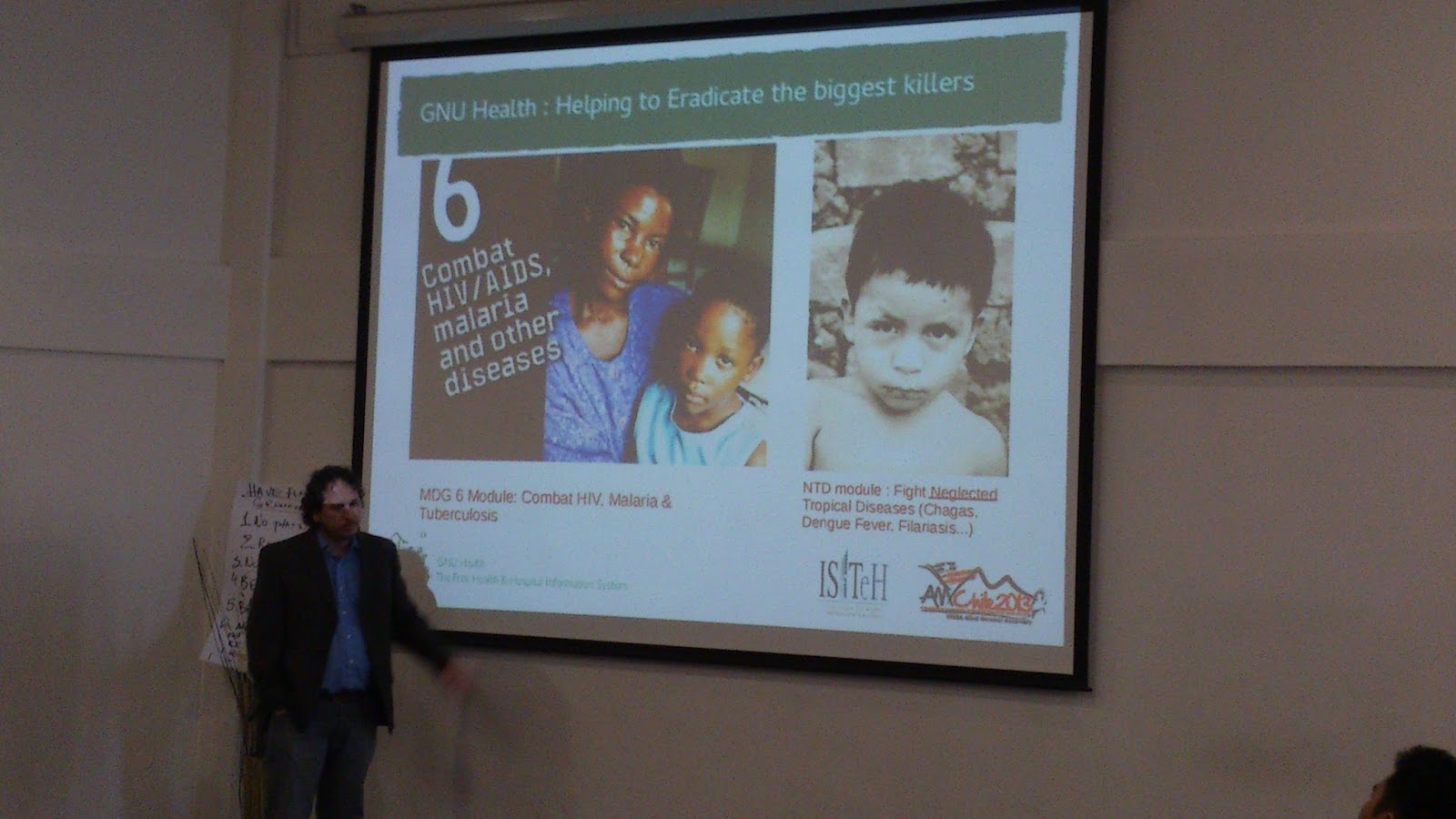
This mini-symposium portrayed two different methodologies to tackle the main Millenium Development Goals (MDGs) for health systems in the Global South: reducing child mortality, improving maternal health and combatting HIV/AIDS, malaria and other diseases. Both approaches aim to providing high-quality, efficient and effective health care through Free and Open Source Software (FLOSS) and Open & User Driven Innovation in a global context.


Paul Turner at eHealth for People Like Us workshop


Moreover, Falcon also participated in the workshop “Moving Beyond eHealth Systems for ‘People Like Us’”, along with Paul Turner, Andre Kushniruk, Pernille Bertelsen and Chris Showell. This interactive workshop was as much a scientific innovation as it was a humbling experience, allowing all attendees to experience the gap between some convoluted designs of eHealth systems and average or disadvantaged users. “People Like us” (PLU) is a thinking tool and a conceptualization of two archetypal categories of potential users: one group, highly skilled and motivated, and a second one, much less engaged with topics around health and healthcare. The different solutions offered at the end of the workshop resulted from collective thinking and diverse participation. 


Indicators from a roadmap towards high-quality healthcare

Pivot in MedInfo 2013 is to coalesce around key issues in facing the future of health and technology. For this reason, Luis Falcon, Thomas Karopka and other members of P { margin-bottom: 0.08in; }A:link { }the Free Libre and Open Source Health Informatics Working Group (OSWG) of the IMIA agreed to generate a new system called “Common Health Indicator Reporting Interface”. This initiative brought together both experts and interested individuals from manifold areas of expertise to contribute in the potential application of open source solutions within their domains. Furthermore, the team at GNU Solidario confirmed that GNU Health would be incorporating this standard. P { margin-bottom: 0.08in; }A:linkP { margin-bottom: 0.08in; }A:link { 
Thomas Karopka, Alvin Marcelo and Luis Falcon
Luis Falcon, Paul Turner and Thomas Karopka


MEDINFO 2013, Copenhagen 20-23 August

Tags

, , , , , , , , , , , , ,

 
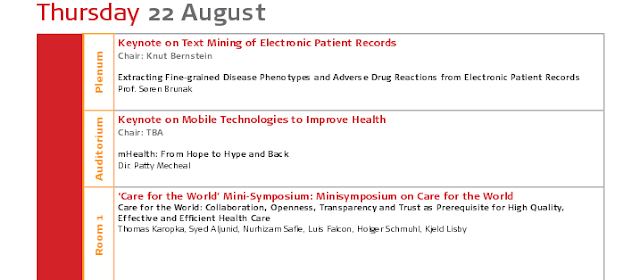
MEDINFO 2013 Copenhagen starts this week, August 20 – 23. and are very proud to present GNU Health August 22nd from 8:30 to 10:00 in Room 1 during the:
 ” Care for the World Mini-Symposium: Minisymposium on Care for the World. Collaboration, Openness, Transparency and Trust as Prerequisite for High Quality, Effective and Efficient Health Care “.
The key speakers will be: Thomas Karopka, Syed Aljunid, Nurhizam Safie, Luis Falcon, Holger Schmuhl and Kjeld Lisby.
Please find more info in the detailed program online:

For more information about the Care for the World Minisymposium, please make sure to check out the IMIA flyer.

 We hope to see you in Copenhagen !

62nd IFMSA (International Federation of Medical Students Associations) General Assembly – Chile

Tags

, , , , , , , , , , , ,

Santiago de Chile view
The Conference took place at the Catholic University of Chile, in Santiago, between August 01-07th, 2013. This year, as part of the recently established “ISfTeH & IFMSA Partnership”, the ISfTeH (International Society of Telemedicine & eHealth) organized an “eHealth Symposium”, on August 1st.
Dr. Etienne, Director of OPS-OMS and Dr. Jaime Mañalich Health Minister of Chile at the Opening Ceremony and Dinner Gala
I was invited as an ISfTeH FLOSS Working Group representative, together with Mr. Frank Lievens and Mr. Adolfo Sparenberg, ISfTeH Board Members.
The “ISfTeH & IFMSA eHealth Symposium”, on August 1st, counted with both our local and remote presentations by very active and recognized ISfTeH members: Dr. Etienne Saliez, Dr. Monika Hübler, Eng. Thomas Karopka.
Dr. Etienne, Director of OPS-OMS at the Opening Ceremony
On August 2nd we attended 2 sessions:
IFMSA GA WG Session on Public Health Strategies: Where I presented the GNU Health Project and Adolfo Sparenberg presented the Public Telecardiology Project RS State/Brazil. The focus of this session was to introduce new opportunities and strategies which can contribute to the improvement of public health assistance. Around 40 IFMSA delegates, representing different countries, were part of the audience.
Sebastián Marró – GNU Health – AIFMSA GA WG Session on Public Health Strategies
IFMSA Telemedicine Session- Round table meeting at the Catholic University of Chile: This activity was characterized as a practical activity aiming to identify students interested in telehealth matters and also as an attempt to organize a group of IFMSA national members for the establishment of an “eHealth working group”.
Sebastián Marró with IFMSA LORMA Maria Aroca
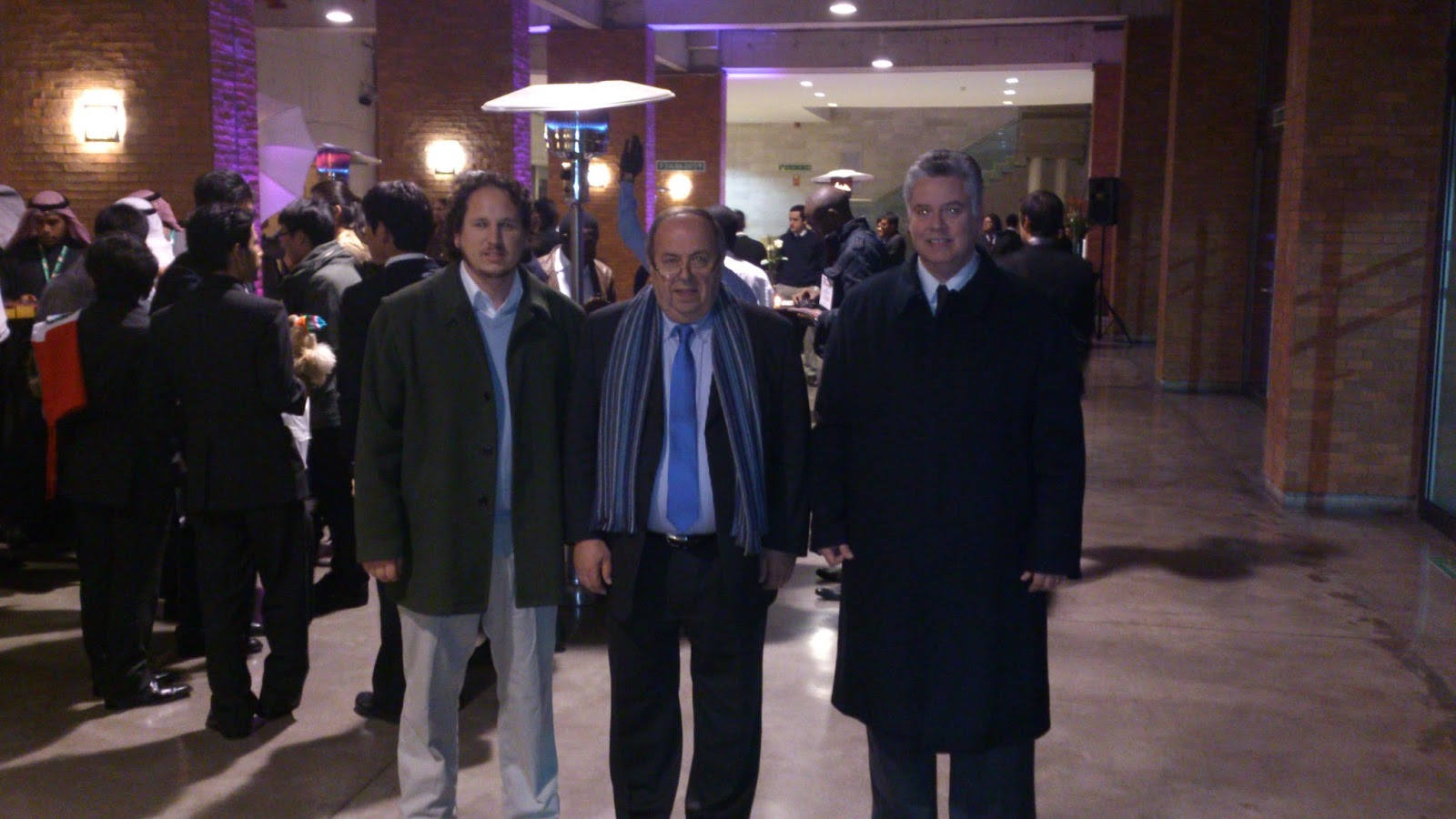
Sebastián Marró with Mr. Frank Lievens and Mr. Adolfo Sparenberg at the Opening Ceremony
I would like to thank Frank Lievens and Adolfo Sparenberg for inviting me to take part of this important activity jointly promoted by the ISfTeH and IFMSA and gave me the opportunity to introduce GNU Health and the Free Software concept to students from all over the world.
Sebastián Marró

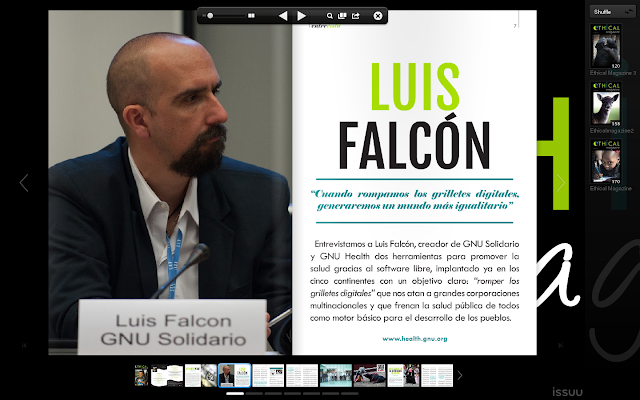
Entrevista a Luis Falcón en Ethical Magazine (español).

Tags

, , , , , , , , , , , , ,

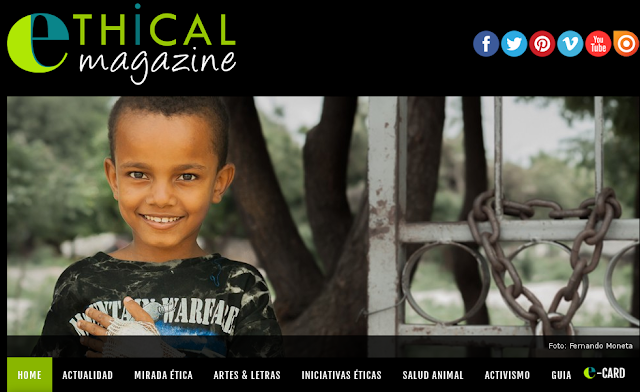
Ethical Magazine Entrevistamos a Luis Falcón, creador de GNU Solidario y GNU Health dos herramientas para promover la salud gracias al software libre, implantado ya en los cinco continentes con un objetivo claro: “romper los grilletes digitales” que nos atan a grandes corporaciones multinacionales y que frenan la salud pública de todos como motor básico para el desarrollo de los pueblos …

Entrevista completa:

Muchas gracias al equipo de Ethical Magazine !

GNU Health chosen by Auroville, the Universal City.

Tags

, , , , , , , ,

Auroville, the Universal City, chose GNU Health, the Universal Health Information System.
The first sentence that we find when we enter Auroville’s homepage is :

“Auroville wants to be a universal town where men and women of all countries are able to live in peace and progressive harmony above all creeds, all politics and all nationalities. The purpose of Auroville is to realise human unity.”

No wonder why we have such a good connection, since the concepts of community and universality are common to Free Software.

GNU Solidario is working hand-in-hand with Aurovillians so the City and their health center can have its own Health Information System.

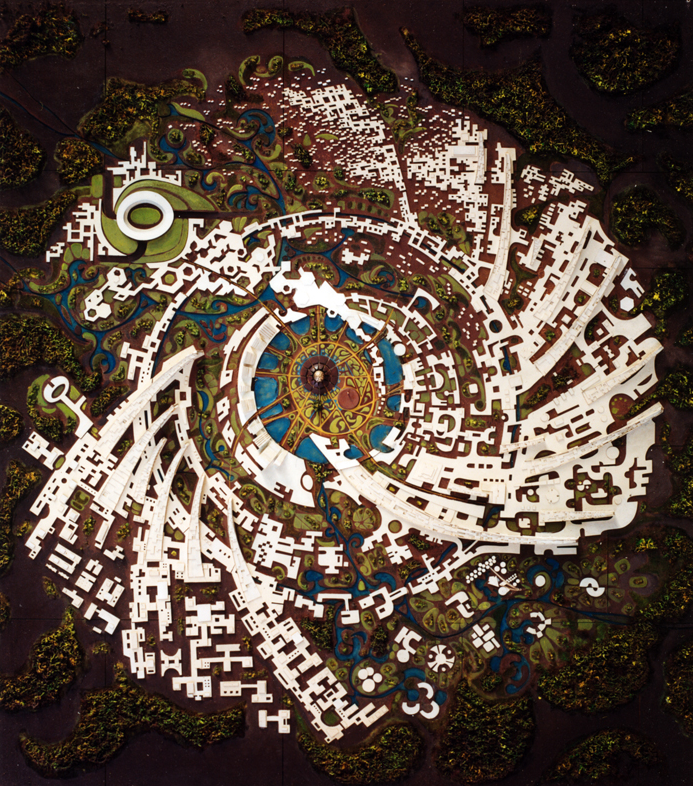
The Galaxy : Auroville layout

Auroville is located in the south of India, in Tamil Nadu state. It designed to host 50000 people, from all over the world. Currently has citizens from 45 nations.

UNESCO commendment : In 1966 UNESCO passed a unanimous resolution commending Auroville as a project of importance to the future of humanity, thereby giving their full encouragement.

Auroville’s Unending education

GNU Health is being implemented in Auroville’s health centers, working at many levels, with health promotion and disease prevention, demographics, epidemiology and, of course, the day-by-day medical encounters and health center management. Auroville health professionals take care of the city and surroundings.

Room in Kailash Clinic

The new building of the Auroville Institute for Integral Health was started one year ago. It will be the new home for the Kailash Clinic where a new health care model called ‘the integrative practice of medicine’ will be practised. This model is based upon collaboration of multiple medical systems (western and eastern) to provide holistic care. The building will have consultation and treatment rooms and rooms for in-patient and senior care. It will also provide training and research facilities.

Matrimandir : The Soul of the City

In GNU Solidario, we are honored and very proud to be part of this project, which aims to be an example of unity, community and solidarity. 


Auroville Animal Care Center


Look for the inner causes of disharmony
much more than outer ones.
It is the inside that governs the outside.

It’s a great to see that GNU Health, the Free Software Health and Hospital Information System, has been chosen to be part of Auroville, a symbol of sustainable living and the future cultural, environmental, social and spiritual needs of mankind

More information : www.auroville.org


About GNU Health
GNU Health is a Free Health and Hospital Information System that provides the following functionality: 

  • Health Information System (Demographics, Epidemiology)
  • Hospital Information System
  • Electronic Medical Record 

GNU Health won the Best Project of Social Benefit from the Free Software Foundation, among other international awards.

GNU Health is an official GNU Package , and is part of GNU Solidario, an NGO that delivers health with free software. GNU Solidario and the United Nations University, International Institute for Global Health have signed an agreement to implement and to train Health professionals GNU Health around the world.

GNU Health was presented at the World Health Organization (WHO) and International Communication Union (ITU) session “ICT for Improving Information and Accountability for Women’s and Children’s Health” at the World Summit on the Information Society – WSIS 2013 Forum in Geneva.


Main site : health.gnu.org

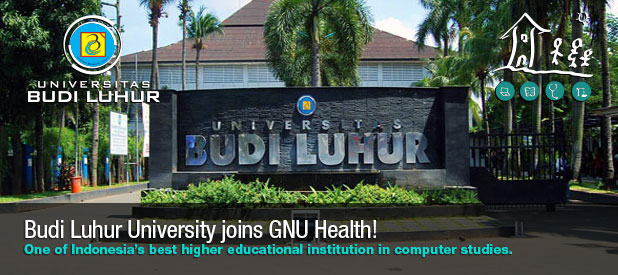
Budi Luhur University, Indonesia, joins GNU Health !

Tags

, , , , , , , , , ,

Once again, with great pleasure and honor, we announce that another university has joined the GNU Health Community: The Budi Luhur Universitas (Indonesia)
Budi Luhur University, under the management of Budi Luhur Foundation is a nationally recognized institution with excellent teaching. The university being the pioneer among private universities in Indonesia offering computer studies, is consistently judged as one of Indonesia’s best higher educational institution in computer studies and is still highly respected.
We are so proud to see how GNU Health is spreading globally in the health care and academic system.
Thanks again to the Budi Luhur University for joining us !

GNU Health project at Kyeni Consolata Hospital – Kenya –

Tags

, , , , , , ,

Few weeks ago we got a mail from Beatriz Meijide. She is from Spain and she has been involved in a very great project for the last 10 years.
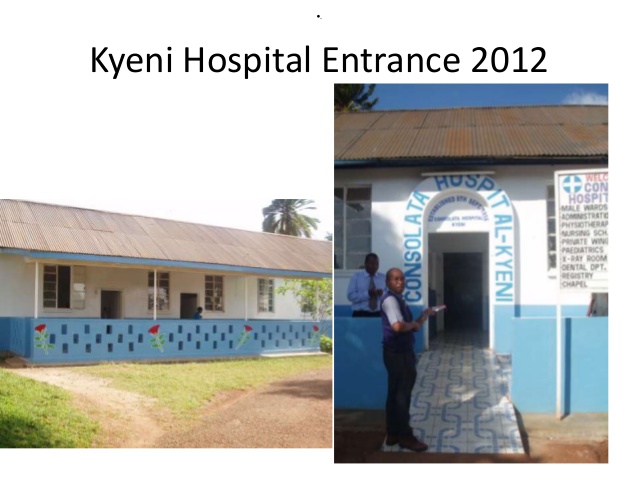
Beatriz has been collaborating with the Kyeni Consolata Hospital (Kenya), this a 166 bed hospital with a patient growth on +188% from 2005 to 2012. It is considered the locals favorite hospital for personalised attention and services. The hospital has improved a lot since 2005 and the idea of the people working there is to enhance it even more.  Knowing that the Hospital was in need of an Hospital Information System, Beatriz heard about GNU Health and contacted us and completed a GNU Health Training.
These are her words:

    ” … I believe GNU Health will take the Kyeni Hospital to another level an it will greatly increase the efficiency and control of the hospital information. I think it covers all te areas we need and it also offers the ability to customize further developments if they are required. It’s been a very intense training and I believe I’ll be able to train the  local team in Kenya ! GNU Health is a very “user-friendly” system and I hope we’ll be another success story … ” Beatriz Meijide

Thanks again to Beatriz and the Kyeni Hospital. We’re very proud and exited to be part of this beatiful project !

GNU Health at Care for the World – MedInfo 2013

Tags

, , , , , , , , , ,

MedInfo 2013

We are very happy to participate in Medinfo 2013 and talk about GNU Health in two different sessions:

  • Care for the World Symposium: Collaboration, Openness, Transparency and Trust as Prerequisite for High Quality, Effective and Efficient Health Care.

  • Moving Beyond eHealth Systems for ‘People Like Us’

Care for the World Symposium
 

Care for the World is a symposium organized by Thomas Karopka ( BioCon Valley GmbH, Germany), that I have the privilege to represent GNU Solidario, joining my colleagues Syed Aljunid and Nurhizam Safie (United Nations University, International Institute for Global Health, Malaysia );  Holger Schmuhl (Institute for Biological and Medical Imaging, Helmholtz Center Munich, Germany) and Kjeld Lisby (Ideas Clinic, Aalborg University Hospital, Denmark


I will talk about GNU Health, the Free Health and Hospital Information System, and discuss the benefits that Free Software provides to Public Health. I will put focus in Primary Health Care; The MDG6 and Neglected Tropical Diseases functionalty in GNU Health.

Abstract

While the Global South still struggles to reach the Millennium Development Goals (MDGs) the health systems of the Global North are under pressure due to an aging population and life style related diseases. In 2000 the Millennium Development Goals have been formulated with the major goal of freeing people from extreme poverty and multiple deprivations. Three of the goals are linked to health, namely reduce child mortality, improve maternal health and combat HIV/AIDS, malaria and other diseases. Three years before the deadline at the end of 2015 the world has met some important targets while others remain to be seen. In this mini-symposium two different but related methodologies will be presented that are regarded by the authors as the most powerful principles to provide high-quality, efficient and effective health care in a global context. These two methodologies are the use of Free/Libre and Open Source Software (FLOSS) and Open & User Driven Innovation. This mini-symposium provides real world best practice examples of these methodologies. The chosen best practice examples represent a Global South and a Global North perspective and context and will highlight the potential of combining these approaches and are intended to induce a process of mutual learning and exchange of experience among Global South/Global North as well as different communities and different parts of the world.


Moving Beyond eHealth Systems for “People Like Us” 

This workshop is organized by Paul Turner (eHealth Services Research Group, University of Tasmania, Australia) , Andre Kushniruk (School of Health Information Science, University of Victoria, Canada), Pernille Bertelsen (Department of Development and Planning, Virtual Centre for Health Informatics, Aalborg University, Denmark )


For this workshop, I will demonstrate how we can enhance the interaction with the Patient and the Health Center, as well as the Doctor-Patient relationship using GNU Health and Free Software. Simple, yet effective solutions that cover from mobile integration to Patient Digital IDs and e-prescriptions for people that don’t have the technical or academic background.


Abstract

The tendency to design personal ehealth systems for well to do technically literate professionals, rather than average or disadvantaged users (the PLU problem), has been described previously, but is not yet well understood. This interactive workshop will introduce attendees to the PLU problem, expose them to a simulated experience of being a disadvantaged system user, and encourage them to share their experiences of systems which may exclude disadvantaged users. Attendees will also discuss ideas and potential solutions for the design of more inclusive ehealth systems, and identify positive steps which could ameliorate or avoid the problem in the future. Key outputs of the workshop will include a summary of the information provided by attendees, draft criteria for identifying potential PLU-type problems, and an interim list of possible or actual solutions.


Many thanks to MedInfo for this great event, and especially to Thomas Karopka (Chair IMIA OS WG) and Paul Turner (Associate Professor, eHealth Services Research Group, University of Tasmania, Australia) for inviting me to be part of their symposium and workshop. It’s an honor for me to share with you such an important event, and to promote the adoption of Free Software in Public Health.

Looking forward to meeting all of you in Copenhagen !

About GNU Health
GNU Health is a Free Health and Hospital Information System that provides the following functionality: 

  • Health Information System (Demographics, Epidemiology)
  • Hospital Information System
  • Electronic Medical Record 

GNU Health won the Best Project of Social Benefit from the Free Software Foundation, among other international awards.


GNU Health is an official GNU Package , and is part of GNU Solidario, an NGO that delivers health with free software. GNU Solidario and the United Nations University, International Institute for Global Health have signed an agreement to implement and to train Health professionals GNU Health around the world.


GNU Health was presented at the World Health Organization (WHO) and International Communication Union (ITU) session “ICT for Improving Information and Accountability for Women’s and Children’s Health” at the World Summit on the Information Society – WSIS 2013 Forum in Geneva.

Main site : health.gnu.org

GNU Health version 2.0 released !

Tags

, , , , , , , ,

Dear All:

I’m proud to announce the release of GNU Health 2.0.0 !
This version comes after 5 months of very hard work, and brings the best version so far. The following highlights some of the main achievements of this version :
  • Compatible with Tryton 2.8
  • GNU Health Installer . An easy OS-independent server installation method
  • Neglected Tropical Diseases – Chagas Module
  • Domiciliary Unit model.
  • Integration with OpenStreetMap (OSM) for realtime geolocation of the Domiciliary Units and other demographic and epidemiological studies.
  • WHO essential medicines is now a module
  • Improve hospitalization module : Bed transfers wizard
  • New Demographics section and functionality on individuals and families
  • Pre-operative ASA (American Society of Anesthesiologists) Physical Status Classification System
  • Revised Cardiac Risk Index
  • Extended Patient Identification registration
  • Improved navigation and view layouts
  • Improved Documentation (on Wikibooks: http://en.wikibooks.org/wiki/GNU_Health)

Bug fixes and many other contributions and suggestions have been incorporated to this version.

UPGRADE : If you plan to upgrade your database from existing releases, please follow the instructions under the “scripts” directory. Before doing the upgrade, double check that you have backed up both your kernel and database !
Documentation: The documentation portal on Wikibooks (http://en.wikibooks.org/wiki/GNU_Health) is being re-written with a new format, more comprehensive and easier to follow. The first four chapters and the installation section are pretty much done, and we are working every day to update all remaining chapters.
Enjoy GNU Health 2.0 and thank you for contributing to a better and more just Public Health using Free Software !
Bests
Luis Falcon
President, GNU Solidario