Tags
#GNUHealthCon2016, #socialmedicine, ambulance management, emergency, EMS, freesoftware, gestión de emergencias, gestión flotas ambulancias, GNU Health
New Emergency and Ambulance Management Module for the upcoming GNU Health v. 3.2


28 Wednesday Sep 2016
Posted in GNU Health, HMIS
Tags
#GNUHealthCon2016, #socialmedicine, ambulance management, emergency, EMS, freesoftware, gestión de emergencias, gestión flotas ambulancias, GNU Health
13 Wednesday Jul 2016
Posted in GNU Health, HMIS
Tags
Dear community:
GNU Health 3.0.2 patchset has been released !
23 Thursday Jun 2016
Posted in GNU Health, HMIS, Public Health
Tags
#CAPS, #historiaclinicaelectronica, #medicinasocial, #saludpublica, argentina, esalud, GNU Health, historia clinica electronica, HMIS

01 Tuesday Mar 2016
Posted in GNU Health, GNU solidario, HMIS, Public Health
Tags
#socialmedicine, Africa, freesoftware, Fundación Recover, GNU Health, gnusolidario, healthcare, HMIS, Public Health
We are very happy to announce that on March 1st. 2016, GNU Solidario and Fundación Recover signed an agreement of cooperation.
The two NGOs will join forces in order to promote and improve health care in African hospitals, through the implementation of GNU Health.


11 Monday Jan 2016
Posted in GNU Health, HMIS
Tags
#socialmedicine, ehealth, FHIR HL7, freesoftware, GNU Health, GNU Health, GNU Pootle, HMIS, ICD10, ICD9 OMS, tryton, webclient
Dear all:
After one year of work, I am vey happy and proud to announce the release
of GNU Health 3.0 series !
The following are some of the new features:
* Tryton 3.8 compatibility and responsive web client.
* Multiple person names, compliant with FHIR HL7, and flexible
person name formats
* Automatic inclusion of medicament history from the prescription
* History of a person socioeconomic assessments
* Link to patient health conditions
* Health conditions now visible from patient main page
* Any person can be mapped to an internal user, not only the health
professionals
* Add person biological sex and gender properties.
* Check all evaluations related to a person specific healh condition
* Easy change a patient appointment status from the tree view (checked
in, no show, … )
* Automatic computing of a patient evaluation waiting time
* Hospitalization and outpatient discharge reason
* Merge chronic with followups evaluations. Merge ambulatory with
outpatient evaluations
* Optimize CAGE (Alcoholism status assessment) view
* Enhanced Crypto plugin and module
* Create / see all the evaluations within a hospitalization
* Health center and hospitalization meals management
* Improved surgery module (surgery team, supplies, status, wound
class, post-op dx, reservation workflow)
* Health services reporting
* Automatic prescription concentration, form and route based on the med
* Enhanced functionality in patient evaluation.
* Improved reporting
* Include / Update unitests ( Thanks Cedric !)
* Improved ergonomics for patient conditions and history.
* Patient protheses and amputation history ( Thanks Lao team !)
* Automatic inclusion of prescription lines in Service document
* Updated disease groups (thanks Chris Zimmerman !)
* Improve patient clinical history report
* New installer gnuhealth-setup tool
* Improved gnuhealth-control center
* Installation of language packs in one single instruction.
* Many other additions and community contributions …
New Modules :
* WHO ICD9 Volume 3 (procedural codes) (in addition to ICD10-PCS and
ICPM) .( Thanks Min of Health of Morelos, Mexico !)
* Ophthalmology module ( thanks Sivadas !)
* Functioning and Disability module [1]
Translation portal moves to Pootle :
Since GNU Health 3.0, the main translation portal is at GNU Pootle server [2]
The following languages have been requested, and they are now included.
* Arabic
* Chinese (China)
* English (United Kingdom)
* French
* German (Austria)
* Greek
* Italian
* Japanese
* Kannada
* Lao
* Portuguese (Brazil)
* Spanish (Argentina)
* Spanish (Ecuador)
* Spanish (Mexico)
* Spanish (Peru)
* Spanish (Spain)
Some of them are still in the process of migrating the translation files from Transifex to the GNU Pootle server. It will take a bit until everything is in place. Of course, you can update your server translation packs at anytime, using the getlang command of gnuhealth-control program.
There is a new mailing list (health-i18n) dedicated to the localization and translation of GNU Health[3]
During the upcoming weeks we’ll be updating the documentation, improving the demo database, as well as working on the translations.
Of course, we’ll be fixing any bugs you will find in this new release 🙂
Many, many thanks to all of you who have contributed to this release, in any way!
All the best,
1.-https://en.wikipedia.org/wiki/International_Classification_of_Functioning,_Disability_and_Health
2.- https://chapters.gnu.org/projects/health/
3.- https://lists.gnu.org/mailman/listinfo/health-i18n
4.- https://en.wikipedia.org/wiki/ICD-9-CM_Volume_3
Luis Falcón
20 Friday Nov 2015
Posted in GNU Health, GNU solidario, HMIS, Public Health
Tags
EMR, expediente medico electrónico, GNU Health, gnusolidario, HMIS, Hospital Information System, Sistema de Información Hospitalaria, software libre

With the purpose to optimize primary care, as well as avoiding paperworks and delays, the Ministry of Health through the Health Services of Morelos (SSM) will implement GNU Health, a free software Health and Hospital Information System, adopted by the University of United Nations and the Ministries of Health of other countries. By 2018 this software will be able to make all the medical records of 7 General Hospitals, 3 Community Hospitals and 204 Health Centers fully electronic (EMR) in order to satisfy the functionality of the medical history, hospital management and Health Information System (HIS).
This project will allow a better coordination between first and second level of health care, becauseit will be able to schedule appointments and get labs results with no need to attend the units, always guaranteeing the confidentiality of patients’ data. Given this new technology and with the goal to make the system more efficient, the Informatics Team of SSM will be trained by Luis Falcón, MD and Computer Scientis, creator of the system GNU Health.
02 Monday Feb 2015
Posted in GNU Health, HMIS
Tags
#FHIR, birth certificate, crypto module, death certificate, demographics reports, digital signing, GNU Health, GNU Health, HL7, HMIS, Hospital Information System, Jamaica MoH, PUID, tryton
After 7 months of intense work, I am happy to announce GNU Health 2.8 series !
Here is a partial list of the new features :
* Tryton 3.4 compatibility
* Distributed environment, data aggregation and synchronization features
* Universal Person Unique Identifier (PUID) and UUID implementation
* Country immunization schedule
* HL7 FHIR server (thank you, Chris Zimmerman !)
* Automatic person immunization status check
* Vital Records System : Birth and Death certificates
* Enhanced security for Tryton server credentials
* Injury Surveillance System (Thank you, Jamaica MoH !)
* GNU Health control program : Automatic backups and patches
* Enhanced Crypto features / GNU Privacy Guard integration
* New models including in digital signatures
* Demographics reports
There are many other improvements and bug fixes that have not been included in this summary document. You can read the Changelog for a detailed description of all the activity.
** Installation :
—————-
If you are installing GNU Health as the first time, follow the instructions in https://en.wikibooks.org/wiki/GNU_Health/Installation
** Existing Installations : Upgrade procedure
——————————
Follow the Upgrade Instructions in the Wikibook
https://en.wikibooks.org/wiki/GNU_Health/Upgrade
** Official Languages
———————-
GNU Health now includes English, Chinese, French, Greek, Italian, Japanese, Portuguese and Spanish, as the official languages. The language packs of the official languages are included in the GNU Health package, with all the modules, so there is no need to download.
There are over 100 language teams for GNU Health ! If you are a language maintainer and want to include your language for the next stable release, please send us a mail to health@gnusolidario.org .
Thanks !
——-
A big thank you to my colleagues from GNU Health community; GNU Solidario; Thymbra and Tryton, and to the Free Software movement.
Enjoy the new version and report any bug / issues / improvements to health@gnu.org !
07 Monday Jul 2014
Posted in GNU Health, HMIS
Tags
crypto module, digital signing, ehealth, EMR, free software, FreeBSD, genetics, GNU Health, GNU solidario, GNU/Linux, HMIS, Hospital Information System, obstetrics, Public Health, PUID, thymbra, tryton

After 6 months of work, we are very happy to announce GNU Health 2.6 series. This version improves the navigation, security and data integrity (health_crypto) and audit. It has also been designed to be used in distributed environments, such a network of public hospitals in a province or country.
Here is a partial list of the new features :
* Tryton 3.2 compatibility
* Universal Person Unique Identifier (PUID)
* Additional / alternative identification codes are now stored in
the person (party) model.
* Crypto module (Document Digest, validation, digital
signing/verification )
* Crypto tryton plugin (included in the backend directory of the
tarball)
* Revision of models for Distributed deployments
* Health Archives module
* New Institution model
* Revised health specialties and disease groups
* Remove extra submenus, for usability.
* Revised medication model
* Improved Obstetrics module (eg, automatic obstetric GPA calculation)
* New shortcuts from the Patient and Institution Model.
* Improved Genetics module
* Revised Neonatolgy functionality. Newborn is assigned a PUID at birth
* New directory for custom modules
* Centralized Authentication / LDAP integration
* Audit trails from the client (thanks Tryton 3.2)
* Improved installation script (covers GNU/Linux distros and FreeBSD)
* Of course, upgrade path is included.
There are many other improvements and bug fixes that have not been included in this summary document. You can read the Changelog for a detailed description of all the activity.
** Installation :
—————-
If you are installing GNU Health as the first time, follow the instructions in https://en.wikibooks.org/wiki/GNU_Health/Installation
Note : The gnuhealth_install script tries to do a local installation, including the required Python packages. This version updates the python packages to one of the latest stable releases. If you are coming from a dedicated server for GNU Health, and used the official installation script, you should be OK. If you installed packages in a system-wide manner, then you would need to uninstall them before the update, otherwise the installation script won’t be able to upgrade them.
** Existing Installations : Upgrade procedure :
——————————
Follow the Upgrade Instructions in the Wikibook
https://en.wikibooks.org/wiki/GNU_Health/Upgrade
** Official Languages.
———————–
GNU Health now includes English, Chinese, French, Greek, Italian, Portuguese and Spanish, as the official languages. The language packs of the official languages are included in the GNU Health package, with all the modules, so there is no need to download.
There are over 85 GNU Health language teams in Transifex. If you are a language maintainer and want to include your language for the next stable release, please send us a mail to health@gnusolidario.org .
Thanks !
——–
Enjoy the new version and report any bug / issues / improvements to
health@gnu.org !
PS: In the coming days we’ll be updating the Wikibook, so it reflects the new features of this version
Best,
—
Luis Falcon
GNU Health : Freedom and Equity in Healthcare
http://health.gnu.org
@gnuhealth
05 Sunday Feb 2012
Posted in GNU Health, GNU solidario, HMIS
Tags
ehealth, emerging economies, free software, gnu, GNU Health, GNU solidario, HMIS, Hospital Information System, LibreOffice, QR code, relatorio, reporting, tryton
 |
| Patient ID card report on GNU Health |
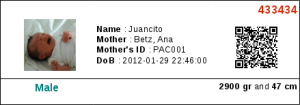 |
| Newborn wristband Identification, with all the information encoded in QR |
We show again how Free Software (Tryton, Libre Office, Python, Postgresql, GNU/Linux, … ) allow us doing anything we need. So, please use Free software. It’s ethical.
We fight for equity in Health care, and one way of doing so is by using Free Software !
About GNU Health
GNU Health is a free Health and Hospital Information System that provides the following functionality :
GNU Health is the Hospital Information System chosen by the United Nations International Institute of Global Health.
Main site : health.gnu.org
Governments hosting GNU Health through their portals :
European Commission (EU) , JoinUp
Brazil: Portal do Software Público Brasileiro (SPB)

26 Saturday Nov 2011
Posted in GNU Health, GNU solidario, HMIS, Public Health
Tags
fsf, gnu, GNU Health, GNU solidario, HMIS, IIGH, IPS, MSPBS, Paraguay, Public Health, UNU
 |
| At Dr. Emilio Cubas Hospital. The largest health center in Paraguay |
 |
| Nicolas Caballero and Social Security Institute (IPS) members |
 |
| Luis Falcón, Nurhizam Safie, Cristina Melgosa, Rosa González and Ana Ayala (director of Informatics) from IPS |
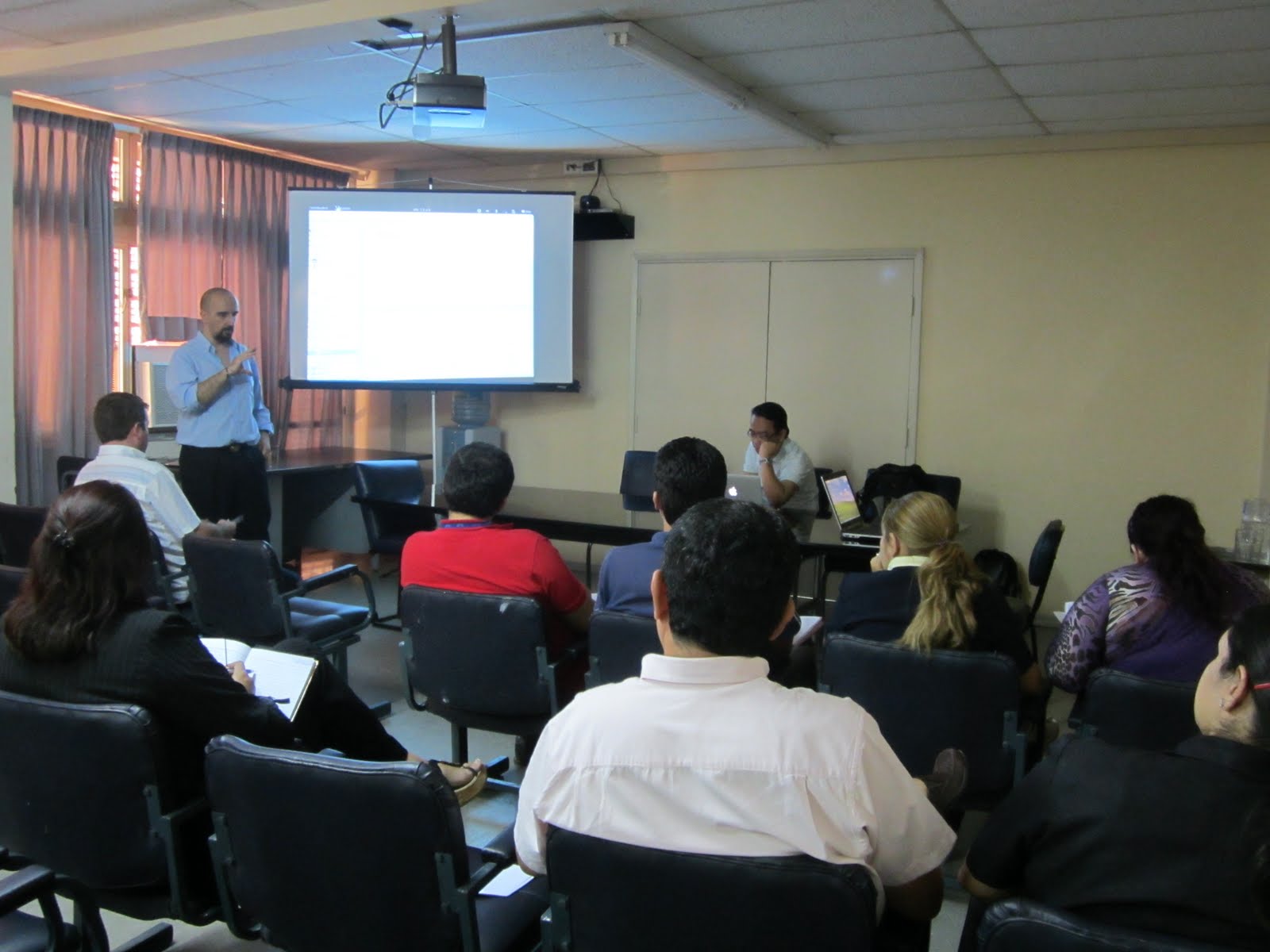 |
| Explaining technical details about GNU Health at the General Hospital |
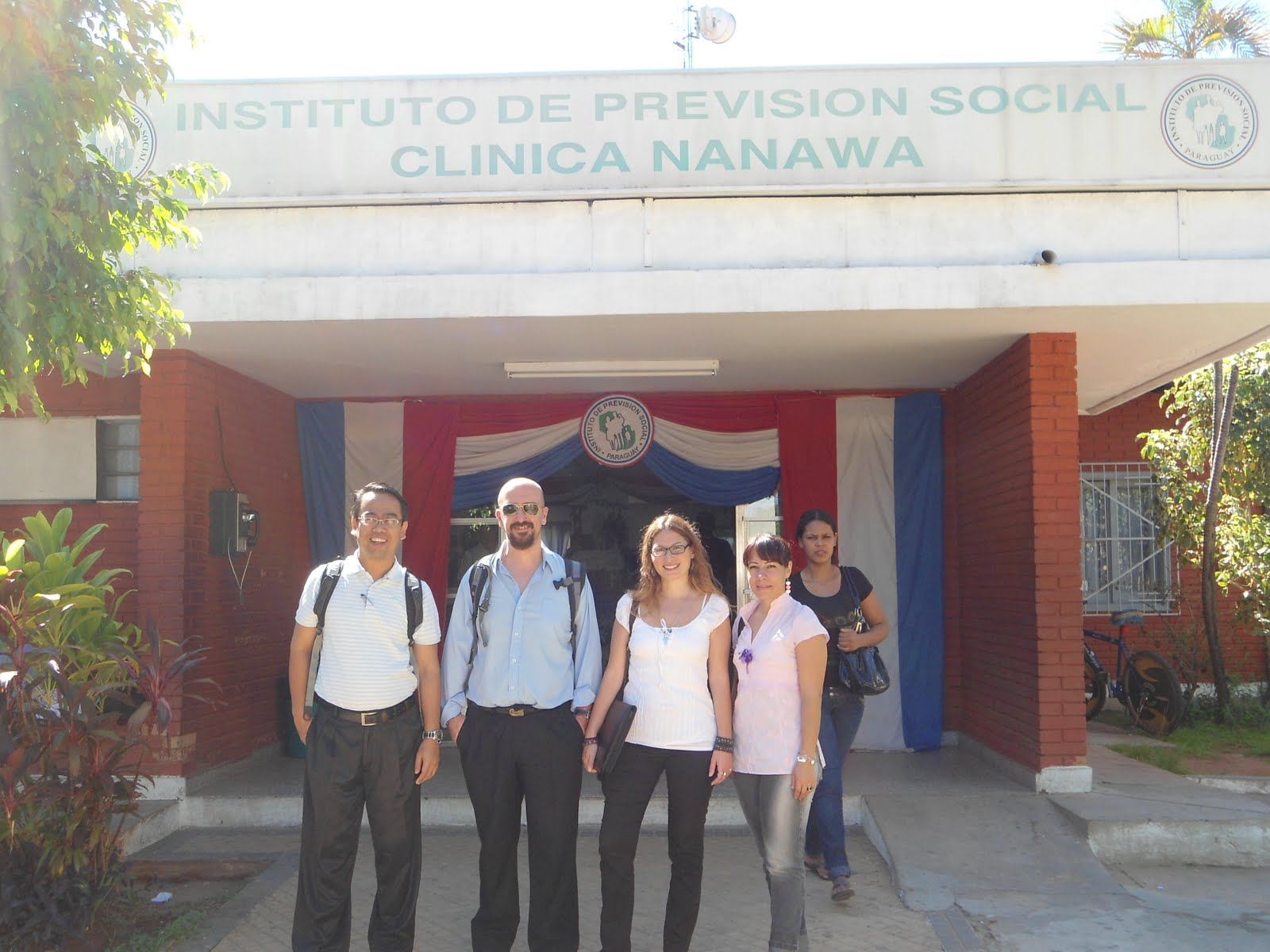 |
| At Clinica Nanawa |
 |
| Dr. Nurhizam Safie from United Nations University, talking about the UNU commitment to the project |
 |
| Part of the Informatics department team at Central Hospital led by Rosa González |
 |
| At the Geriatric Hospital |
 |
| Dr Nurhizam, Cristina Melgosa and Rosa González at IPS entrance hall |
 |
| Taking a break |
But most importantly, I want to thank the government of Paraguay for the commitment with Free Software in Public Health. Latin America is today a leader in the adoption of Free Software in public administrations, delivering equity and universality in health care for their habitants.
Last but not least, thanks to Richard Stallman, who referred GNU Health to Nicolás Caballero , chief technology innovation officer of the Presidency office. Thanks Nicolás for making this possible !
About GNU Health
GNU Health is a free Health and Hospital Information System that provides the following functionality :

 MeanMicio