• About Luis Falcon
  • Cookies & GDPR Privacy Policy

MeanMicio

~ Medicine. Open Science. Animal Rights.

MeanMicio

Tag Archives: free software

Reflexiones acerca de GNU Health en la sesión de la UIT – OMS WSIS 2013

27 Monday May 2013

Posted by Luis Falcon in Uncategorized

≈ Leave a comment

Tags

developing countries, ehealth, EMR, esalud, free software, GNU Health, GNU solidario, HMIS, Hospital Information System, ITU, phealth, Public Health, tryton, WHO, World Health Organization, WSIS

From Luis Falcon’s blog (english version)
En este mes de mayo he tenido el gran privilegio de ser invitado a participar como ponente en la sesión de la Unión Internacional de las Telecomunicaciones (UIT) y de la Organización Mundial de la Salud (OMS) : “TICs para la Mejora de la Información y Responsabilidades de la Salud Materno-Infantil” en la Cumbre Mundial sobre la Sociedad de la Información – WSIS 2013 Forum.

 
El titulo de mi presentación fue: “GNU Health: Mejorando la Salud de Niños y Madres con el Software Libre” y se realizó el día 14 de mayo, con una transmisión de la misma en vivo por Internet.
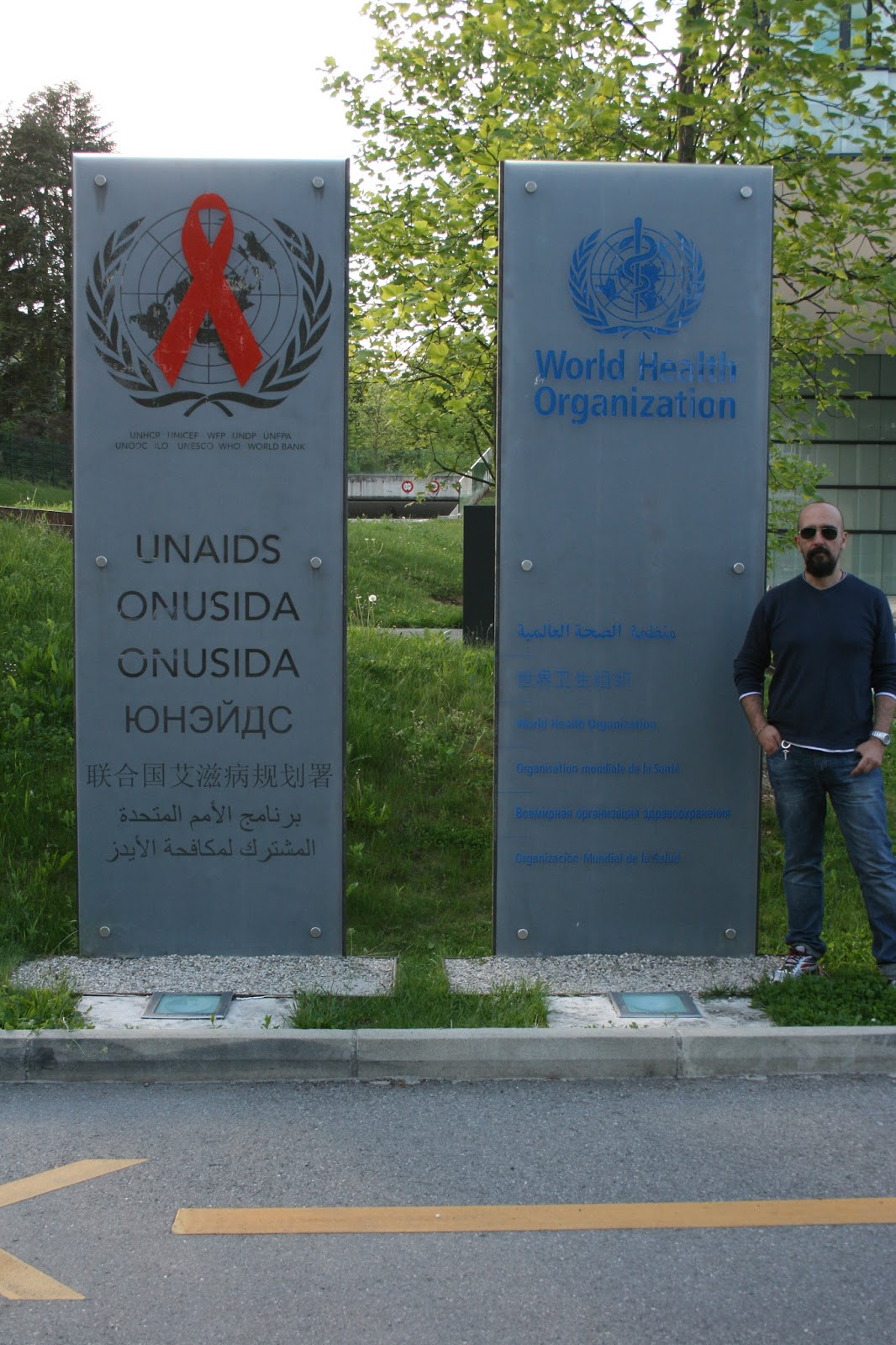
Oficinas Centrales de la Organización Mundial de la Salud en Ginebra

No puedo dejar de pensar en los tremendos niveles de mortalidad materno-infantil, la mayoría por enfermedades prevenibles. Estos pensamientos son el motor principal para el desarrollo de GNU Health, una herramienta con Software Libre que puede mejorar la salud de millones de personas en países en desarrollo.

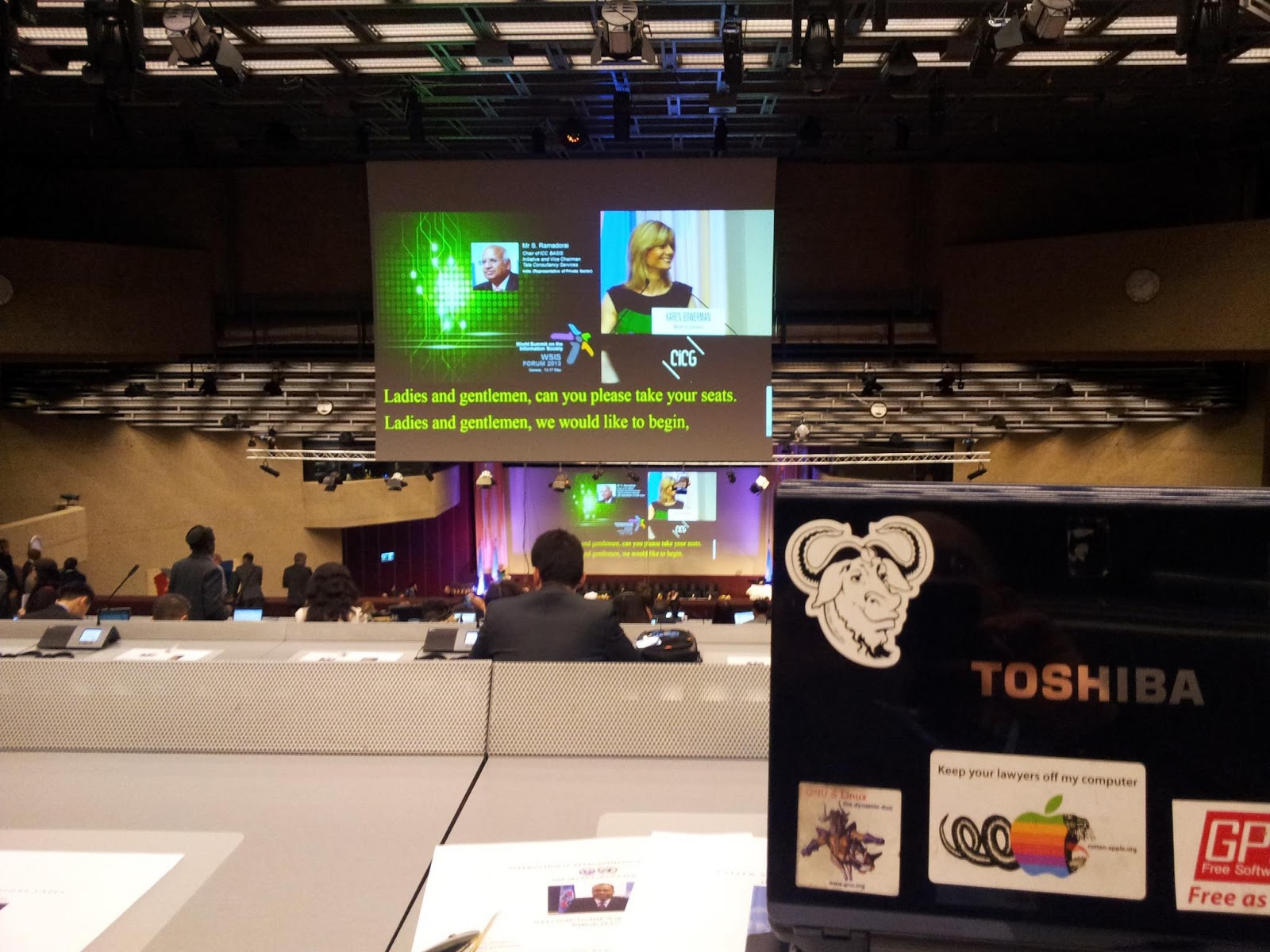
Opening Session en WSIS 2013
GNU Health tiene su foco principal en la Atención Primaria y en la Declaración de Alma Ata. Nosotros solo cambiamos una letra de esa declaración, transformando el original “Salud para Todos” en “e-Salud para Todos”.

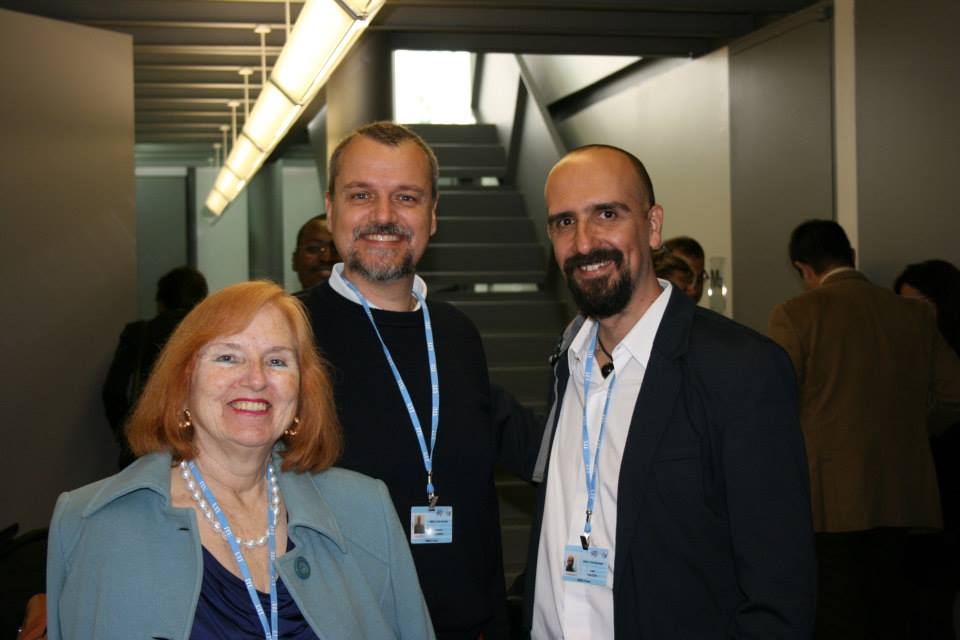
Tily Martín y Miguel Falcón de GNU Solidario

De esta manera luchamos para que la Salud y e-Salud sean un bien público. Los gobiernos deberían utilizar el Software Libre como una forma de lograr políticas de Estado sostenibles en el ámbito de la salud pública.

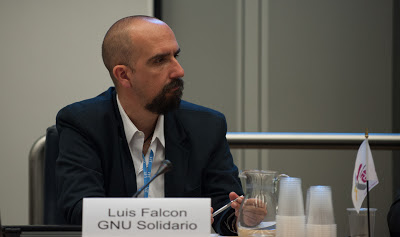
Luis Falcón en su sesión
Es desgarrador ver a países pagar millones de dólares a corporaciones extranjeras en licencias de software privativo. Deberían mejor pensar en utilizar ese dinero para potenciar la promoción de la salud; las campañas de prevención de enfermedades, o mejorar los salarios de los profesionales de la salud o la infraestructura de muchos centros, por mencionar algunas ideas. 
Para continuar con los conceptos de la  Declaración de Alma Ata y con la Atención Primaria de la Salud, la tecnología médica debe ser accesible, asequible y factible. No es necesario adquirir sistemas costosos o de ciencia ficción, en la Atención de la Salud lo que necesitamos son herramientas asequibles y eficaces.

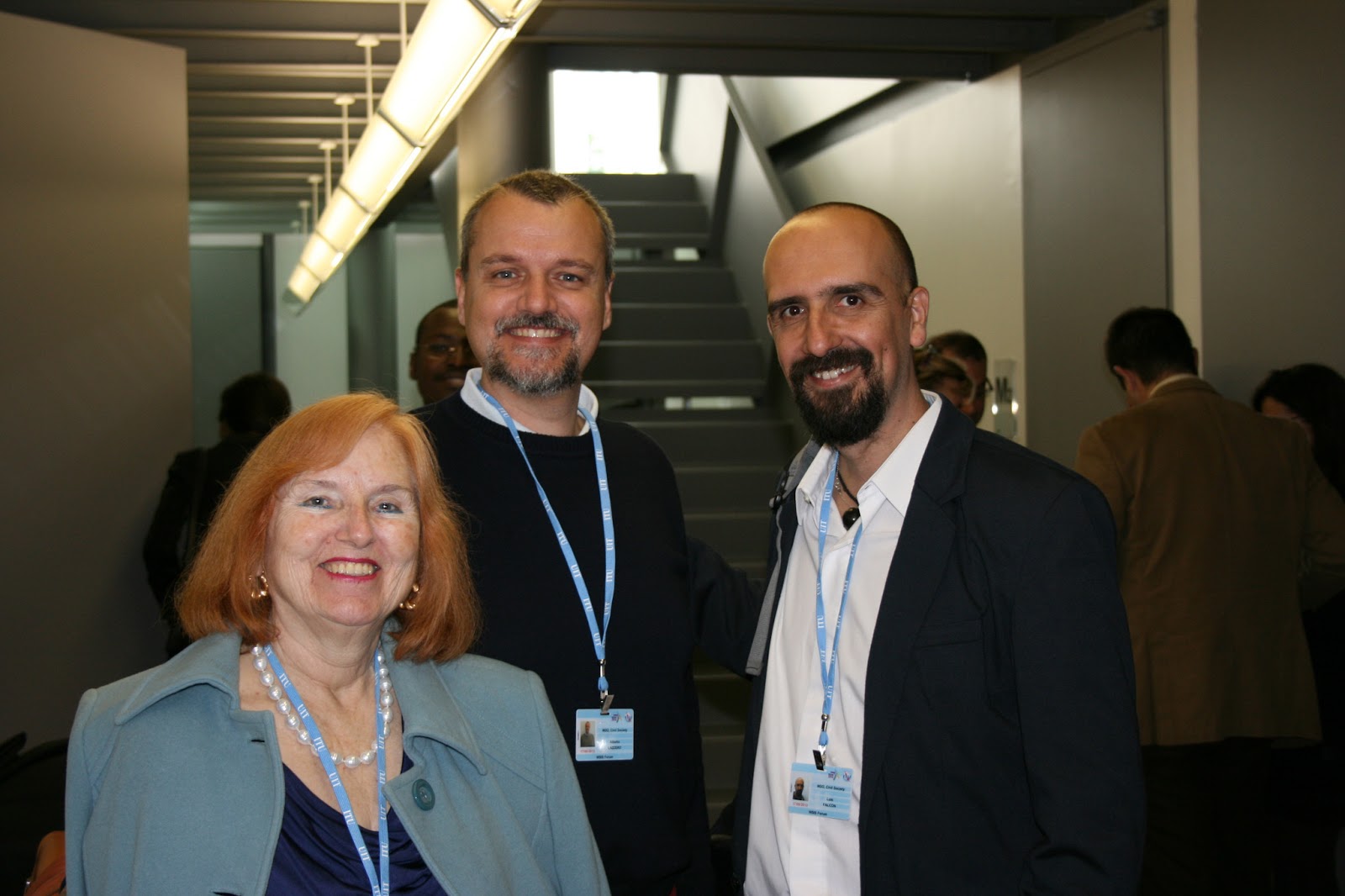
Tily Martín, Dr. Alberto Lazzero y Luis Falcón

En mi charla presenté el caso de la implementación de GNU Health en un Hospital Público de Entre Ríos, Argentina. GNU Health gestiona los datos demográficos de la ciudad, la información socioeconómica de las familias, las evaluaciones de los pacientes, los análisis de  laboratorio, farmacia y stock, hospitalización, contabilidad financiera y RRHH, para mencionar algunos de los procesos utilizados. El centro sólo tuvo que invertir en la compra de computadoras para las oficinas de los profesionales de la salud.

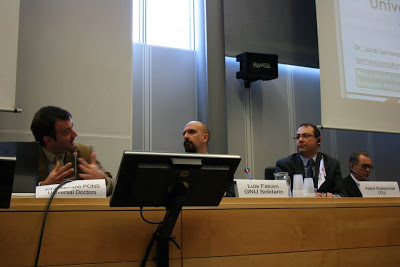
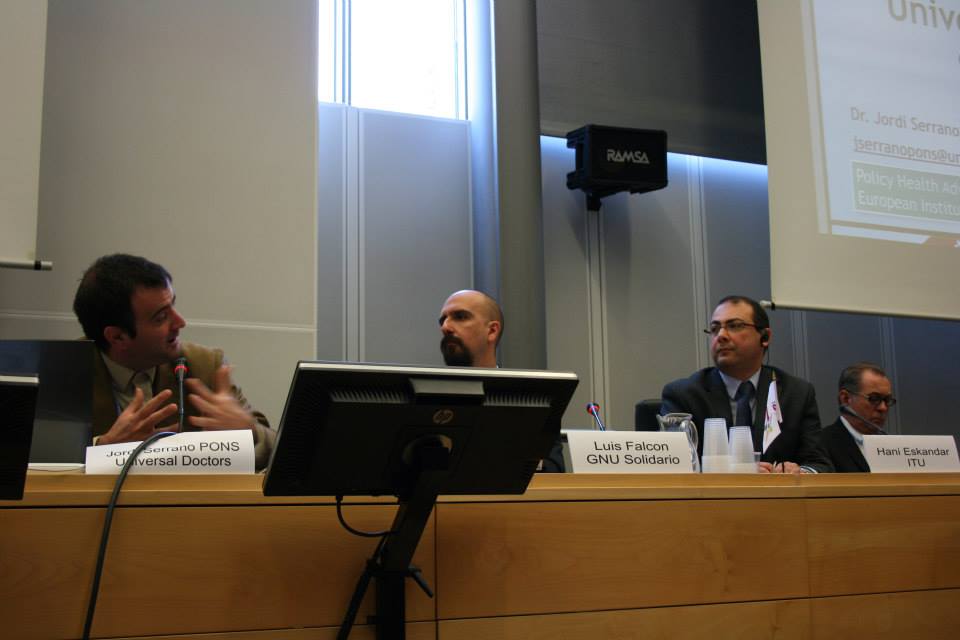
Dr. Jordi Serrano, Luis Falcon y Sr. Hani Eskandar

La informática medica es sólo una herramienta para optimizar el profesional de la salud, los centros de salud y las autoridades sanitarias. No es ciencia ficción y no debe reemplazar el factor humano. El rol del profesional de la salud, integrado con los pacientes, las familias y la sociedad es insustituible.

He tenido el honor de compartir el panel con la Dra. Véronique Thouvenot (ITU), el Dr. Misha Kay (WHO eHealth Unit), el Sr. Hani Eskandar (ITU), el Dr. Ousmane Ly (National Mali Telemedicine Agency), el Dr. Jordi Serrano Pons (UniversalDoctors) y el Prof. Peter Bruck ( World Summit Award).

Ponentes sesión sobre eSalud
Mi agradecimiento a la Unión Internacional de las Comunicaciones (IUT) y a la Organización Mundial de la Salud (WHO) por invitarme a un evento tan importante y por poner el Software Libre (FLOSS) en el orden del día. El Software Libre mantiene viva la Declaración Alma Ata y La Atención Primaria de la Salud, aportando equidad y universalidad. La Salud debería seguir siendo un derecho humano no negociable y, la comunidad del software libre, debería ser un elemento clave para lograr este objetivo.

Algunos enlaces:
WSIS Agenda
Fotos 2º día
About GNU Health

GNU Health es un Sistema Libre de Gestión Hospitalaria y de Información de la Salud con las siguientes funcionalidades:

  •     Expediente Médico Electrónico (EMR
  •     Sistema de Gestión Hospitalaria (HIS)
  •     Sistema de Información de Salud
En 2012 GNU Health ha sido galardonado como mejor Proyecto para Beneficio Social 2011 por la Free Software Foundation.
En 2013, GNU Health ha recibido los premios como  Software Libre mas revolucionario y software con mayor potencial de crecimiento por el  PortalProgramas.

GNU Health es un  Paquete Oficial GNU , y es parte de GNU Solidario. GNU Solidario en una ONG que entrega educación y salud con software libre a países en vía de desarrollo. GNU Health es un sistema de Gestión Hospitalaria y de Información de la Salud elegido por las Naciones Unidas y el International Institute of Global Health. GNU Solidario y la Universidad de Naciones Unidas, International Institute for Global Health han firmado un acuerdo para implementar y enseñar GNU Health a nivel mundial.

health.gnu.org

Reflections from GNU Health at WHO – ITU session WSIS 2013

26 Sunday May 2013

Posted by Luis Falcon in Uncategorized

≈ Leave a comment

Tags

developing countries, ehealth, free software, GNU Health, GNU solidario, Hospital Information System, ITU, phealth, Public Health, tryton, WHO, World Health Organization, WSIS

This month of May we had the immense privilege to be a guest speaker in the World Health Organization (WHO) and International Communication Union (ITU) session “ICT for Improving Information and Accountability for Women’s and Children’s Health” at the World Summit on the Information Society – WSIS 2013 Forum.

The title of the presentation was “GNU Health : Improving Children and Mothers Lives with Free Software“.  The presentation was on May 14th, and it was transmitted live over the Internet.

At WHO headquarters in Geneva
I keep thinking about the tremendous levels of maternal and child death, most of them from preventable diseases. This thoughts are the main drive to develop GNU Health, a tool to improve the health of millions of people in developing countries with Free Software. 
At the WSIS Forum 2013 inauguration session
GNU Health has at its heart Primary Care and the Alma Ata Declaration. We only change a letter from that declaration. To the original “Health for all“, we added the “e” to become “eHealth for all“.
Tily Martin and Miguel Falcon from GNU Solidario

In this sense, we fight to make health  – and eHealth – a public good. Governments should use Free Software as a way to achieve sustainable state policies in the field of public health. 
Luis Falcon during the session
It’s heartbreaking to see countries paying millions of dollars to corporations in freedom-denying software licenses. Think about putting that money to improve health promotion and disease prevention campaigns, or to improve the salaries of the health professionals; or to improve the infrastructure of many health centers, just to name some ideas.

Keeping along the Alma Ata Declaration and Primary Health Care, medical technology should be accessible, affordable and feasible. We don’t need expensive, science fiction hardware of software, we need affordable and effective tools in health care.
 
Tily Martin, Dr. Alberto Lazzero and Luis Falcon
In the talk I presented the GNU Health implementation case of a Public Hospital in Entre Rios, Argentina. GNU Health manages the city demographics, socioeconomics, families,  patient evaluations, laboratory, stock and pharmacy, hospitalizations, financial accounting, human resources and medical imaging, to name a few processes within the health center. The health center only had to invest in buying desktops in the health professional offices.
Dr. Jordi Serrano, Luis Falcon and Mr. Hani Eskandar

Health informatics is just a tool to optimize the health professional, health center and health authorities. It’s not science fiction and should never replace the human factor. The role of the health professional, integrated with the patient, families and society is irreplaceable.

I had the honor to share the panel with Dr. Véronique Thouvenot (ITU), Dr. Misha Kay (WHO eHealth Unit), Mr. Hani Eskandar (ITU), Dr Ousmane Ly (National Mali Telemedicine Agency), Dr. Jordi Serrano Pons (UniversalDoctors) and Prof. Peter Bruck ( World Summit Award). 

eHealth Session Panelists

 
My gratitude goes to WSIS and WHO for inviting me to such an important event, and for putting Free Software (FLOSS) in the agenda. Free Software care keeps alive the Alma Ata Declaration and Primary Health Care, providing equity and universality. Health must remain a non-negotiable human right, and the free software community should be a key component to achieve this goal.

Some links :

WSIS Agenda
Pictures from Day 2 sessions

About GNU Health
GNU Health is a Free Health and Hospital Information System that provides the following functionality: 

  • Health Information System (Demographics, Epidemiology)
  • Hospital Information System
  • Electronic Medical Record

GNU Health won the Best Project of Social Benefit from the Free Software Foundation, among other international awards.


GNU Health is an official GNU Package , and is part of GNU Solidario, an NGO that delivers health with free software. GNU Solidario and the United Nations University, International Institute for Global Health have signed an agreement to implement and to train Health professionals GNU Health around the world.

GNU Health was presented at the World Health Organization (WHO) and International Communication Union (ITU) session “ICT for Improving Information and Accountability for Women’s and Children’s Health” at the World Summit on the Information Society – WSIS 2013 Forum in Geneva.

Main site : health.gnu.org


University of West Indies, Jamaica, joins GNU Health

24 Friday May 2013

Posted by Luis Falcon in Uncategorized

≈ Leave a comment

Tags

educación, education, ehealth, EMR, free software, fsf, gnu, GNU Health, GNU solidario, health promotion, HMIS, University of West indies, UWI

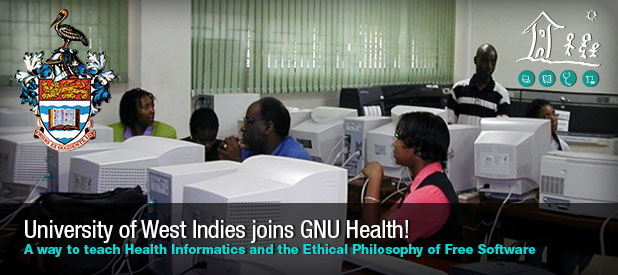
We are very pleased to announce that the University of West Indies has joined the GNU Health‘s Community !
GNU Solidario and UWI are starting this cooperation working closely on GNU Health’s development and deployment in the region.
The University of the West Indies is a dynamic, international institution serving the countries of the Commonwealth Caribbean (Anguilla, Antigua/Barbuda, the Bahamas, Barbados, Belize, the British Virgin Islands, Cayman Islands, Dominica, Grenada, Jamaica, Montserrat, St. Christopher-Nevis, St. Lucia, St. Vincent and the Grenadines, Trinidad and Tobago and the Turks and Caicos Islands).
UWI’s mission is to unlock West Indian potential for economic and cultural growth by high quality teaching and research aimed at meeting critical regional needs, by providing West Indian society with an active intellectual centre and by linking the West Indian community with distinguished centres of research and teaching in the Caribbean and overseas. 
UWI recognises that as a regional university supported by the West Indian peoples, and as the sole local organ equipped to meet local requirements and to relate its own developmental programmes to them, it should give priority to regional needs (…).
It’s wonderful to see how the GNU Health’s community is growing. We need to deliver more Health and Education with Free Software !

GNU Health at FLISOL 2013 – Interview by Canal Seis

09 Thursday May 2013

Posted by Luis Falcon in Uncategorized

≈ Leave a comment

Tags

argentina, FLISOL, free software, gnu, GNU Health, GNU solidario, software libre, tryton

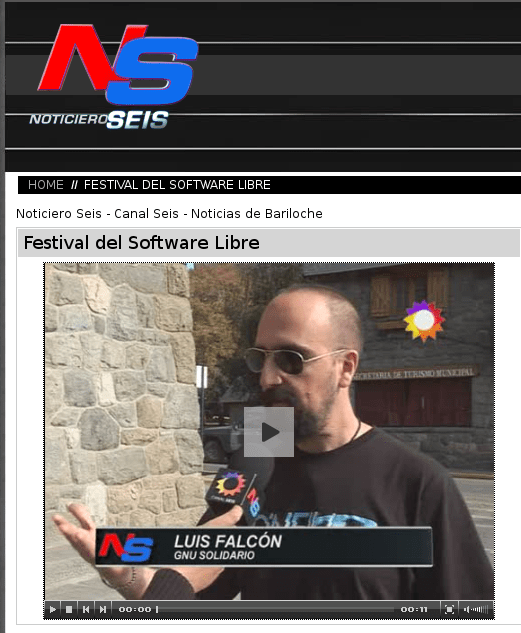
We would like to thank once again all the people involved in the organization of this great event. It was a pleasure and an honor to share this moment with all of you.
It was a great opportunity to show how it is possible to deliver e-Health and Education with Free Software !
We’ll leave you with a video !

WHO Essential Medicines – OMS Medicinas Esenciales

07 Tuesday May 2013

Posted by Luis Falcon in Uncategorized

≈ Leave a comment

Tags

EMR, Essential Medicines, free software, gnu, GNU Health, GNU solidario, historia clinica electronica, HMIS, OMS, software libre, tryton, WHO

WHO Essential Medicines will be a new module from GNU Health 2.0.
Although the updated list of WHO essential medicines has been in GNU Health for quite a while, we have decided to create a module for itself, this will give us more flexibility and modularity.

Welcome health_who_essential_medicines ! More information on this at the WHO site http://www.who.int/topics/essential_medicines/en/

Medicamentos Esenciales de la Organización Mundial de la Salud (OMS), será un nuevo módulo de la version 2.0 de GNU Health.
Aunque la lista actualizada de los medicamentos esenciales de la OMS ha estado en GNU Health durante bastante tiempo, hemos decidido crear un módulo especifico, esto nos dará más flexibilidad y modularidad.

Bienvenido health_who_essential_medicines! Mas información en el sito de la OMS: http://www.who.int/topics/essential_medicines/es/index.html


World Summit on the Information Society

26 Friday Apr 2013

Posted by Luis Falcon in Uncategorized

≈ Leave a comment

Tags

ehealth, free software, gnu, GNU Health, maternal health, primary care, WSIS

We are extremely proud to announce our presence at the World Summit on the Information Society on May 14th. 2013, in Geneva.

Luis Falcón will present “GNU Health: Improving Children and Mothers lives with Free Software. A new approach in Primary Care.” at the Action Line C7 Interactive Facilitation Meeting on eHealth: ICT for Improving Information and Accountability for Women’s and Children’s Health. 
This session will feature some of the innovative ICT applications for Maternal and Child Health and highlight efforts of national and international organizations to foster the use of ICT to better implement the recommendations of the Commission on Information and Accountability for Women’s and Children’s Health.
WSIS Forum 2013 Draft Agenda.
We hope to see you in Geneva !
 

GNU Health Conference at Medetel 2013

12 Friday Apr 2013

Posted by Luis Falcon in Uncategorized

≈ Leave a comment

Tags

ehealth, free software, gnu, GNU Health, GNU solidario, health, HMIS, Hospital Information System, Medetel 2013, phealth, tryton

Don’t miss Sebastián Marró presentation. Today April 12th. at 11 AM in the Conference Room 4 – Medetel 2013 – 
“GNU Health: The Free Health & Hospital Information System”

GNU Health at Med-e-Tel 2013

26 Tuesday Mar 2013

Posted by Luis Falcon in Uncategorized

≈ Leave a comment

Tags

ehealth, free software, gnu, GNU Health, GNU solidario, HMIS, ICT, ISFT, medetel, telemedicine

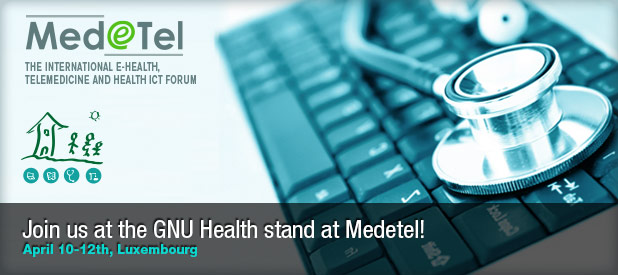
We are proud to invite  you GNU Health stand at Med-e-Tel 2013: the official event of the International Society for Telemedicine & eHealth (ISfTeH).
Through this event, the ISfTeH facilitates the international dissemination of knowledge and experience in Telemedicine and eHealth in order to provide access to recognized experts in the field worldwide. That’s why GNu Health has been invited to participate as The Free Health and Hospital Information System.

Med-e-Tel focuses on e-Health and telemedicine applications and a wide range of other medical ICT applications and on the convergence of information and communication technology with medical applications, which lead to higher quality of care, cost reductions, workflow efficiency, and widespread availability of healthcare services.

Do not forget to check the list of Med-e-Tel 2013 sponsors and exhibitors, it will be a very productive event.

Med-e-Tel 2013 will allow you to see and test hands-on a number of Telemedicine and eHealth products and solutions from companies around the world. The event will also feature several international organizations and institutions who are active in Telemedicine/eHealth research, implementation and funding or who create global networking opportunities across geographical and professional boundaries.

We’ll see you all in Luxembourg !

Success of GNU Health goes beyond free software

19 Tuesday Mar 2013

Posted by Luis Falcon in Uncategorized

≈ Leave a comment

Tags

free software, fsf, GNU Health, GNU solidario, health information system, healthcare, HMIS, tryton

Please find below Luis Falcón’s interview about GNU Health in opensource.com

In 2006, Luis Falcón founded GNU Health, a free health information system that recently recieved the “Best Project of Social Benefit” award given by the Free Software Foundation.
GNU Solidario is the non-profit NGO behind GNU Health, started as a free software project for Primary Care facilities in rural areas and developing countries. Since then, it has evolved into a full Hospital and Health Information System used by the United Nations, public hospitals and Ministries of Health (such as in Entre Rios, Argentina), and private institutions around the globe.
GNU Health/Solidario and the United Nations International Institute for Global Health—UNU IIGH—signed an agreement in 2011 to train health professionals around the world on the system, as a way of promoting free software in public health, especially in emerging economies. Since then, both organizations have been cooperating and expanding their network of partners to deliver health in a universal way; which, also works towards the UN’s Millenium Development Goals.
Q: What are the top 3 ways that GNU Health is better than a proprietary system in use now?
A: GNU Health is an official GNU program and community-based project, so…
Administrators and providers can download GNU Health for free, study it, then adapt it to their needs.
There’s no vendor lock-in, because there’s no vendor. There are no hidden costs or upgrade scripts. Everyone will always be able to upgrade to the latest version for free.
There is an international community of support around GNU Health. We have community GNU Health demo server, documentation at WikiBooks, IRC channels, mailing lists, bug tracking systems, and a development environment.
Q: How does it go beyond cost?
A: Freedom and ethics.
GNU Health evolves from the talent, feedback, contributions of a constantly growing community.There are already academic institutions, like the United Nations and its International Institute for Global Health, teaching GNU Health to health professionals around the world. GNU Solidario, the non-profit organization behind GNU Health, delivers health and education with free software. We work with the United Nations and other institutions to provide primary care and preventive medicine and other of the MDG (Millenium Development Goals). For instance, we have a GNU Health module specific to MDG6, helping tof ight Malaria, HIV/AIDS and Tuberculosis. GNU Solidario also hosts the International Workshop on eHealth in Emerging Economies, a yearly conference focused on free software on eHealth, and how it can help organizations to improve the lives of their people. We have guests and participants from Doctors without Borders, United Nations, UNESCO, Red Cross, academic institutions, and health ministries. As you can see, it goes far beyond free of cost.
Q: Does GNU Health work in tandem with existing health systems or does it replace them?
A: It can do both.
In terms of health center management, GNU Health combines and integrates patient information from their electronic medical records (demographics, evaluations, medical history, labs, etc.) with the health center’s processes (accounting, human resources, stock, supply chain management, etc.). Any uncoupled systems (accounting, HR, EMR, SCM, etc.) can be replaced in order to optimize the resources and processes into one system.
GNU Health can also interoperate with other free software healthcare projects. For example, GNU Health can store patient medical images (MRIs, Xrays, CT, etc.) locally or connect directly to a PACS server using DICOM viewers like Ginkgo or Aeskulap. Interoperability in a hospital environment is a must and free software provides the tools to achieve more.
Q: Have most health administrators been eager or reluctant to implement an open source health system?
A: We have implemented GNU Health in both public hospitals and private institutions.
And they love the idea of having a system that belongs to them. GNU Health is a community-based project, so they are not tied to a software vendor; there are no licenses, hidden costs, or vendor lock-ins.
Q: Do providers have to buy new equipment and hire IT professionals to implement GNU Health?
A: It depends on the size and complexity of the center.
Hospital Information Systems deal with many aspects (accounting, stock, clinical records, suppliers, epidemiology, laboratory, pharmacy, security and access control, etc.). So, it’s no surprise that a well planned and designed project implemented by a well-trained local team will produce a high-quality product with a high level of sustainability.
Q: Why do you feel GNU Health benefits more patients, caregivers, and doctors than current systems?
A: In addition to being free software…
The system focuses on the human factor and takes a holistic approach to the patient—making concepts like health promotion, disease prevention, family medicine, and social determinants of disease top priorities. From a technical point of view, scalability and adaptability are key. Today there are over 20 different language and localization teams, making it easy for anyone to use GNU Health in their region.
Q: Does GNU Health provide high scalability?
A: GNU Health provides solutions for small offices and large hospitals.
The system’s modular design allows them to adapt its functionality to the complexity of their health center. GNU Health runs on top of the fantastic PostgreSQL database and we can implement it in a centralized or distributed environment. Plus, GNUHealth makes use of Python and Tryton frameworks; both are very scalable.
Q: Do you suggest other open source solutions to health providers and centers?
A: Absolutely.
Systems like Aeskulap or Ginkgo are excellent DICOM viewers. Bika Labs is a LIMS that can connect directly to GNU Health laboratory module. Tryton provides a robust and scalable framework to build enterprise solutions.
Q: What issues do we all need to better understand about our health?
A: Health is an issue for us all, whether we think about it much or not.
I encourage people to ask their politicians to adopt free software in the healthcare sector, because health is a public good. And thus, all health information systems should be based on free software. Public health and propietary software are antagonistic.
We, as individuals, should demand free software in our public administrations. And health professionals should know about free software and how it can help them, their patients, and their caregivers. Next time you go to the doctor, please tell her or him about the benefits of free software and write them a prescription for health.gnu.org!

main  source: http://opensource.com/health/13/3/interview-luis-falcon-gnu-health

GNU Health 1.8 is out, with Android support

21 Thursday Feb 2013

Posted by Luis Falcon in Uncategorized

≈ Leave a comment

Tags

AIDS, developing countries, free software, GNU Health, GNU solidario, Hospital Information System, Malaria, Public Health, tryton, tuberculosis, United Nations

From Luis Falcón blog:  
It’s been a couple of weeks since the release of GNU Health series 1.8, and we’re thrilled on the evolution of the system, and its adoption by the community.
This latest series is compatible with Tryton 2.6.x and has many improvements, in the core and reporting modules, among others. As usual, the migration from previous versions are included.

The other good news is that, being compatible with Tryton 2.6 allows the connection from mobile devices with the Android Operating System . 
Thanks to the great Tryton development framework, and to the fantastic job done by SCIL  in the development of the Android client for Tryton, GNU Health servers can now be accessed directly from your mobile device. 
 
You can find the Android client on Google Play . For the development process, check the SCIL page .

There are more good news on the way. The web client is also around the corner, and we will have 3 different ways to connect to GNU Health. From the standard GTK interface, the Android client, or your web browser.

Make sure you upgrade your database to the latest GNU Health version. The upgrade scripts and the instructions are always incorporated in the new version. The upgrade process is an integral part of GNU Health and, of course, it’s completely free.
e-Health for all !

About GNU Health

GNU Health is a free Health and Hospital Information System that provides the following functionality : 

  •     Electronic Medical Record (EMR)
  •     Hospital Information System (HIS)
  •     Health Information System (Epidemiology)


GNU Health has been awarded the Best Project of Social Benefit from the Free Software Foundation in 2012. 

In 2013, GNU Health received the awards for  most revolutionary Free Software and software with the largest potential from PortalProgramas.

GNU Health is an  official GNU Package , chosen by Richard Stallman, and is part of GNU Solidario. GNU Solidario is a NGO that delivers education and health to emerging economies with free software. GNU Health is the Hospital Information System chosen by the United Nations International Institute of Global Health.  GNU Solidario and the United Nations University, International Institute for Global Health have signed an agreement to implement and to train GNU Health globally.

← Older posts
Newer posts →

Recent Posts

  • Gracias, India
  • Parallel and distributed computing in GNU Health
  • El cambio de horario es un atentado contra la salud. Rechazarlo es la mejor medicina
  • Tu finca, su infierno
  • La Cátedra de Animales y Sociedad de la URJC: Un referente de empatía y respeto hacia los animales.

Archives

  • September 2025
  • May 2025
  • March 2025
  • February 2025
  • May 2024
  • July 2023
  • March 2023
  • February 2023
  • January 2023
  • October 2022
  • August 2022
  • April 2022
  • February 2022
  • September 2021
  • August 2021
  • July 2021
  • June 2021
  • March 2021
  • December 2020
  • September 2020
  • July 2020
  • May 2020
  • March 2020
  • February 2020
  • November 2019
  • October 2019
  • June 2019
  • April 2019
  • May 2018
  • November 2017
  • October 2017
  • June 2017
  • May 2017
  • April 2017
  • March 2017
  • February 2017
  • January 2017
  • December 2016
  • November 2016
  • October 2016
  • September 2016
  • August 2016
  • July 2016
  • June 2016
  • May 2016
  • April 2016
  • March 2016
  • February 2016
  • January 2016
  • November 2015
  • October 2015
  • September 2015
  • August 2015
  • July 2015
  • May 2015
  • March 2015
  • February 2015
  • January 2015
  • December 2014
  • October 2014
  • September 2014
  • July 2014
  • June 2014
  • May 2014
  • April 2014
  • March 2014
  • December 2013
  • November 2013
  • October 2013
  • September 2013
  • August 2013
  • July 2013
  • June 2013
  • May 2013
  • April 2013
  • March 2013
  • February 2013
  • January 2013
  • December 2012
  • November 2012
  • October 2012
  • September 2012
  • August 2012
  • July 2012
  • June 2012
  • May 2012
  • April 2012
  • March 2012
  • February 2012
  • January 2012
  • December 2011
  • November 2011
  • October 2011
  • September 2011
  • August 2011
  • July 2011
  • June 2011
  • May 2011
  • April 2011
  • March 2011
  • February 2011
  • January 2011
  • December 2010
  • November 2010
  • October 2010
  • September 2010
  • August 2010
  • July 2010
  • June 2010
  • May 2010
  • April 2010
  • March 2010
  • February 2010
  • January 2010
  • December 2009
  • November 2009
  • October 2009
  • September 2009
  • August 2009
  • July 2009
  • June 2009
  • May 2009
  • February 2009
  • November 2008
  • October 2008
  • September 2008
  • December 2007
  • October 2006

Categories

  • #FHIR
  • animal liberation
  • animal rights
  • embedded
  • events
  • gnu
  • GNU Health
  • GNU solidario
  • HMIS
  • KDE
  • Libre Software
  • LIMS
  • medical
  • MyGNUHealth
  • Public Health
  • thalamus
  • tryton
  • Uncategorized

Meta

  • Create account
  • Log in
  • Entries feed
  • Comments feed
  • WordPress.com

Blog at WordPress.com.

  • Subscribe Subscribed
    • MeanMicio
    • Already have a WordPress.com account? Log in now.
    • MeanMicio
    • Subscribe Subscribed
    • Sign up
    • Log in
    • Report this content
    • View site in Reader
    • Manage subscriptions
    • Collapse this bar