Latinoware Day 2 – IWEEE 2011 –

Tags

, , , , , , ,

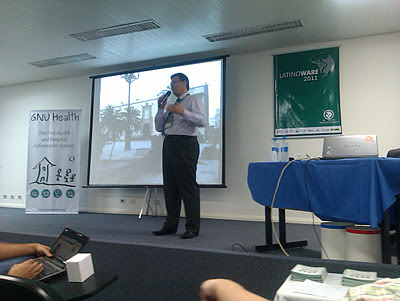
After a lot of work organizing, planning (and of course a lot of stress too 😀 ) IWEEE 2011 Brazil: Momentum finally started .
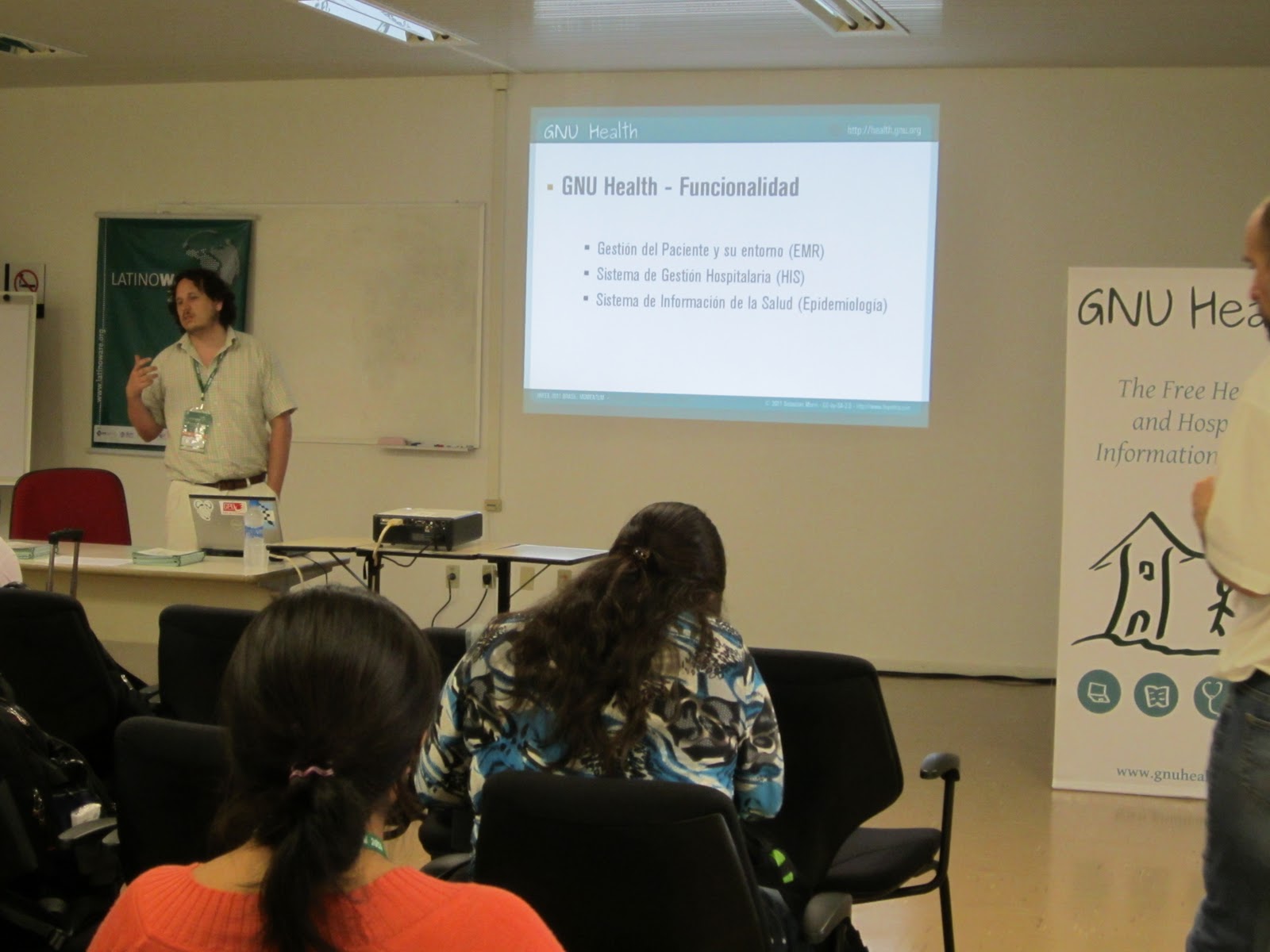
In this last edition we shared experiences and speeches with health professionals who contributed with their precious experiences and knowledge .
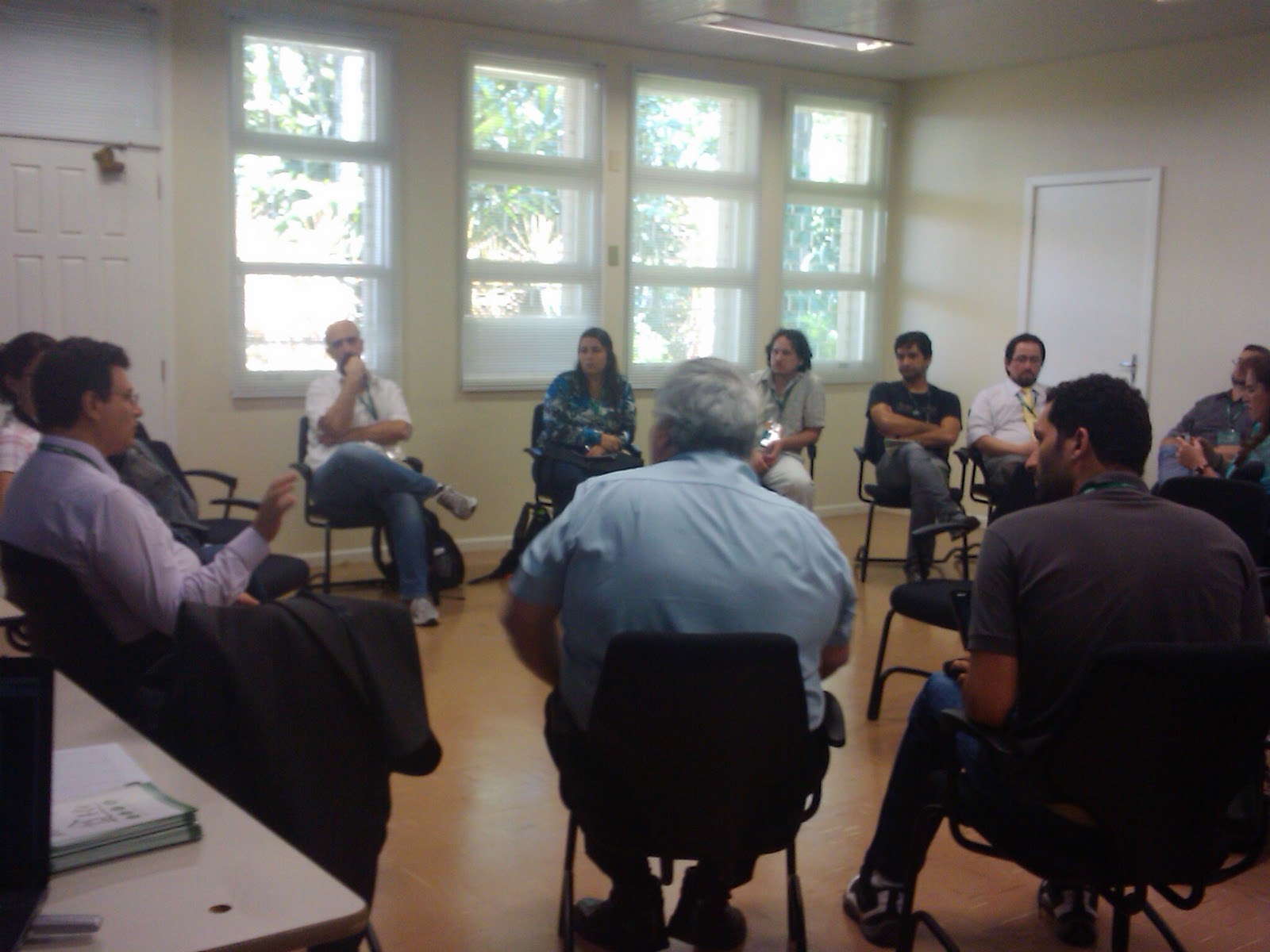
The presentations were very interesting and created the perfect environment for the round table, during which arose ideas, projects, reflexions …
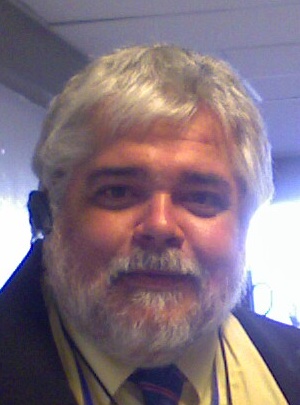
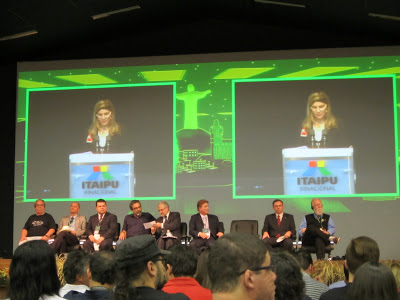
Opening Session by Cesar Brod
Dr. Alexandre Aguiar – Brazil –
Claudia Muñoz-Reyes, Seeds of Empowerment – Stanford University –
Giuliana Garcete, U.I.R Décima Región Sanitaria – Paraguay –
Luis Falcón, GNU Solidario – Spain –
Nicolás Caballero, Gabinete Civil Presidencia de la Nación – Paraguay –
Sebastían Marró, Thymbra – Argentina –
The round table was very rewarding
Group picture !!
It has been a pleasure to have you all at IWEEE 2011 – Latinoware !
We hope to see you at the next edition IWEEE 2012 Europe.

Latinoware day 1

Tags

, , , , , , , ,

Neither the ashes or the incompetence of the airline companies could stop us … and we finally made it to Latinoware !!
Let me remind you that tomorrow from 10 AM to 6 PM Latinoware will host IWEEE 2011 Brazil: Momentum.
Here is the program:
 
Today at 2:30 PM there was the Opening Session of Latinoware 2011, this edition registered a record of participant, 4092 so far !
Here is the link where you’ll find all the info about speeches and courses, they are really interesting: http://goo.gl/vfuVR
I leave you with some pics of the day !
We made it !!
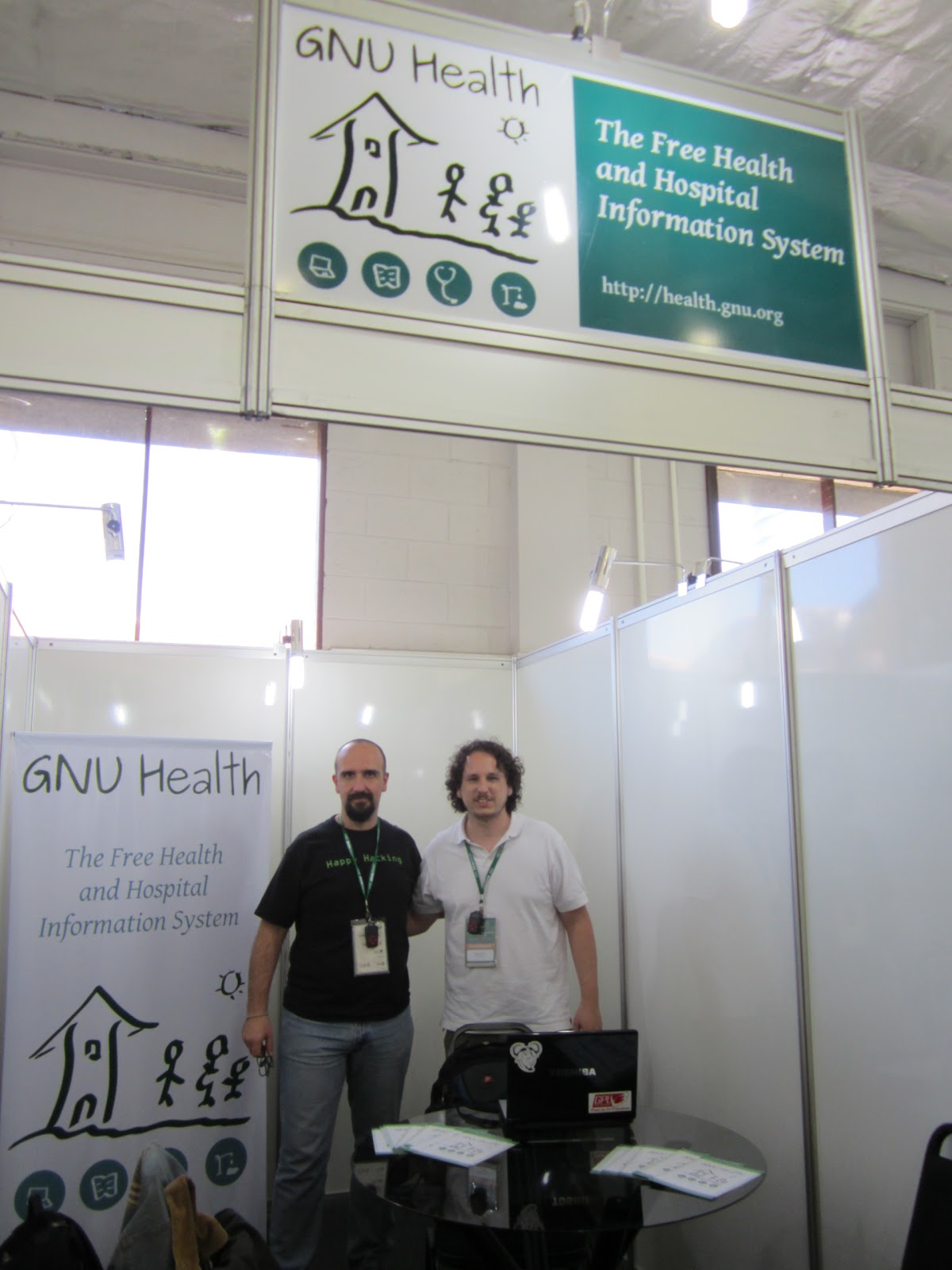
Cristina Melgosa and Sebastián Marró at our stand
Opening Session
Sebastián Marró, TUX and Luis Falcón !
Luis Falcón and Sebastián Marró
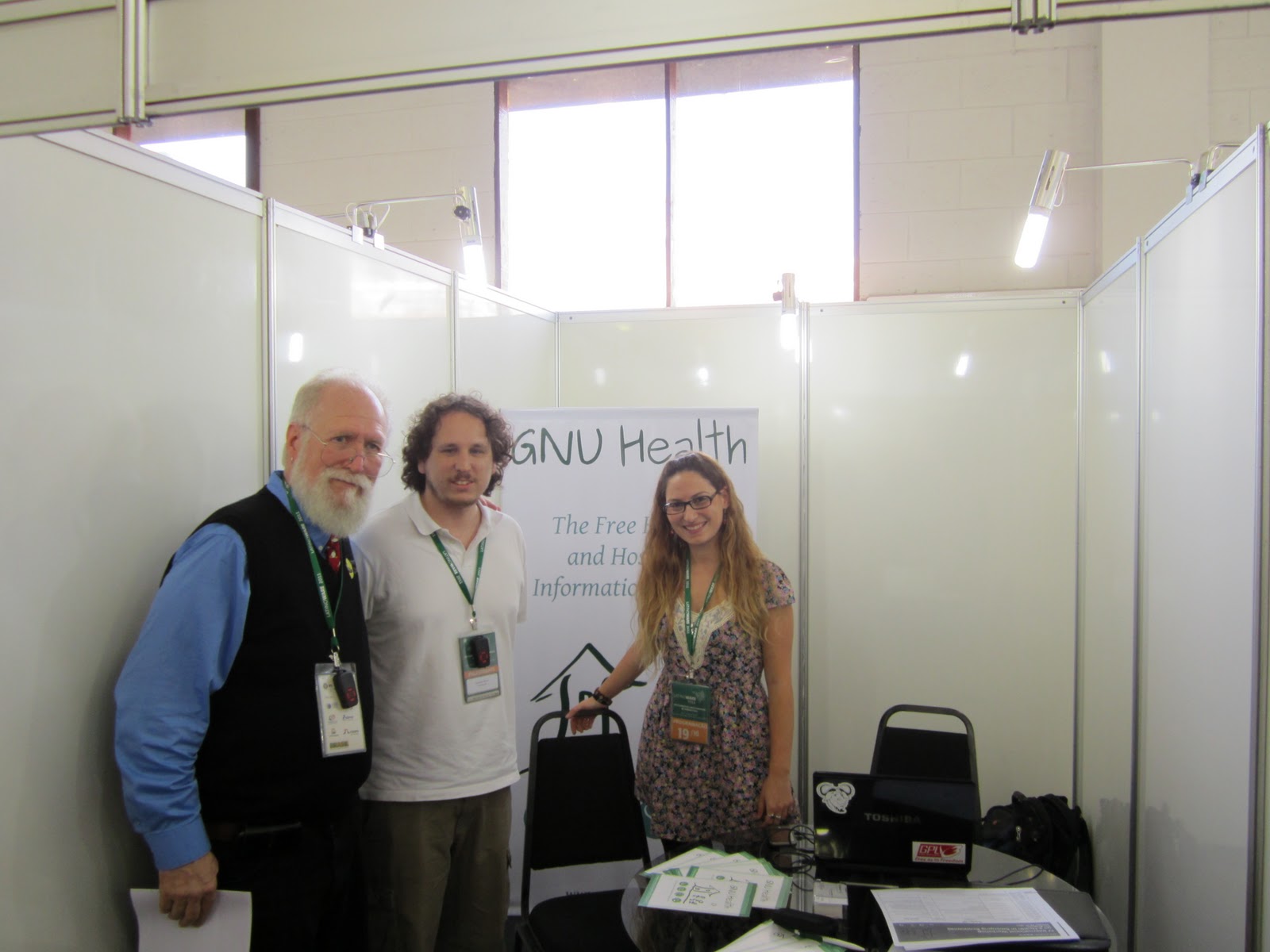
Jon “Maddog”, Sebastián Marró and Luis Falcón
Jon “Maddog”, Sebastián Marró and Cristina Melgosa
A little work …
What happened  TUX !?!? Please, help him …

GNU Health Calendar Module

Tags

, , , , ,

We have just released the Calendar Module for GNU Health. 


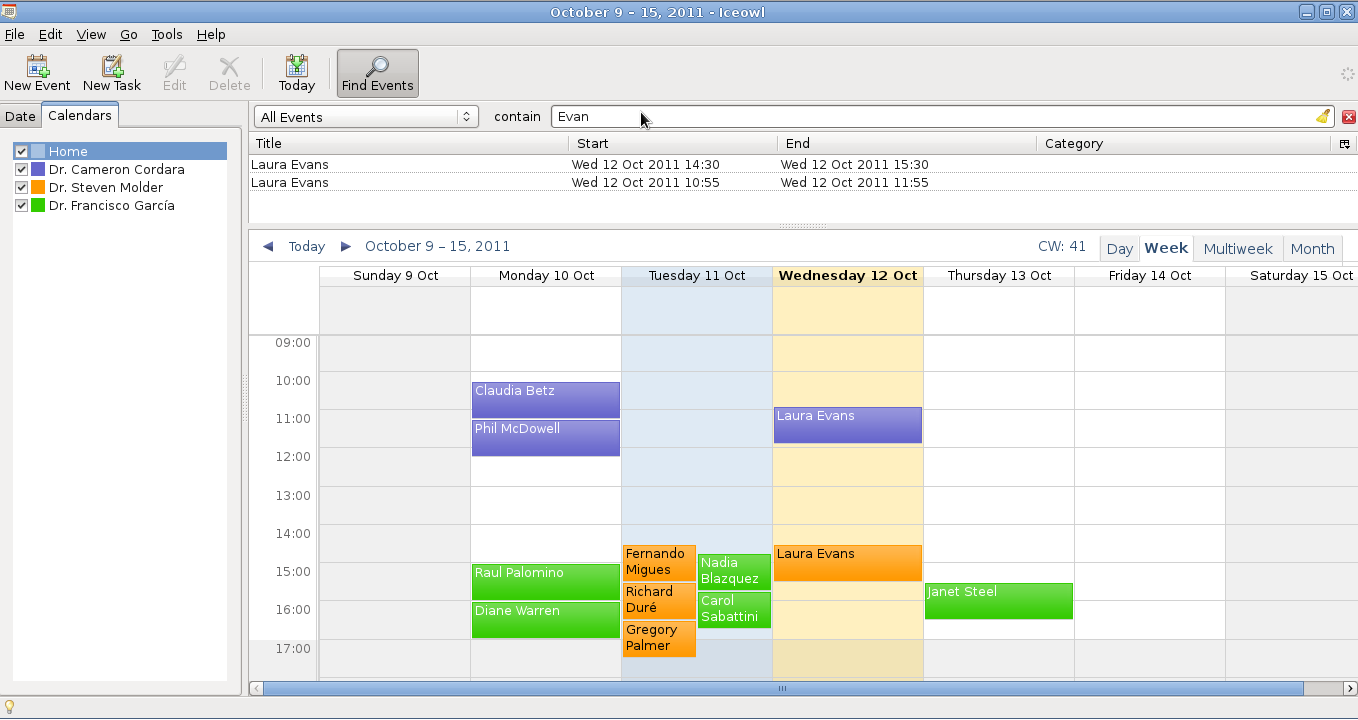
This module allows appointments to be viewed from any calendar client that supports the CalDAV protocol, like Sunbird/Iceowl, Thunderbird/Icedove, iPhone or Android Clients. 


Doctors can use this tool from a desktop computer, notebook or mobile device to manage their appointments. The calendar can also be used by the receptionist to visualize all the doctor’s appointments and make suew that different patients were not being scheduled at the same time.
 
 
Thanks to the Tryton team for the CalDAV support.
 
GNU Health is a Free Health and Hospital Information System.  
 

GNU Status Reports: October 2011

Tags

, , , , ,

The FSF just released the October 2011 bulletin

My surprise was to see that Health has been positioned in the first place of the list.

It’s an honor for us and for the GNU Health team to be among these great programs !

http://www.gnu.org/bulletins/gnustatus-2011-10.html#Health

At GNU Solidario, we will keeping doing our best to include Free Software in Public Health.

10 open source projects that could really use a donation …

Tags

, , , , ,

GNU Health in the best 10 free software projects !

September 29, 2011, 1:12 PM PDT
Takeaway: Even a small donation can go a long way toward providing support for these deserving open source projects.
In my recent post The importance of donating to open source projects (and a giveaway), I called for donations to one of my favorite open source projects, Bohdi Linux. I also ran a poll to see where members stand as far as donating to open source is concerned (Figure A). After I wrote that post, I realized there were many other outstanding open source projects that deserved a bit of attention. So I thought I would take a moment to list 10 projects I feel could use a little help. These projects range in target audience and scope — I wanted to cover as much ground as possible. Certainly, some of the projects listed are more in need than others, but each of them could use a bit of financial support …

4: GNU Health
There are a couple of open source tools for hospitals, but GNU Health is one of the finest. With this application, hospitals get a strong focus in both family and primary health care, as well as on socioeconomics (housing conditions, substance abuse, etc.), prescriptions, billing, and patient genetic and hereditary risks. GNU Health offers an outstanding patient records section, along with imaging, appointments, and much, much more.
Complete articlehttp://tek.io/qHxpgc

Maddog confirms participation in Latinoware 2011

Tags

, , , , , ,

Please find below a very interesting interview of Maddog by Cesar Brod :

Latinoware’s participants cannot imagine having a Maddog-Free Latinoware. The godfather of free and open source software, the one responsible for sparking the first port of Linux outside the Intel’s 386 processor family and one of the main visionaries in the IT industry is coming again to Latinoware where, again, he will be followed by a hurd of picture takers. Probably the main reasons Jon “maddog” Hall (president of Linux International and one of the leaders of the Cauã Project) always attracts crowds to his talks are, at the same time, his eternal evangelism words and the ability of opening the eyes of people for new and exciting opportunities with free and open technologies. In this interview, Maddog answers some thought provoking questions asked by his long time friend, the program coordinator of Latinoware, Cesar Brod.
    
Cesar Brod: People coming every year to Latinoware already expect your presence in the event and, as usual, you will have again a big crowd watching your talk. It is being now more than ten years since you first came to Brasil to talk about free and open source software. What do you believe people really get and what do you think people still don’t get at all in relation to free and open source software?


Maddog: “You can fool some of the people all of the time, and all of the people some of the time, but you can not fool all of the people all of the time.” – Abraham Lincoln. I point out that the phrase “people still don’t get at all” is a problem, because I to think that many people “get” some of the points of Free Software some of the time, but most people do not “get” all of the points all of the time.
    
For some people “Free Software” is something they can pull down of the Internet and use to solve their problems without having to pay a royalty or a license fee.  In many countries this argument has little pull, since they do not pay for a lot of their software.
     
For others, such as developers or enterprise people, Free Software represents software that they can get bug fixes or extensions for quickly so they can continue working.  Or use their own extensions to develop a better solution than their competitor.
   
For trainers and consultants it means that by studying the software and the source code to that software they can be just as expert in that software as the person (or people) that wrote it, and therefore command a premium for their services.


For governments Free Software represents a way to keep their brightest and best university-trained programmers in their own country instead of having them migrate other places where they can get good jobs developing software.  Free Software means potential longevity of a solution to the government’s needs, and to maintain sovereignty over their own computing systems, safe from embargoes or privacy violations from another country’s government.
    
I often try, in my mind, to extend the present day to the far future.  What would happen if we had seven billion people using our systems of today?  Would the queue at the help line be five days long, or only three?  Would I get 500 patches to wade through on “Patch Tuesday”, or would the vendor also patch on Thursdays in the future?
   
For certain people, like myself, who have had the misfortune of seeing the computer industry evolve from one of service to one of products, and the luxury of having the time to look into the future to a day when we have to meet the needs of another five billion “desktop” users….we can see how computer products as we know them will fail, and software built on good service will be the key to delivering the next five billion “desktops”. ….
Complete interview: http://bit.ly/qpYdQO

Developing countries NOT in the OpenERP agenda

Tags

, , , , ,

This is a segment of the letter from Doctor Christoph Larsen, in April 2011, who was working in Rwanda and asked OpenERP for the upgrade scripts and OpenERP refused to give them to him. Dr. Larsen gave me his permission to publish it, so the community knows his point of view.

When Dr.Larsen sent me the mail, I started the migration to GNU Health in the Tryton environment. And no, this is no FUD, this is the reality of was has become of OpenERP.

[..] Please do realise that our group speaks an entirely different language: We do not target the profit-making market, and regarding the combination of OpenERP’s Medical module, the underlying OpenERP backbone for health facility management and Bika Health, we are actually talking LDCs = read: Least Developed Countries. There is no money for any such partnerships, warranties and the like. People out there are haoy to learn from each other, and you will be surprised how keen they ARE to learn. BUT: A few thousand Euros for warranties (imagine a governmental multi-user installation!) – no way!!! In fact, I can tell you from my very own experience with various East and Central African governments that such upgrade path is an exclusion criterion in public tenders. Many governments, after having been burnt by numerous First World approaches to software expressively demand full and complete ownership, which includes control over the upgrade path. I cannot blame them, because, contrary to common belief in the West, there is no money left on the table, if we charge less for more. Instead, something might actually – in the end – arrive at the bottom end, for the patients’ and grassroot’s benefit.
A different market altogether. I would be delighted to see OpenERP provide the script, and with capable people like Luis, various other groups, the South African Bika team and myself, we might well figure out a beautiful and lively howto, how to go from verison 5 to 6, and further on. As you talked of 7 emails, by remote control, only, it is certainly easily doable! This is not a request for free services, but for transparency, and, yes, NO lock-in. At present, the Rwandan biomedical equipment management data are, in fact, locked in, into version 5. You may understand that this, and your change of policy, does not make such end user institutions happy. This also has serious consequences for users of the Medical module. It is utterly unthinkable that users (especially those in poor settings) cannot upgrade to a new version, and risk losing all they last version’s data, without dishing out a few thousand Euros.Your input and an, as I most strongly believe, urgently required reconsideration of your strategy, are highly welcome.
With best regards,

Dr. Chris H. Larsen


Quite sad, isn’t it ? Of course, no answer from OpenERP.  Clearly, developing or Least Developed Countries are not in the OpenERP agenda.

Luckily, we have now a much more robust Health system, official GNU Package, that is 100% free and community-based. If your center is stuck with OpenERP, please contact us and we’ll be happy to help you out in the migration to Tryton.


 About GNU Health

GNU Health (formerly known as “Medical”) is a free (GPL license), Health and Hospital Information System that provides the following functionality :
  • Electronic Medical Record (EMR)
  • Hospital Information System (HIS)
  • Health Information System
GNU Health is part of GNU Solidario. GNU Solidario is a NGO that delivers education and health to emerging economies with free software.

Main site : health.gnu.org

Governments and Institutions hosting GNU Health through their portals :

Tordesillas, España. Año 2011.

Tags

, , ,

Difícil contener las lágrimas ante tanta crueldad y sadismo.

Únicamente personas y políticos carentes de compasión , con un alma realmente enferma pueden permitir y disfrutar estos macabros espectáculos.

Hoy en día, este tipo de eventos son declarados de interés turístico. Ay mi Dios ! Qué sociedad podrida tenemos … Dónde está la justicia ? O acaso el maltrato animal no está tipificado ? Pareciera que en España hay espacios donde lo macabro y lo sádico está amparado. No entiendo nada.

Por favor, terminemos con esta barbarie de una vez !

Señores políticos, por favor, atiendan el reclamo de la gran mayoría de los ciudadanos e ilegalicen este macabro negocio de las corridas de toros y otros eventos donde se maltratan a los animales. Sean un ejemplo de una sociedad moderna y humanitaria, donde se respetan a todos los animales.

Por último, a ti, lector, no dejes que te invada la desesperanza . Estoy convencido que con tu ayuda tendremos una sociedad más justa y compasiva.

Apoya al PACMA o a otro partido que abiertamente defienda los derechos humanos y de los animales y que condene públicamente el maltrato animal, en su significado más extenso.

GNU Health 1.3.3 released

Tags

, , , ,

I’m pleased to announce GNU Health 1.3.3

This version could be considered a milestone in itself, due the major changes and new features:

  • New naming convention of modules and models. From  medical to gnuhealth
  • New installation scripts (setup.py) . 
  • Major improvements in the Laboratory module. Now we have automatic visual alerts, possibility to exclude analytes from the analysis, qualitative and quantitative testing. Contextualize results in the patient status (gender, age, comorbidities … ).

Screenshot of a sample lab report on GNU Health 1.3.3

As in every new release, bugs are fixed, navigation improved and new features are includes.

Since Health is now part of the official GNU system, the development is hosted at GNU Savannah.

Last but not least…  many thanks to Cedric and Tryton community for getting involved in the GNU Health project !

About GNU Health

GNU Health (formerly known as “Medical”) is a free (GPL license), Health and Hospital Information System that provides the following functionality :
  • Electronic Medical Record (EMR)
  • Hospital Information System (HIS)
  • Health Information System
GNU Health is part of GNU Solidario. GNU Solidario is a NGO that delivers education and health to emerging economies with free software.
Main site : health.gnu.org
Governments hosting GNU Health through their portals :