GNU Health version 2.8.0 released

Tags

, , , , , , , , , , , , ,

Dear GNU Health community:

After 7 months of intense work, I am happy to announce GNU Health 2.8 series !

Here is a partial list of the new features :

* Tryton 3.4 compatibility
* Distributed environment, data aggregation and synchronization features
* Universal Person Unique Identifier (PUID) and UUID implementation
* Country immunization schedule
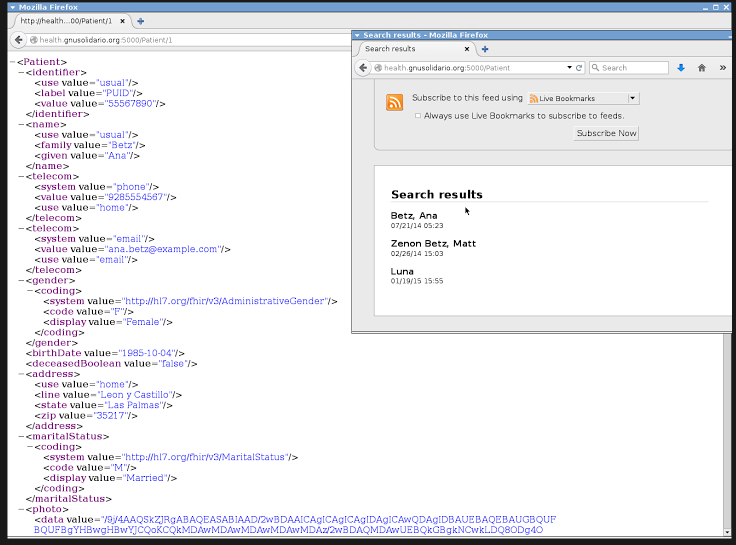
* HL7 FHIR server (thank you, Chris Zimmerman !)
* Automatic person immunization status check
* Vital Records System : Birth and Death certificates
* Enhanced security for Tryton server credentials
* Injury Surveillance System (Thank you, Jamaica MoH !)
* GNU Health control program : Automatic backups and patches
* Enhanced Crypto features / GNU Privacy Guard integration
* New models including in digital signatures
* Demographics reports

There are many other improvements and bug fixes that have not been included in this summary document. You can read the Changelog for a detailed description of all the activity.

** Installation :
—————-
If you are installing GNU Health as the first time, follow the instructions in https://en.wikibooks.org/wiki/GNU_Health/Installation

** Existing Installations : Upgrade procedure
——————————

—————-
If you already have a GNU Health system in your health center, you should upgrade it to 2.8.0 . As always, the upgrade path is included in GNU Health.  The upgrade for version 2.8.0 is straight forward :

Follow the Upgrade Instructions in the Wikibook
https://en.wikibooks.org/wiki/GNU_Health/Upgrade

** Official Languages
———————-
GNU Health now includes English, Chinese, French, Greek, Italian, Japanese, Portuguese and  Spanish, as the official languages. The language packs of the official languages are included in the GNU Health package, with all the modules, so there is no need to download.

There are over 100 language teams for GNU Health ! If you are a language maintainer and want to include your language for the next stable release, please send us a mail to health@gnusolidario.org .

Thanks !
——-
A big thank you to my colleagues from GNU Health community; GNU Solidario; Thymbra and Tryton, and to the Free Software movement.

Enjoy the new version and report any bug / issues / improvements to health@gnu.org !

 
Luis Falcón

GNU Health 2.8 incorporates a HL7 #FHIR server

Tags

, , , , , , , , , , , ,

GNU Health 2.8 incorporates a HL7 #FHIR server. This allows interoperability with many devices and other systems ! 
Many thanks to Chris Zimmerman for his great work on HL7 FHIR in GNU Health. 
Luis Falcón

GNU Health: Ganador Premios PortalProgramas 2014

Tags

, , , , , , , , , , , ,

GNU Health ha ganado los Premios PortalProgramas 2014 en la categoría de Software Libre Más Revolucionario.
Queremos agradecer a Premios PortalProgramas y a todos los que han votado para GNU Health.

1er puesto
GNU Health

“GNU Health ya había ganado en esta categoría en la edición del 2012 de los Premios PortalProgramas y es que hay que reconocer que es un enorme proyecto que aglutina todos los verdaderos valores del software libre. Es una gran satisfacción ver que este proyecto sigue vivo, creciendo y con un futuro muy brillante”.

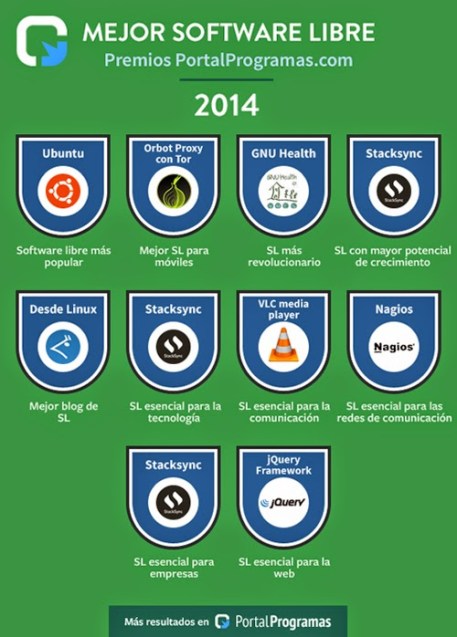
Todos los ganadores de este año:

http://www.portalprogramas.com/milbits/informatica/ganadores-6-edicion-premios-portalprogramas-software-libre-2014.html

GNU Health: Winner Premios PortalProgramas 2014

Tags

, , , , , , , , , , , ,

GNU Health won the Award of Premios PortalProgramas 2014 in the category of Most Revolutionary Free Software.
We want to thank Premios PortalProgramas and everyone who voted for GNU Health. 
 

1st place
GNU Health

GNU Health had already won in this category in the 2012 edition of Premios PortalProgramas, and we must admit that this is a huge project that brings together all the true values ​​of Free Software. We’re pleased to see that this project is still alive, growing and has a very bright future”.  

The winners of this year:

http://www.portalprogramas.com/milbits/informatica/ganadores-6-edicion-premios-portalprogramas-software-libre-2014.html

GNU Solidario new partner

Tags

, , , , , , , , , ,

From GNU Solidario we would like to thank Sílex Sistemas for joining us in our GNU Health project !

“…Our commitment with the social contract of GNU Solidario also represents to us a recognition that software is much more than a business, but it is also a tool to guarantee the basic rights and the access to development and well being to mankind. Finally, it is a proof that it is possible to be ethical and to do good business.” Roberto Vasconcelos Novaes – Sílex Sistemas –

Encuentro Latinoamericano de GNU Health

Tags

, , , , , , , , , , , ,

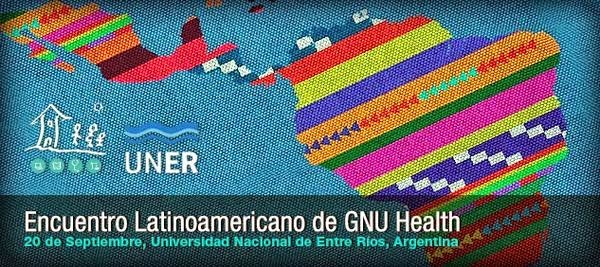
Sábado 20 de Septiembre, Comienza 9:00 hs – Facultad de Ingeniería – Universidad Nacional de Entre Ríos
Ruta 11 Km 10 – Oro Verde 
Organizan:
Proyecto de Extensión “Tecnología para la administración de la atención de la salud”
Cátedra de Salud Pública (FI-UNER)
GNU Solidario
Datos para la inscripción y certificados de asistencia.
Actividad libre y gratuita. Hay que inscribirse previamente

GNU Health version 2.6 released

Tags

, , , , , , , , , , , , , , , ,

Dear GNU Health community

After 6 months of work, we are very happy to announce GNU Health 2.6 series. This version improves the navigation, security and data integrity (health_crypto) and audit. It has also been designed to be used in distributed environments, such a network of public hospitals in a province or country.

Here is a partial list of the new features :

* Tryton 3.2 compatibility
* Universal Person Unique Identifier (PUID)
* Additional / alternative identification codes are now stored in
  the person (party) model.
* Crypto module (Document Digest, validation, digital
  signing/verification )
* Crypto tryton plugin (included in the backend directory of the
  tarball)
* Revision of models for Distributed deployments
* Health Archives module
* New Institution model
* Revised health specialties and disease groups
* Remove extra submenus, for usability.
* Revised medication model
* Improved Obstetrics module (eg, automatic obstetric GPA calculation)
* New shortcuts from the Patient and Institution Model.
* Improved Genetics module
* Revised Neonatolgy functionality. Newborn is assigned a PUID at birth
* New directory for custom modules
* Centralized Authentication / LDAP integration
* Audit trails from the client (thanks Tryton 3.2)
* Improved installation script (covers GNU/Linux distros and FreeBSD)
* Of course, upgrade path is included.

There are many other improvements and bug fixes that have not been included in this summary document. You can read the Changelog for a detailed description of all the activity.

** Installation :
—————-
If you are installing GNU Health as the first time, follow the instructions in https://en.wikibooks.org/wiki/GNU_Health/Installation

Note : The gnuhealth_install script tries to do a local installation, including the required Python packages. This version updates the python packages to one of the latest stable releases. If you are coming from a dedicated server for GNU Health, and used the official installation script, you should be OK. If you installed packages in a system-wide manner, then you would need to uninstall them before the update, otherwise the installation script won’t be able to upgrade them.

** Existing Installations : Upgrade procedure :
——————————

If you already have a GNU Health system in your health center, you should upgrade it to 2.6.0 . As always, the upgrade path is included in GNU Health.  The upgrade for version 2.6.0 is straight forward :

Follow the Upgrade Instructions in the Wikibook
https://en.wikibooks.org/wiki/GNU_Health/Upgrade

** Official Languages.
———————–
GNU Health now includes English, Chinese, French, Greek, Italian, Portuguese and  Spanish, as the official languages. The language packs of the official languages are included in the GNU Health package, with all the modules, so there is no need to download.

There are over 85 GNU Health language teams in Transifex. If you are a language maintainer and want to include your language for the next stable release, please send us a mail to health@gnusolidario.org .

Thanks !
——–

 A big thank you to my colleagues from GNU Health community; GNU Solidario; Thymbra and Tryton, and to the Free Software movement.

Enjoy the new version and report any bug / issues / improvements to
health@gnu.org !

PS: In the coming days we’ll be updating the Wikibook, so it reflects the new features of this version

Best,


Luis Falcon
GNU Health : Freedom and Equity in Healthcare
http://health.gnu.org
@gnuhealth

A new day has come: Occhiolino, the GNU LIMS

Tags

, , , , , ,

A time of digital convergence and market concentration is one of haste and efficiency, but also one of opportunities…if you dare to innovate. For GNU Solidario, the challenge was called “Occhiolino GNU LIMS”. This Laboratory Management Software is meant to partner GNU Health as leading solutions based on the Tryton framework.

GNU LIMS aims at providing excellence and adaptability to its users. Licensed under the terms of GPL v3+, this system is also community based. As well, the system will have two vital qualities every fruitful and visionary platform ought to possess nowadays: modularity and scalability. Since it is meant for a wide variety of sectors—such as healthcare, food and water, pharmaceuticals, and bio-labs, among others—Occhiolino must be modular, multi-language, highly (and easily) scalable and versatile. It also has to fit the most rigorous international standards.
Some of its functionalities are:


Features • Free: Licensed under GPL v3+
• Community Based: A project for the community, by the community.
• Modular: It will fit different sectors (health, water, food, …)
• Scalable: It should fit both small and large institutions.
• Standard based
• Multi-language

Funcionality • Sample management
• Lab equipment integration
• Workflows
• Suppliers and Supply Chain Management
• Accounting
• Stock Management
• Purchase Management
• Sales Management

To innovate, one must also bestow a significant amount of faith upon a project. This is what the organization CIATI A.C., pioneers in the use of GNU LIMS, did in Argentina. This enterprise provides technical services to food and agriculture industries, through its own laboratories and pilot plants.

Favio Dutria, responsible for the IT Department, explained: “To be part of the development of Occhiolino and generate the first LIMS that is integrated with and ERP and is also free software, that is what drove us to take challenge, because we believe this could benefit not only CIATI, but also all emerging communities that will function much better through this development”.

He added: 

“Free Software philosophy will enable companies, such as CIATI, to constantly grow, while sharing knowledge in a community-based way, which will guarantee a constant evolution of the product. For all this is that we thank the team at Thymbra, for giving us the security and confidence in betting on this project.”


Do not miss the opportunity to see all about it during the upcoming IWEEE!

Here is an amuse-bouche:

GNU Lims’ Official Site

GNU Lims on Twitter