
Dear GNU Health community
After 6 months of work, we are very happy to announce GNU Health 2.6 series. This version improves the navigation, security and data integrity (health_crypto) and audit. It has also been designed to be used in distributed environments, such a network of public hospitals in a province or country.
Here is a partial list of the new features :
* Tryton 3.2 compatibility
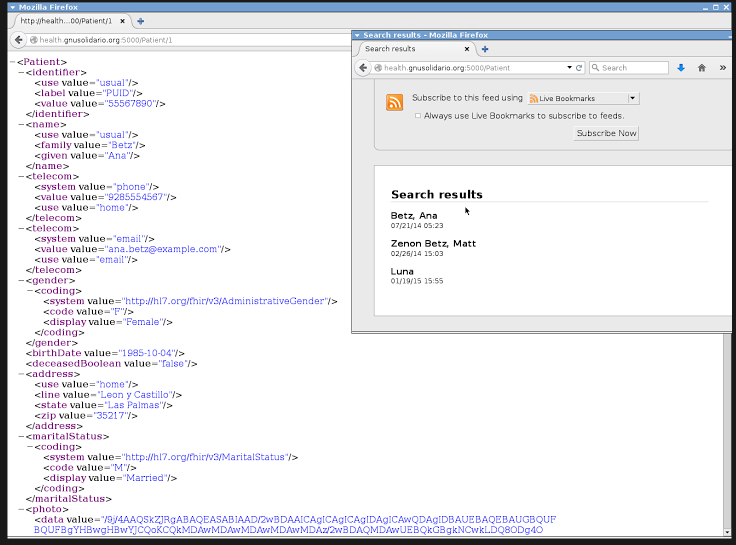
* Universal Person Unique Identifier (PUID)
* Additional / alternative identification codes are now stored in
the person (party) model.
* Crypto module (Document Digest, validation, digital
signing/verification )
* Crypto tryton plugin (included in the backend directory of the
tarball)
* Revision of models for Distributed deployments
* Health Archives module
* New Institution model
* Revised health specialties and disease groups
* Remove extra submenus, for usability.
* Revised medication model
* Improved Obstetrics module (eg, automatic obstetric GPA calculation)
* New shortcuts from the Patient and Institution Model.
* Improved Genetics module
* Revised Neonatolgy functionality. Newborn is assigned a PUID at birth
* New directory for custom modules
* Centralized Authentication / LDAP integration
* Audit trails from the client (thanks Tryton 3.2)
* Improved installation script (covers GNU/Linux distros and FreeBSD)
* Of course, upgrade path is included.
There are many other improvements and bug fixes that have not been included in this summary document. You can read the Changelog for a detailed description of all the activity.
** Installation :
—————-
If you are installing GNU Health as the first time, follow the instructions in https://en.wikibooks.org/wiki/GNU_Health/Installation
Note : The gnuhealth_install script tries to do a local installation, including the required Python packages. This version updates the python packages to one of the latest stable releases. If you are coming from a dedicated server for GNU Health, and used the official installation script, you should be OK. If you installed packages in a system-wide manner, then you would need to uninstall them before the update, otherwise the installation script won’t be able to upgrade them.
** Existing Installations : Upgrade procedure :
——————————
If you already have a GNU Health system in your health center, you should upgrade it to 2.6.0 . As always, the upgrade path is included in GNU Health. The upgrade for version 2.6.0 is straight forward :
Follow the Upgrade Instructions in the Wikibook
https://en.wikibooks.org/wiki/GNU_Health/Upgrade
** Official Languages.
———————–
GNU Health now includes English, Chinese, French, Greek, Italian, Portuguese and Spanish, as the official languages. The language packs of the official languages are included in the GNU Health package, with all the modules, so there is no need to download.
There are over 85 GNU Health language teams in Transifex. If you are a language maintainer and want to include your language for the next stable release, please send us a mail to health@gnusolidario.org .
Thanks !
——–
A big thank you to my colleagues from GNU Health community; GNU Solidario; Thymbra and Tryton, and to the Free Software movement.
Enjoy the new version and report any bug / issues / improvements to
health@gnu.org !
PS: In the coming days we’ll be updating the Wikibook, so it reflects the new features of this version
Best,
—
Luis Falcon
GNU Health : Freedom and Equity in Healthcare
http://health.gnu.org
@gnuhealth








 MeanMicio