• About Luis Falcon
  • Cookies & GDPR Privacy Policy

MeanMicio

~ Medicine. Open Science. Animal Rights.

MeanMicio

Category Archives: GNU Health

Tackling the Beast: Using GNU Health to help the fight against the COVID-19 pandemic

31 Tuesday Mar 2020

Posted by Luis Falcon in GNU Health, Public Health

≈ Comments Off on Tackling the Beast: Using GNU Health to help the fight against the COVID-19 pandemic

gnuhealth-covid-banner

Introduction

The world is facing one of the the biggest health, economic and social crisis. A minuscule, 50-nanometer in diameter structure is putting the most powerful world economies on their knees, and hundred of thousands are tragically succumbing to COVID-19.

This article is an invitation to governments to embrace GNU Health and Libre Software for the sake of their public healthcare system in the context of the COVID-19 pandemic.

For those of you who already use GNU Health, take this article as some sort of guideline to optimize your implementation and day-by-day usage. Even though it focuses on COVID-19 disease, most topics will apply to any GNU Health implementation.

People before patients: Demographics and health infrastructure

Information is power. Good quality and timely data is crucial to tackle the COVID-19 pandemic. GNU Health has been designed on Social medicine. That is, instead of dealing directly with patients, GNU Health works first on the main pillars of a society. As a result, the government will have better tools for health promotion and disease prevention. The government will be better prepared to fight this pandemic and future outbreaks.

Domiciliary Units : DU are houses, apartments and buildings where people live. GNU Health DU model stores the infrastructure, sanitary conditions as well as the people who is living at anytime at that dwelling, in realtime. This feature is key to track possible contacts of an infected individual. Moreover, the infrastructure, surface and number of rooms provides great information in terms of possible overcrowding conditions that would facilitate the spreading of the disease. Each domiciliary unit can be georeferenced, thanks to GNU Health link OpenStreetMap.


gnuhealth_domiciliary_unit_osm

Domiciliary Unit in GNU Health: conditions, members and its geolocation linked to OSM


Operational Areas: GNU Health can divide a country in administrative areas and sectors (provinces, cities, neighborhoods,..) composed by domiciliary units and health institutions. GNU health can do real-time epidemiological reporting based on these sectors. Understanding this concept is key for COVID-19 contention or mitigation programs, since it would be able to identify early outbreaks in new areas, or focus on sections of relevant incidence. Operational areas and sectors allow us to find correlations from many indicators (ethnicity, sex, age, income, education level, population density) in the COVID-19 incidence, prevalence, susceptibility of infection or disease progression.

Health institutions: GNU Health can keep track and manage health institutions across the country. Human resources, financial and stock management, pharmacies and laboratories. In the context of the COVID-19 pandemic, you can do reporting on occupation levels of those institutions, number of beds, operating rooms, devices such as ventilators, number of health professionals and their specialties, the incidence, prevalence and mortality per institution, average time of hospitalization, and many other studies. Of course, you need to have the institutions set up.
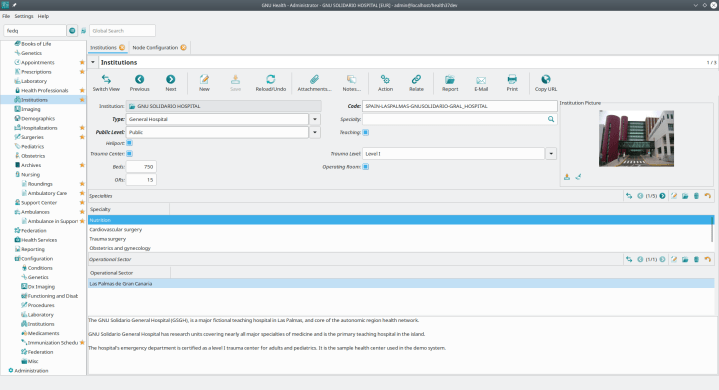
gnuehalth_institution

GNU Health institution model

Health professionals : In crises such the COVID-19, GNU Health allows the Ministry of health to know each health professional, their specialties, the health institution where they work and where are they located (operational sectors). Time is precious and keeping updated information of the professionals will allow rapid assignment.

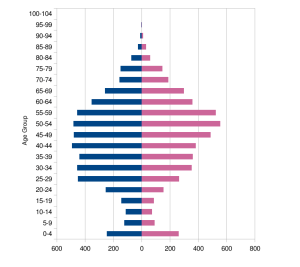
Person Demographics: Age, address and domiciliary units, work and insurance. Make sure this information is stored. Age is a factor on this epidemics, as COVID-19 is particularly pernicious with the elderly population. The profession of the person is also important. For instance, health professionals are highest infected group. Demographics will also help to identify people without health coverage, unemployed, homeless and other underprivileged groups that are particularly vulnerable.

GH population pyramid sample
GH eval. dx report extract


Person contacts: For each person, GNU Health keeps record of their contacts and their relations (work, classmates, friends, classmates). In the scenario of a positive case for COVID-19, this information would allow to call the patient close contacts. It is key to have this information updated. Remember to fill in all possible contact mechanisms for each person (email, mobile phone, Telegram, …). Tracking and getting in touch with the person close contacts is vital.

Person Universal ID: This is one key feature of GNU Health, specially in the context of the GNU Health Federation. The person Unique ID (Federation Account) would be valid not only for the region or country, but across the world. The clinical information could be available and updated in any health institution across the country or region, immediately available for the rest.

Screening

The World Health Organization (WHO) keeps saying “test,test,test” the population. The earlier we test the population, the better we can control the spread of the disease in the community. Special population groups, such as health professionals, the elderly or those with existing health conditions should have priority.

There are rapid, point-of-care tests available in many countries that can deliver the results in less than 30 minutes. Some of them around 10 minutes. In GNU Health, you can use the SARS-CoV-2 antibodies lab test type.

GNU Health workstations can be deployed at the mobile test stations, and send the information in real-time to the Ministry of Health, with the result, signed and validated.

SARS-CoV-2 antibodies lab request
GNU Health report SARS-CoV-2 result
gnuhealth-lab-test-sars-cov-2-igm-result-screen

If the person has tested positive for IgM antibodies, it means she is in the early stage of the infection. IgG antibodies build up later in the infection and are part of the “immunological memory”. If IgM is positive, you must update the health conditions, include the following ICD10 code and activate the COVID-19 protocol for patient isolation and contact tracking.

The ICD10 code for COVID-19 is U07.1

U07.1 : 2019-nCoV acute respiratory disease COVID-19 : In GNU Health, the U07.1 condition (COVID-19) belongs to the infectious, respiratory and notifiable disease groups.

Indicate the lab test type and order in the related condition.

gnuhealth_patient_screen

GNU Health patient screen sample, including critical information related to COVID-19 disease

Clinical Management

If the patient is tested positive but is asymptomatic or mild clinical, the patient might be sent home for home care. Please verify at that moment if the Domiciliary Unit meets the requirements (ventilation, number of rooms, number of people in the house, … ).

If the person has tested positive and/or presents signs to warrant her hospitalization, admit her to the health facility and assign her a bed in the appropriate ward. A new inpatient record will be created, with the corresponding in charge physician, treatment and nutrition plan. When admitting a patient suffering from COVID-19 is important to enter its code (U07.1 : 2019-nCoV acute respiratory disease COVID-19) as the reason of admission and discharge. This will be very valuable for statistics.

Medical History: The patient medical history is ready in GNU Health, from all the patient evaluations in the different health institutions. In the context of the COVID-19, this information is key, especially for people with chronic health conditions, such as cardiovascular disease or diabetes. The current and past medication is also stored in GNU Health, as well as surgeries.

Roundings: For each rounding, enter the vital signs, the medication provided,  assess the environment and the “Six P’s” and record all the procedures done in the rounding itself.  In addition, if the patient is on Intensive Care Unit (“ICU” tab), record relevant information on nervous, respiratory, cardiovascular, urinary and digestive systems, as well as any signs of infection.

The vital signs can be taken in different contexts. They can be assessed in an outpatient evaluation, inpatient nurse rounding or ICU setting.

Intensive Care Unit: If the disease progression is life threatening, the patient will be admitted to the Intensive Care Unit. GNU Health has an Intensive Care Unit module. After recording the main information of the rounding, move to the “ICU” tab for a detailed assessment of the patient in this unit. Scores such as Glasgow Coma Scale and Apache II are available.   For each ICU rounding the health professional should record both the basic information as well as a detailed RoS. GNU Health allows to enter ECG information and the copy of the ECG strip per rounding, if needed.

A percentage of hospitalized patients by COVID-19 will need mechanical ventilation. GNU Health records the type and duration of the intubation, per patient on each institution. This information is very valuable for both clinical management as well as for statistics. Most countries are facing today is the shortage of mechanical ventilators. GNU Health permits to know the incidence of hospitalizations due to COVID-19, as well as the discharge rate.

Medical Imaging and Laboratory tests

Radiological findings of many COVID-19 patients are compatible with atypical pneumonia. Streaky opacities, specially at the bases are common findings. Many people with mild disease won’t show any radiological signs.

GNU Health provides different types of Dx tests. Images and observations are recorded in the system and linked to the patient history. In addition to the standard GNU health radiology package, the Intensive Care module also permits to add Xray images on each rounding to evaluate and compare the disease progression.

For large images and studies, such MRI or CT scans, we highly recommend the GNU Health Orthanc package. Orthanc is a fantastic Libre DICOM server and GNU Health can interoperate with it, thanks to the magic of the Free Software philosophy.
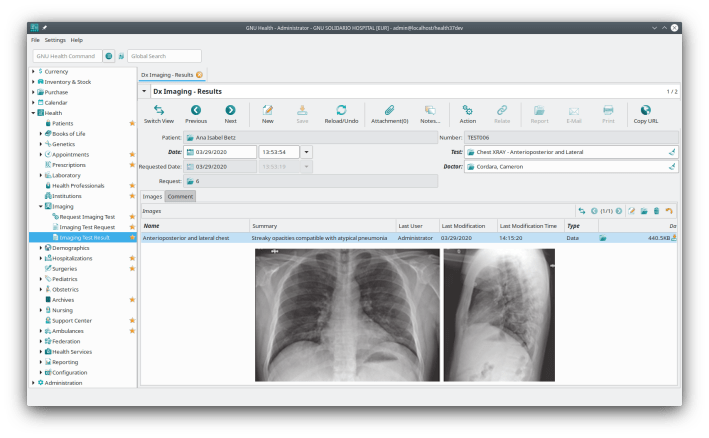
gnuhealth-dx-imaging-atypical_pneumonia_covid19

GNU Health radiology. Findings compatible with atypical pneumonia in a COVID-19 patient

In addition to the standard lab test types (CBC, renal and liver function …..), there are markers that can predict COVID-19 progression and severity. For instance, high ferritin levels, low platelet number and a high ESR are common in patients who develop severe disease and the cytokine storm syndrome.
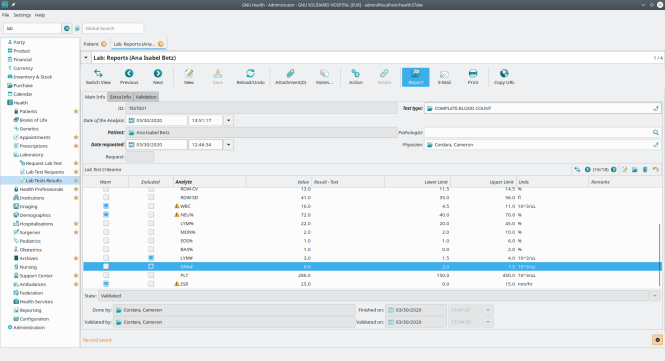
CBC-lab-test

GNU Health LIMS showing a Complete Blood Count sample

All the lab test results can be exported to different formats. In the context of the GNU Health Federation a new POL (Page of Life) is created and the information can be exchanged directly in JSON format. The following pictures show the same lab test report in PDF and JSON format from the GNU Health Federation message server (“Thalamus”)

GNU Health generated CBC Lab test report in pdf
Lab test JSON format from the GNU Health Federation


In addition to the tests done in hospitalized patients, remember that GNU Health LIMS package can be used in diagnostic and population screening, as in the case of PCR and rapid tests.

Death Certificates

The death certificate is a key document, since it has legal, administrative, demographic and epidemiological significance.

The following is an example of how we could use the GNU Health Vital Record System to generate a death certificate associated to the COVID-19 disease.
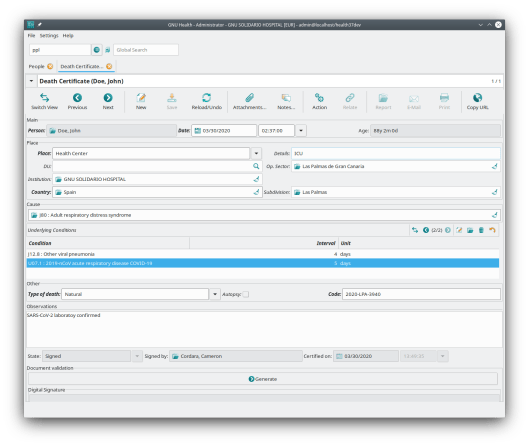
gnuhealth_covid_death_certificate

Person Death certificate related to COVID-19 disease

Digitally signing the digital certificate with the health professional and/or civil officer will make it a legal document. GNU Health uses GNUPG (GNU Privacy Guard) to digitally sign and encrypt documents.
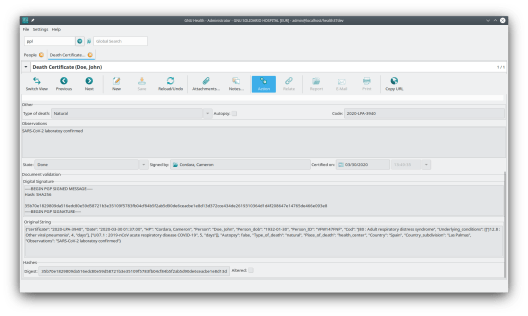
death-certificate_digital_signature

Digital signature section of the death certificate

Research

Although the respiratory system is the most affected in patients with COVID-19, other organs can be impacted. The ACE2 receptor (cell’s entry point for SARS-CoV-2) is expressed in other tissues in addition than lungs, such colon and heart. Not surprisingly, gastrointestinal symptoms and cardiac involvement, as acute myocarditis, have been reported. Recording all findings will help to improve the management of the disease of the patient, but also to share information with colleagues from the scientific community.

Sharing the patient treatments and individual outcomes will help speed up clinical trials and response to possible therapeutic agents (eg, remdesivir, lopinavir/ritonavir, hydroxychloroquine, tocilizumab…)
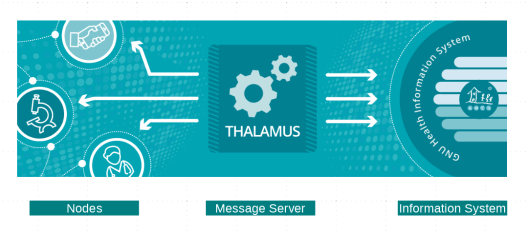
gnuhealth_federation_components

The GNU Health Federation connects thousands of nodes from health and research institutions

To be able to achieve such breakthroughs in science and in our society, we need our politicians and governments to embrace open science, open data and Libre software.

A call for Open Science, Open Data and Libre Software

The current COVID-19 pandemic is a terrible tragedy for human kind, but opens an opportunity to cooperation, to join forces and to our innate resilience.There are many gray areas and many uncertainties in the origin of the virus, disease progression and therapeutic approaches. On the other hand, the GNU Health Federation allows the scientific community to come together and tackle this beast. We can securely  share huge, anonymized amount of information from all over the world to find not only the molecular basis of the COVID-19 disease, but environmental and social factors that impact on the susceptibility and disease progression.

I am returning from Japan, where I was invited to give a lecture at Kyoto university Medical Innovation Center (MIC). It was an honor to share ideas with students and professionals from a leading institution on molecular biology and biomedicine. Although I talked about GNU Health in cancer research, my presentation focused on the importance of Libre Health informatics, open science, open data in Public Health. It was surprisingly exciting the great level of engagement of the audience in these topics.

A robust, sustainable public health infrastructure must be based in cooperation. Cooperation involves open knowledge and open science. I am convinced that true evolution comes from cooperation, and not from competition. In this sense, we as members of the scientific community should share our work, whether is a computer program source code, the discovery of a protein natural variant or the development of a new therapeutic molecule.

GNU Health uses the GPL license (General Public License), which permits downloading the program, study the source code, adapt it to your center needs and share it with the community.

Keep in mind that libre software not only provides collective freedom, but is the only way to achieve privacy in healthcare. Proprietary, non-libre programs are blackboxes that jeopardize both personal privacy and public health information. In addition to that, using proprietary software in Public Health is an obscene contradiction.

To accomplish collective freedom, every single component must be Free/Libre. That is, the operating systems (both for servers and clients) as well as the applications around. We will need to share information among colleagues around the world, so the format that we use in the corresponding files should also be open.

In the meantime, stay safe. Stay home !
 

GNU HEALTH HMIS 3.6 series released

11 Monday Nov 2019

Posted by Luis Falcon in GNU Health, HMIS

≈ Comments Off on GNU HEALTH HMIS 3.6 series released

gnu-health-3.6-II

Dear community:

I am very proud to announce the release of the GNU Health 3.6 series !

This version is the result of many developments and integration of ideas from the community.

We are now 11 years old. We should all be very proud because not only we have built the best Libre Health and Hospital Information System, but we have created a strong, committed and friendly international community around it.
What is new in GNU Health 3.6 series

  • Both GNU Health client and server are now in Python3
  • Remove Python2 support
  • GH HMIS server uses Tryton 5.0 LTS kernel (5 year support)
  • Client is based on Tryton GTK client 5.2
  • Automation on the GH Federation queue management
  • Integration to Orthanc DICOM server
  • Pages of Life models fully integrated with patient evaluation & GH Federation
  • GNU Health camera plugin integrated with the latest OpenCV
  • GH Client uses GI. Removed pygtkcompat.
  • GH Federation HIS has been migrated from MongoDB to PostgreSQL
  • New demo database downloader
  • Thalamus uses now uwsgi as the default WSGI
  • SSL is the default method for Thalamus and the GH Federation

Upgrading from GNU Health 3.4

  • Make a FULL BACKUP your kernel, database and attach directories !!!
  • Follow the instructions on the Wikibooks
  • Read specific instructions found under scripts/upgrade/3.6 of the main source installation tarball, an apply the scripts in the specified order.

Development focus

In addition of the GH HMIS server, we will focus the development in the following areas of the GNU Health ecosystem:

  • The GNU Health Federation Portal
  • The mobile client
  • Interoperability

The GH Federation Portal has already started. It is a VueJS application and provides a single point of entry for individuals, health professionals and epidemiologists to the GNU Health Information system.

The GNU Health Federation now receives information coming from many health institutions and people from a region or country. The GH Federation portal will allow to manage resources, as well as the main point for analytics and reporting of massive amount of demographics health data generated nationwide. People, health centers and research institutions (e.g. genomics) already can enjoy the benefits from the GNU Health Federation.

The mobile client (MyGNUHealth) development will remain in QT and will be focus on KDE plasma mobile technology, and run in Libre mobile operating systems and devices (such as Pine64). We need fully libre mobile devices if we want to preserve privacy in healthcare.

As far as Interoperability goes, GNU Health is now very interoperable. It uses open coding standards, as well as open formats (XML, JSON, .. ) to exchange messages. We currently have support for read operations in HL7 FHIR for a number of resources. Needless to say, we are open to other open standard communities that are willing to integrate to GNU Health.

Last but not least….no matter how hard we try to avoid them, there will be bugs, so please test the new system, upgrade process, languages, and give us your feedback via them via health@gnu.org

Happy and Healthy Hacking !

—
Dr. Luis Falcon, M.D.
President, GNU Solidario
GNU Health: Freedom and Equity in Healthcare
https://www.gnuhealth.org
GNUPG Fingerprint :ACBF C80F C891 631C 68AA 8DC8 C015 E1AE 0098 9199

GNU Health: 10 years of Freedom and Equity in Healthcare

16 Wednesday Oct 2019

Posted by Luis Falcon in GNU Health, Public Health

≈ Comments Off on GNU Health: 10 years of Freedom and Equity in Healthcare

Update: Last year (May 2018), the FSF asked me to write a post about GNU Health. Finally, here it is !


May 2018

social_medicine

Health is a non-negotiable human right. Access to quality healthcare must be public and universal.

I am back from my trip to India, where I spent a week with the team of All India Institute of Medical Sciences – AIIMS –, the largest public hospital in Asia and a leading research institution. They have taken the decision to adopt GNU Health, the Free Hospital and Health Information System.

One key aspect in Free Software is ownership. From the moment they adopted GNU Health, it now also belongs to AIIMS. They have full control over it. They can download and upgrade the system; access the source code; customize it to fit their needs; and contribute back to the community. This is the definition of Free Software.

The definition of Free Software is universal. GNU Health is equally valid for very large institutions, national public health networks and small, rural or primary care centers. The essence is the same.

GNU Health as a social movement: GNU Health is a social project with technology behind. It’s about Social Medicine and delivering universal healthcare. It’s about social activism. One of the main reasons that led me to create GNU Health were the tremendous inequalities in access to healthcare. Over 20000 children die every day from preventable, social diseases. To name a few : malnutrition, contaminated water, child slavery, prostitution, war, malaria, HIV-AIDS, tuberculosis, dengue and other neglected tropical diseases. These are causes and/or results of social diseases, conditions that have a higher impact and higher prevalence on the poor and the underprivileged.

Studying and getting a deeper understanding on the living conditions of people in rural areas and in urban ghettos around the world, reinforced my intention to write a system that included the socio-economic determinants of health and disease. Most of the time, health (and the lack of) is determined by the environment, and biology plays a lesser role. Proper nutrition, housing, sanitation, access to education and to primary healthcare are key for the dignity, development and health of the individual, family and society at large. I like to summarize it as “people before patients”.

sArea=111111111

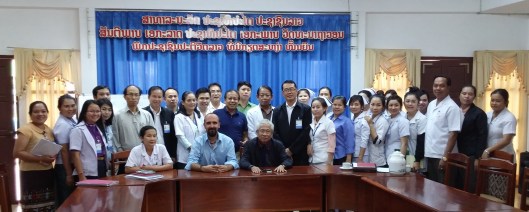
GNU Health implementation at Laos CMR Public Health hospital (CC BY-SA 4.0 GNU Solidario )

Nature and Nurture: Having Social Medicine on its DNA does not stop GNU Health from also working on the molecular basis of health and disease, precision medicine, bioinformatics and genetics. For instance, we incorporate state-of-the-art information from Unitprot containing thousands of gene natural variants involved in human disease. The bio-psycho-social GNU Health approach makes personalized medicine possible, and it builds the bridge between the clinician and the research institution, to better understand and fight multifactorial conditions such as Alzheimer’s disease or cancer. Both nature and nurture are present in GNU Health.

gnuhealth_new_banner_dna_adn

GNU Health – Freedom and Equity in Healthcare

Trans-disciplinary team: GNU Health works at different levels. Social workers doing prevention in the field; health professionals taking care of the patients; Administrative team dealing with stock, human resources, finances and other internal health institution processes; and the ministry of health improving health campaigns based on the collected data. All these processes and tasks are interconnected, and the result of others.

The fight for Public Health System: I am observing how many countries are dismantling the Public Health system in favor of private corporations. This is not only sad, it is a crime. The only way we can guarantee proper and universal health care is by maintaining the Public Health system. Privatization of the public healthcare is evil, creates a health system for the rich, and excludes the underprivileged that can not afford insurance costs. Let me be very clear: healthcare is just a business for the corporation. Dr. René Favaloro said “Medicine without humanism is unworthy of being practiced”. I am not against the small private doctor office, that is complementary to the public health system. I am condemning the destruction of the current public health system, and putting it on the hands of large corporations that only care about money.

IMGP3399.jpg

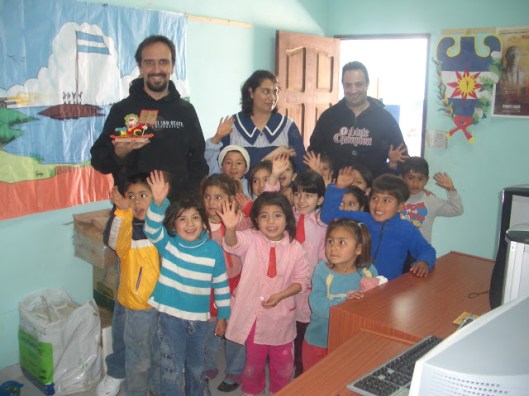
GNU Solidario first project. Santiago del Estero 2006 . (CC BY-SA 4.0 Luis Falcon)

Public Health is a public good, so, as a result, anything related to public health should also be public. It is a contradiction to have proprietary software running in the public health system. Not only is contradictory and unethical, it poses many dangers to privacy and security of the individual health information. Private software is a black box. We don’t know what happens when a medical evaluation is recorded. Where else does this data go? Who can access it ? We simply don’t know, because we can not see the code behind the action.

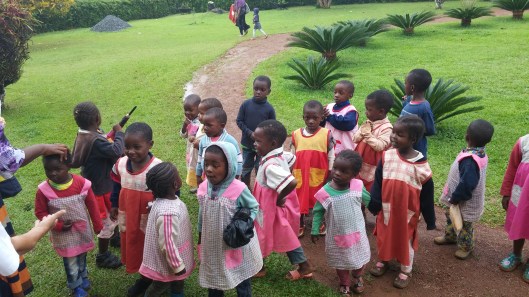
Niños de una escuela de Camerún

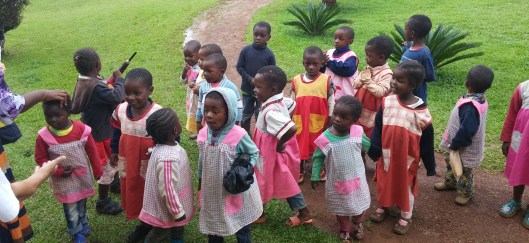
Children in a Cameroon rural school (2018 CC BY-SA 4.0 Luis Falcon)

Collective Freedom and ethical software: Free software is a philosophy based on community, cooperation and solidarity. We all benefit from the work, effort and talent of others. GNU Health uses many Free Software (operating systems, programming languages, database engines, encryption libraries, etc.). Moreover, GNU Health is today the result of the contribution of many people and institutions. We must be grateful to the community, and make sure that nobody breaks the evolution chain. This is where the concept I call “collective freedom” comes into play. People or companies that take the work of others, and purposely make it non-free are breaking the chain of evolution. They have taken advantage of the good will from the community to lock-in them in. Purposely obfuscating the code, not providing upgrade scripts, hiding documentation are ways violating the “collective freedom” and making a system non-ethical. That is one of the reasons we differentiate between Free Software philosophy, which is ethical by definition, from “Open Source”, that has a more pragmatic approach to programming. Richard Stallman wrote an article “When Free Software depends on nonfree” (https://www.gnu.org/philosophy/when-free-depends-on-nonfree) , related to this concept. For Spanish speakers, you can read my article “El Software Libre no se Mancha” (http://www.rebelion.org/noticia.php?id=233717 ), also related to this concept of Collective Freedom.

Ten years of Freedom and Equity in Healthcare: During this 10-year period, we have seen GNU Health adopted in many different scenarios: Primary care centers and academic institutions in Argentina; in the tropical rainforest of Cameroon; Infectious diseases laboratory in Gabon; the eHealth system in Jamaica Ministry of Public Health; The Center for Physical Rehabilitation in Laos taking care of UXO victims; Red Cross hospitals in Mexico or the largest public hospital in India and Asia. They are all different contexts and peculiarities, yet they all share the same spirit, that is, delivering Freedom and Equity in healthcare to the people.

IMG_3505.JPG

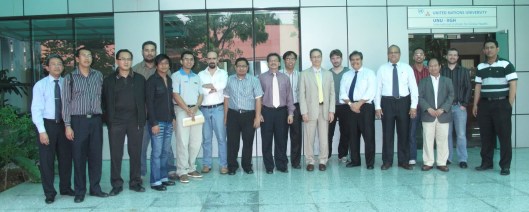
GNU Health at the United Nations – International Institute for Global Health

Let’s celebrate this 10 years of GNU Health, a social movement with technology behind. Let’s keep on fighting for health to be a non-negotiable human right.


Reconocimiento OpenAwards 2019 en Medicina y Ciencia

20 Thursday Jun 2019

Posted by Luis Falcon in GNU Health

≈ Comments Off on Reconocimiento OpenAwards 2019 en Medicina y Ciencia

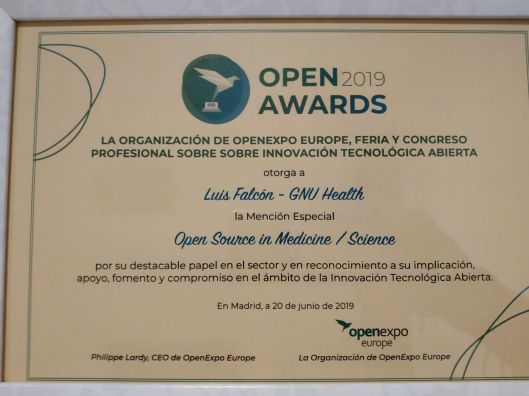
Hoy me siento honrado con este importante reconocimiento en OpenExpo 2019 , el mismo Día mundial de Refugiado .Se lo dedico a ellos y a los profesionales de la Sanidad Pública, que día tras día defienden la Salud como un derecho humano no negociable. Seguiremos trabajando por GNU Health y por llevar dignidad y salud alrededor del mundo.
Openaward 2019a Luis Falcon en Medicina y Ciencia


40.416775 -3.703790

My trip to Haiti, the land of the free and the brave

12 Friday Apr 2019

Posted by Luis Falcon in GNU Health, GNU solidario

≈ Comments Off on My trip to Haiti, the land of the free and the brave

I am coming back from my trip to Haiti.
I was invited by our GNU Health representative in Haiti, Augustin Pierre Michel.
gnuhealth_shirt_haiti

Handmade GNU Health shirt from Haiti

Haiti is a country of  brave men and women who stand strong fighting for their dignity.
A friend of mine from Jamaica told me once to dig into the history of Haiti, and the importance it had  in the freedom of human kind.
I found particularly captivating the  article “Our debt to Haiti”, from Sir Hilary Beckles[1]. A passage from that article:

This is what happened exactly 200 years ago: Jamaica is bursting at the seams with 300,000 enslaved Africans. Haiti is the only true land of the free and the brave, having defeated in battle the enslavers of France, Britain, and Spain before becoming in 1804 the first free state in the western world.

President Jean-Jacques Dessalines, enshrined within the 1805 national constitution, the most humane and politically powerful provision: Any enslaved person of African descent who arrives on the shores of Haiti is automatically freed and a citizen of Haiti.

Quick digression.. After reading this article, I would love Mr. Jean-Jaques Dessalines to reincarnate and to sit down with all the politicians that want to build walls of shame, and give them a lesson of humanity and ethics.
Two hundred years afterwards, over 40 million women, men and children are victims of modern slavery[2]. The modern world has slavery, slave owners and  “human properties” . Just look at what is happening in the Mediterranean and how migrants are abused and raped in Libya concentration camps. Another way of slavering is how children are used in clothing factories in Bangladesh, that make billionaires in Europe. Appalling.
The Freedom passage
Going back to the history of Haiti …
The Freedom passage named the 170 miles that separated those 300,000 slaves from freedom. The distance between Jamaica and Haiti.
Thousands of women, men and children would risk their live to reach freedom. Similiar to those who do it daily trying to cross the Mediterranean sea in Europe or the Rio Grande in America.
GNU Health mission in Haiti
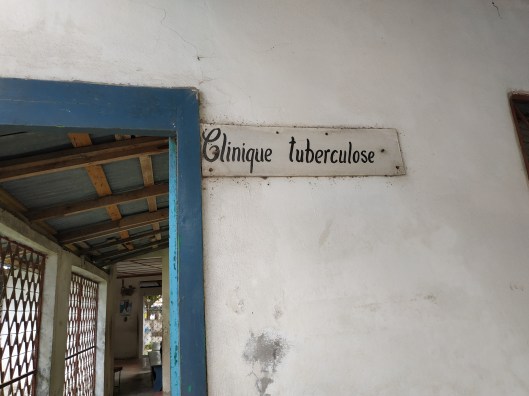
Back to Haiti… I stayed at Hopital Bon Samaritain (HBS) in the city of Limbé, where we shared time with the colleagues at the hospital. The health institution not only serves as the reference hospital in the region, but also, as a orphanage. The work they do in the areas of Social Medicine is amazing.
clinique-tuberculose-bon-samaritain-limbe-haiti

Tuberculosis clinic in Hopital Bon Samaritain (2019 CC BY-SA 4.0 Luis Falcon)

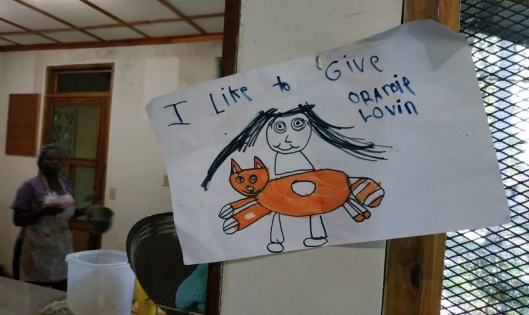
The kids at the HPS orphanage receive education, health and psychological support, as well as food and accommodation throughout the year. It was great sharing time, breakfast, lunch and dinner with them !
htal_bon_samaritain_limbe_haiti

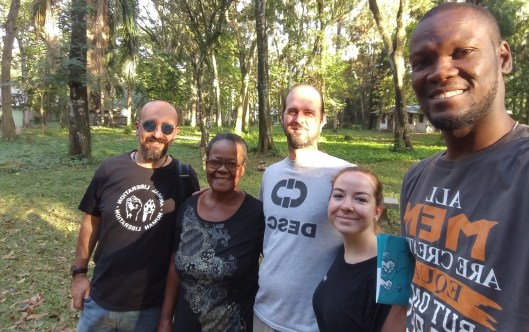
Michel and team from Bon Samaritain Hospital in Limbé, Haiti

like_to_give_lovin_orpahage_hbs_limbe

Drawing by child at HBS orphanage (2019 CC BY-SA 4.0 Luis Falcon)

We also got to visit other health institutions in the area interested in implementing GNU Health.
limbe_dentist
michel_luis-limbe-haiti-
The world can not turn its back on Haiti
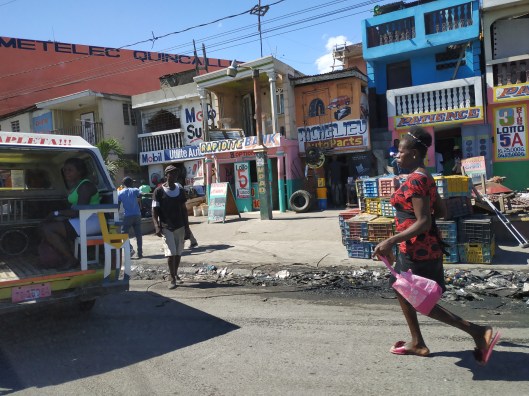
Yes. Today Haiti is a impoverish country with civil unrest, and the world is turning the back on Haiti. Haiti exists and we must cooperate with its brave men and women of to bring back dignity to that beautiful country.
lady-cape-haitien-1

Lady in Cape Haitian . (2019 CC BY-SA 4.0 Luis Falcon)

Since the moment I put a foot in Cape Haitien, I felt the warmth of their people. Their noble smile and their genuine gestures of hospitality from Michel, his mom and the rest of the Haitian colleagues.
Michel is an example of resilience. Not only he is a great computer engineer, but he represents commitment and congruence. He decided to stay in Haiti, and fight for the much needed freedom, prosperity and peace in his country.
michel-pierre-haiti1
michele-colleagues-haiti2
I am honored to have Michel Pierre as our GNU Health ambassador in Haiti, and looking forward to many implementations in the country. It has been an experience that I cannot describe with words. You must see for yourself to understand the situation in Haiti.
And yes, I agree with Sir Hilary Beckles, we, the rest of the World are in debt with Haiti. Is now our time to cooperate with our Haitians brothers and sisters, when they need us most.
References / Further reading:
1.- Our debt to Haiti: http://www.jamaicaobserver.com/columns/Our-debt-to-Haiti_77305
2.- Global Slavery Index: https://www.globalslaveryindex.org/2018/findings/global-findings/
18.971187 -72.285215

Del software libre a la medicina social: la propuesta de un doctor canario para humanizar la sanidad

10 Wednesday Apr 2019

Posted by Luis Falcon in GNU Health, GNU solidario, Public Health

≈ Comments Off on Del software libre a la medicina social: la propuesta de un doctor canario para humanizar la sanidad

Disfruté mucho la entrevista de Natalia Vargas en Canarias Ahora.

Hablamos de la situación de la salud pública en España, del impacto de los determinantes socioeconómicos en la salud de cada individuo y del rol del software libre en salud, entre otros temas.

Niños de una escuela de Camerún

La adopción de GNU Health en muchas instituciones de salud en el mundo nos permite ser optimistas para que la Salud Pública, y la administración pública en general, adopte el Software Libre como forma de empoderamiento y soberanía tecnológica.

Enlace al artículo:

Del software libre a la medicina social: la propuesta de un doctor canario para humanizar la sanidad

https://www.eldiario.es/canariasahora/sociedad/software-medicina-propuesta-canario-humanizar_0_885411773.html


AIIMS adopts GNU Health

01 Tuesday May 2018

Posted by Luis Falcon in GNU Health, GNU solidario, Public Health

≈ Comments Off on AIIMS adopts GNU Health

A new chapter in Public Health begins. The largest public hospital in Asia, and leading research institution has adopted GNU Health.
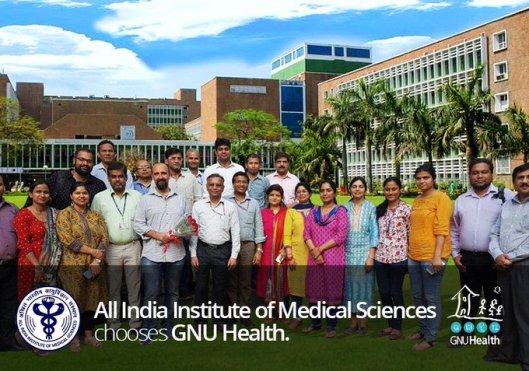
Group picture of AIIMS IT personnel and Luis Falcon
It has been a pleasure to meet in person the IT director Dr. Shariff and the rest of the team, that made me feel at home during my visit to the AIIMS in Delhi.
AIIMS is the largest public health institution in India and in all Asia.
During my stay, we had time to visit the facility, the infrastructure and give an initial training to the local team. The GNU Health implementation will be lead by them, and I am very happy to see that. Building local capacity is key for a large project like this.
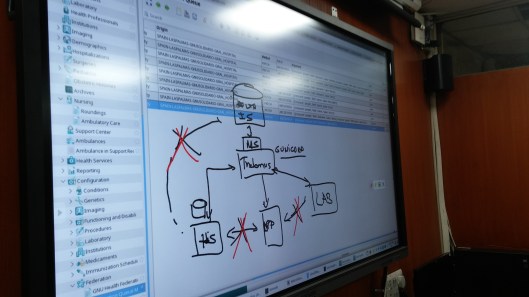
GNU Health Federation - HMIS node
Thank you All India Institute of Medical Sciences for choosing Freedom and equity in healthcare !
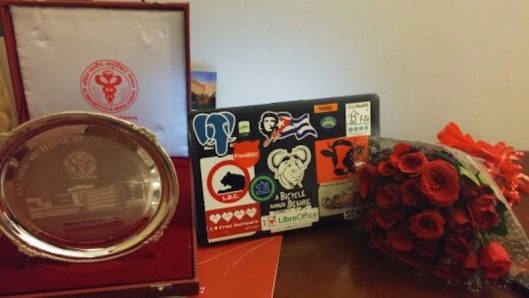
AIIMS-memento-luis_falcon
I will always remember Dr. Shariff email on Febraury 2018. That mail started all. Thank you, and your team, for choosing GNU Health. Thank you for your hospitality in India, for  making me feel at home during my stay, and for all the beautiful presents I will always keep.
aiims_presents_gnu_health
The world needs more Social Medicine, and AIIMS has given another huge step forward in that direction.  We wish AIIMS all the best and, for now, we  give you a warm welcome our international GH Community !
28.704059 77.102490

Sanidad del siglo XXI en el Camerún rural

07 Tuesday Nov 2017

Posted by Luis Falcon in GNU Health, GNU solidario, Public Health

≈ Comments Off on Sanidad del siglo XXI en el Camerún rural

Artículo interesante de El País – Planeta Futuro – que habla de la informatización de centros de salud de Camerún.

En este caso, hablamos del caso del centro de salud de Bikop, liderado por la Doctora Ana Gutierrez y del centro de salud en Kribi, gestionado por Insoláfrica.

gnuhealth_at_bikop

GNU Health es, ante todo,  un proyecto social y me enorgullece ser parte de estos proyectos y poder brindar equidad en salud en el corazón de África.

Artículo fuente:

https://elpais.com/elpais/2017/10/31/planeta_futuro/1509473092_530414.html

GNU Health : www.gnuhealth.org

Twitter : @gnuhealth

El Software Libre no se mancha

04 Saturday Nov 2017

Posted by Luis Falcon in GNU Health, Public Health

≈ Leave a comment

Tags

capitalismo, economía, Free Software Foundation, GNU Health, GNU solidario, justicia social, neoliberalismo, software libre


Existen dos tipos de miserables: las personas que sufren la miseria y aquellas que la generan.
La concentración del poder en el actual modelo socio-económico es tan injusta como insostenible. La privatización de la Salud Pública pervierte el derecho a una vida digna. La brecha social se profundiza, con ricos más ricos y pobres más pobres.
La codicia y el cortoplacismo del sistema están destruyendo la sociedad y el planeta. La contaminación medioambiental, la galopante deforestación y las granjas industriales son responsables del cambio climático que amenaza a las próximas generaciones.
Millones de animales son privados de su libertad y condenados al holocausto. Bebés arrancados del lecho materno destinados al matadero o encarcelados de por vida en mega granjas industriales en condiciones deplorables. Especismo y antropocentrismo inútil y despiadado, responsable de enfermedades cardiovasculares, cáncer, resistencia antibiótica y cambio climático.
Las corporaciones y sus gobiernos han encontrado herramientas formidables para el adoctrinamiento y vigilancia de masas. Similar a los medios de comunicación tradicionales, pero con métodos de control mucho más sofisticados que anestesian, hipnotizan y anulan el pensamiento crítico de los individuos.
Es imperativo retomar el control de nuestra libertad y dignidad, como individuos y como sociedad. La educación y el activismo social son clave para restaurarlos, y el Software Libre nos ofrece una magnífica vía para llevarlo a cabo.

El Software Libre representa lo contrario al modelo neoliberal. Entre sus fines está desarrollar comunidades, generar conocimiento y compartir recursos. Pero si queremos tener éxito, debemos afrontar y abrir un espacio para la discusión sobre las amenazas y riesgos existentes dentro y fuera de la comunidad.

En los últimos años hay un intento de desprestigiar el movimiento de Software Libre, principalmente por dos actores: La corporación del software propietario y núcleos de desarrolladores sin ética. Que la corporación y el software propietario intente dañar al Software Libre está dentro de lo esperado. Lo que requiere especial atención es el efecto deletéreo ocasionado por especuladores inescrupulosos infiltrados en la comunidad. El factor común de ambos actores es una lectura egoísta y retorcida de la libertad.
Según Richard Stallman, para que un proyecto sea Software Libre debe cumplir las cuatro libertades. Libertad para usar, estudiar, distribuir y mejorar el código. Estas “cuatro libertades” invitan a la colaboración y a construir comunidades alrededor del proyecto.
En el Software libre prevalece el sentido de libertad colectiva . La esfera colectiva tiene prioridad sobre la esfera individual. Por supuesto, el escenario ideal es que ambas libertades coexistan y se retroalimenten. Cuando la libertad individual coarta o anula la libertad colectiva, entonces no es Software Libre, aunque cumpla las cuatro libertades.

La laxitud del Software Libre está concebida para potenciar el espíritu comunitario y colaborativo. Desgraciadamente, esta flexibilidad ha permitido que se infiltren individuos y empresas miserables. Estos impostores tienen por objetivo engañar y apresar a la comunidad con sus malévolos cantos de sirena (Stallman lo denomina “Free bait” o “el anzuelo de lalibertad”).

Por ejemplo, hay quienes que, con nocturnidad y alevosía, sin previo aviso ni argumentos, se apropian, copian o bifurcan un proyecto de software libre activo. No han roto ninguna de las cuatro libertades, pero sus acciones los convierten en unos miserables que perjudican y traicionan a la comunidad.
A esos individuos les pido que mantengan sus sucias manos fuera de la comunidad, porque el Software Libre no se mancha.
La filosofía del Software Libre tiene mucho más de Libre que de Software. Cuando pensemos sobre Software Libre, pensemos en “Software que ofrece Libertad”. El software sólo es el medio para alcanzar la libertad.
En lo personal, adopté la filosofía del Software Libre como estudiante de ingeniería informática a principio de los años noventa. Actualmente, pasados veinticinco años, el Software Libre me ha permitido participar en muchos proyectos sociales y concretar principios de Medicina Social en instituciones de salud alrededor del mundo con el proyecto GNU Health.
Necesitamos avanzar, y para ello es fundamental que losgobiernos, organizaciones multilaterales y ONGs adopten el Software Libre. Las administraciones públicas que usan software privativo entran en una contradicción. Un bien público nuncapuede estar en manos privadas. Pidamos a los partidos políticos que incluyan el Software Libre en la administración pública, y podremos ver su compromiso social.
El Software Libre enseña, sana y hacepueblos soberanos. Permite generar un modelo económico sostenible, donde personas y empresas pueden colaborar con sus servicios, generando un medio digno y ético de vida. Hoy no hay ningún motivo para usar software privativo.
Cada línea de Software Libre codifica comunidad, democracia y dignidad. Codifica justicia social y un futuro mejor para las próximas generaciones y nuestro planeta.
Es tu elección.

GNU Health: enhance Calendar Funcionality

04 Sunday Jun 2017

Posted by Luis Falcon in GNU Health, HMIS

≈ Leave a comment

Tags

#publichealth, #socialmedicine, calendar module, ERP, freesoftware, gnu, GNU Health, HMIS, medical informatics, python, python3

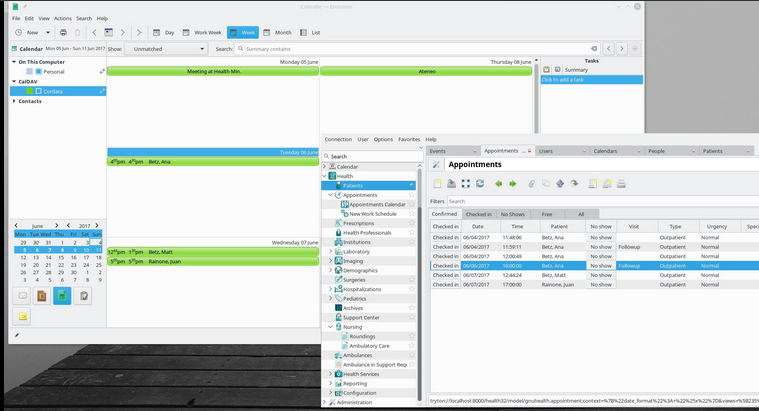
We’re working on the enhanced Calendar functionality on GNU Health 3.2 with Python 3 . Here are some Samples from Lightning and Evolution. Enjoy it !
← Older posts
Newer posts →

Recent Posts

  • El Software Libre se humilla ante Google
  • Gracias, India
  • Parallel and distributed computing in GNU Health
  • El cambio de horario es un atentado contra la salud. Rechazarlo es la mejor medicina
  • Tu finca, su infierno

Archives

  • March 2026
  • September 2025
  • May 2025
  • March 2025
  • February 2025
  • May 2024
  • July 2023
  • March 2023
  • February 2023
  • January 2023
  • October 2022
  • August 2022
  • April 2022
  • February 2022
  • September 2021
  • August 2021
  • July 2021
  • June 2021
  • March 2021
  • December 2020
  • September 2020
  • July 2020
  • May 2020
  • March 2020
  • February 2020
  • November 2019
  • October 2019
  • June 2019
  • April 2019
  • May 2018
  • November 2017
  • October 2017
  • June 2017
  • May 2017
  • April 2017
  • March 2017
  • February 2017
  • January 2017
  • December 2016
  • November 2016
  • October 2016
  • September 2016
  • August 2016
  • July 2016
  • June 2016
  • May 2016
  • April 2016
  • March 2016
  • February 2016
  • January 2016
  • November 2015
  • October 2015
  • September 2015
  • August 2015
  • July 2015
  • May 2015
  • March 2015
  • February 2015
  • January 2015
  • December 2014
  • October 2014
  • September 2014
  • July 2014
  • June 2014
  • May 2014
  • April 2014
  • March 2014
  • December 2013
  • November 2013
  • October 2013
  • September 2013
  • August 2013
  • July 2013
  • June 2013
  • May 2013
  • April 2013
  • March 2013
  • February 2013
  • January 2013
  • December 2012
  • November 2012
  • October 2012
  • September 2012
  • August 2012
  • July 2012
  • June 2012
  • May 2012
  • April 2012
  • March 2012
  • February 2012
  • January 2012
  • December 2011
  • November 2011
  • October 2011
  • September 2011
  • August 2011
  • July 2011
  • June 2011
  • May 2011
  • April 2011
  • March 2011
  • February 2011
  • January 2011
  • December 2010
  • November 2010
  • October 2010
  • September 2010
  • August 2010
  • July 2010
  • June 2010
  • May 2010
  • April 2010
  • March 2010
  • February 2010
  • January 2010
  • December 2009
  • November 2009
  • October 2009
  • September 2009
  • August 2009
  • July 2009
  • June 2009
  • May 2009
  • February 2009
  • November 2008
  • October 2008
  • September 2008
  • December 2007
  • October 2006

Categories

  • #FHIR
  • animal liberation
  • animal rights
  • embedded
  • events
  • gnu
  • GNU Health
  • GNU solidario
  • HMIS
  • KDE
  • Libre Software
  • LIMS
  • medical
  • MyGNUHealth
  • Public Health
  • thalamus
  • tryton
  • Uncategorized

Meta

  • Create account
  • Log in
  • Entries feed
  • Comments feed
  • WordPress.com

Blog at WordPress.com.

  • Subscribe Subscribed
    • MeanMicio
    • Already have a WordPress.com account? Log in now.
    • MeanMicio
    • Subscribe Subscribed
    • Sign up
    • Log in
    • Report this content
    • View site in Reader
    • Manage subscriptions
    • Collapse this bar
 

Loading Comments...
 

You must be logged in to post a comment.