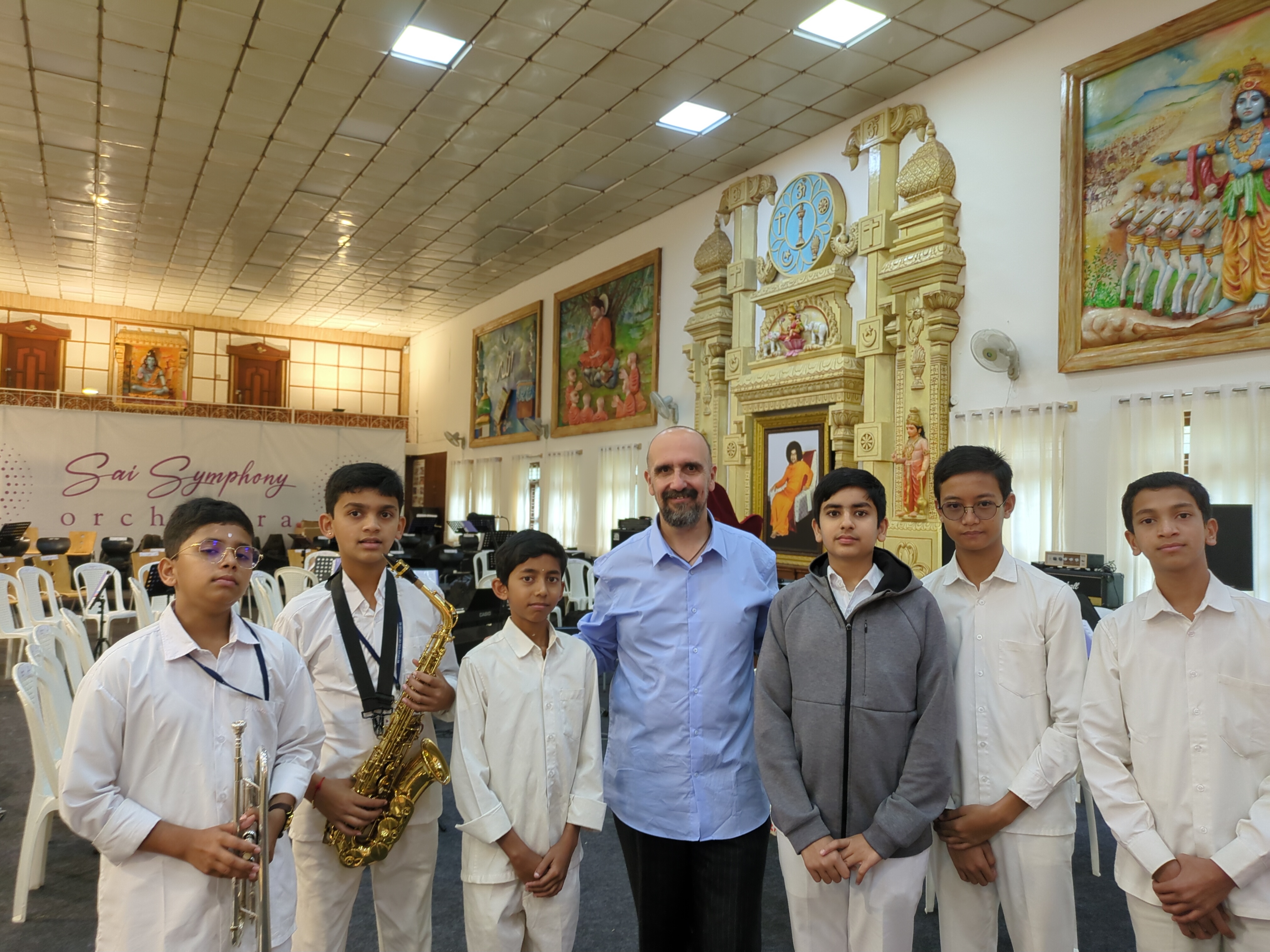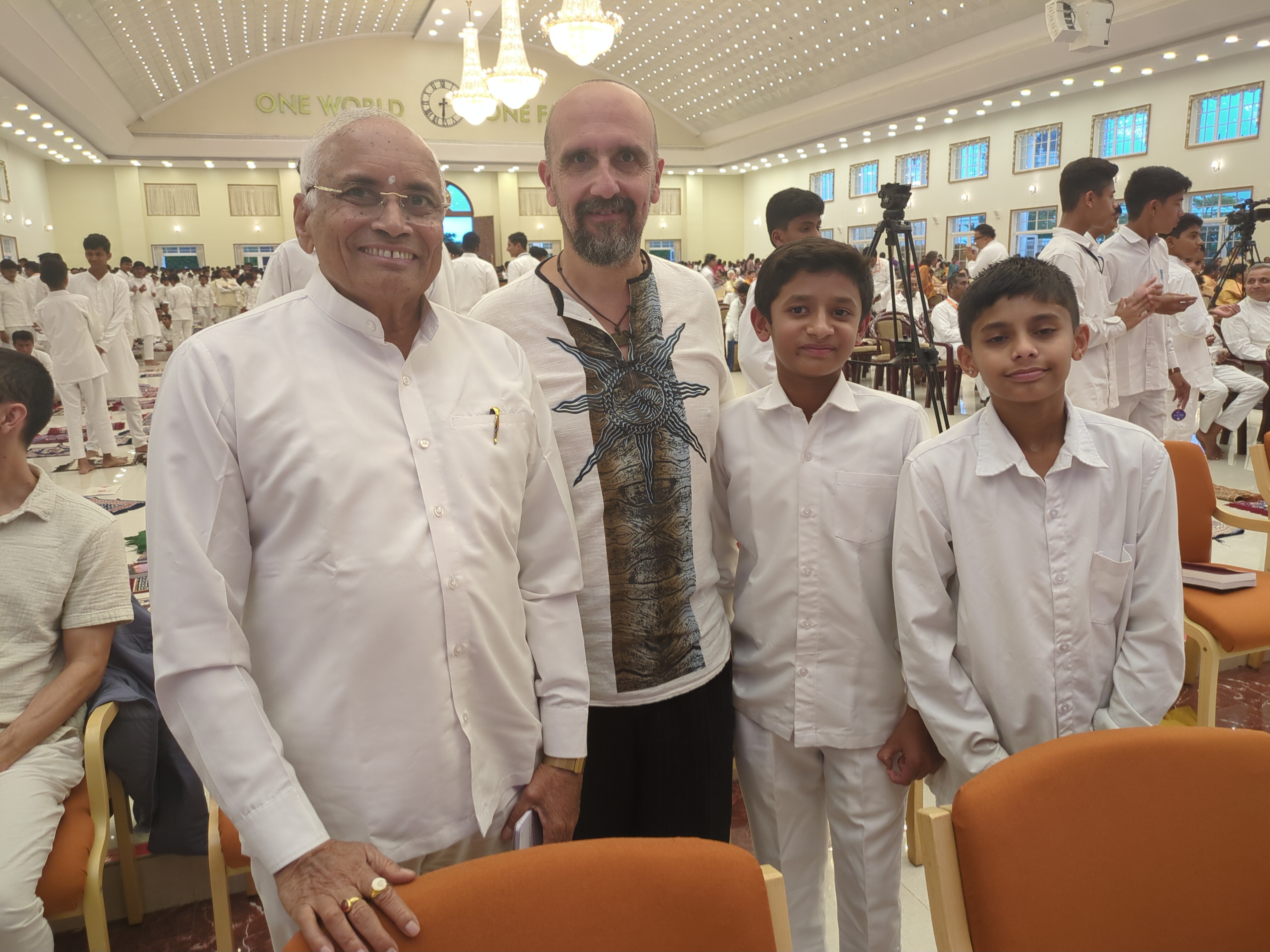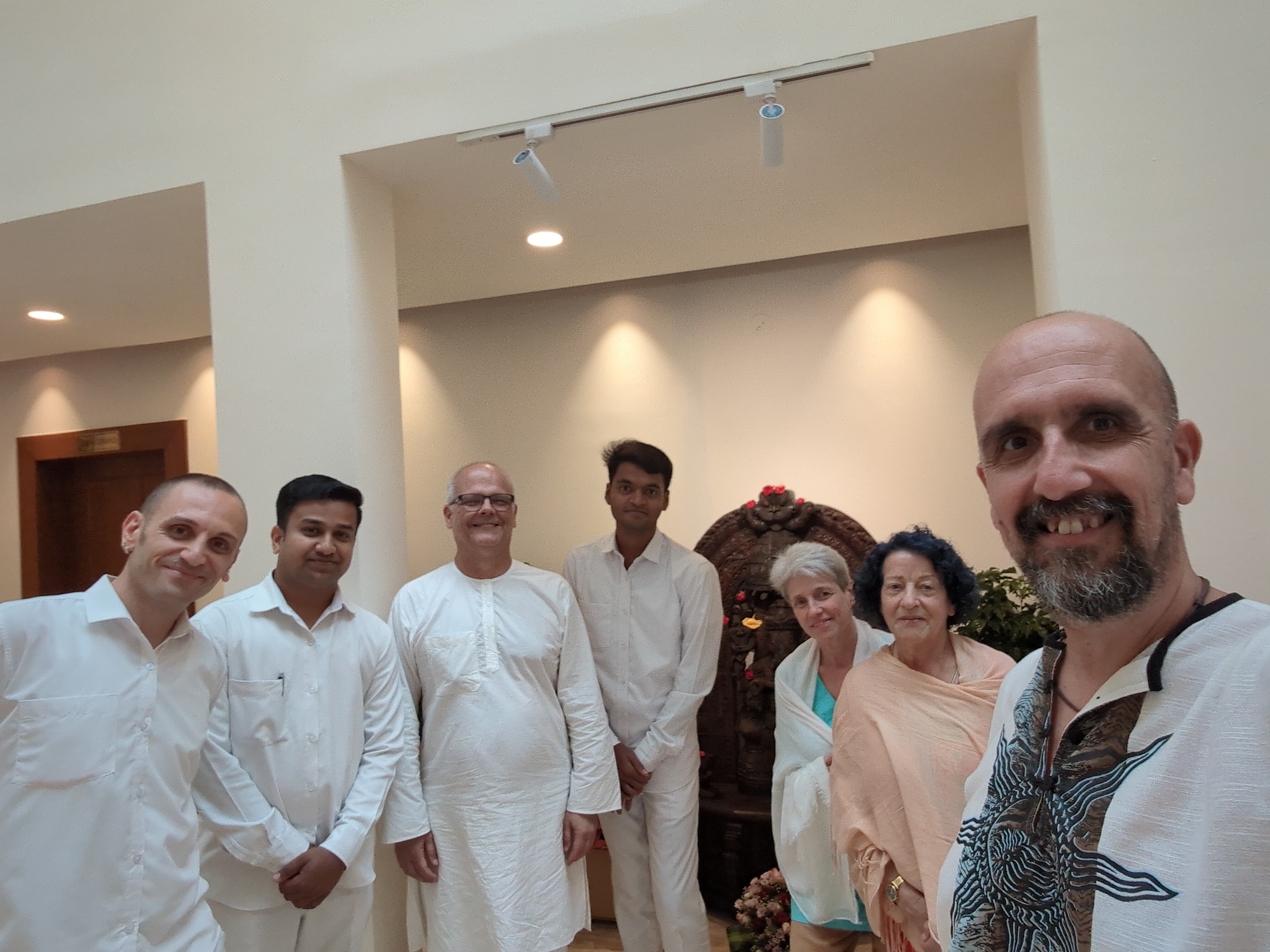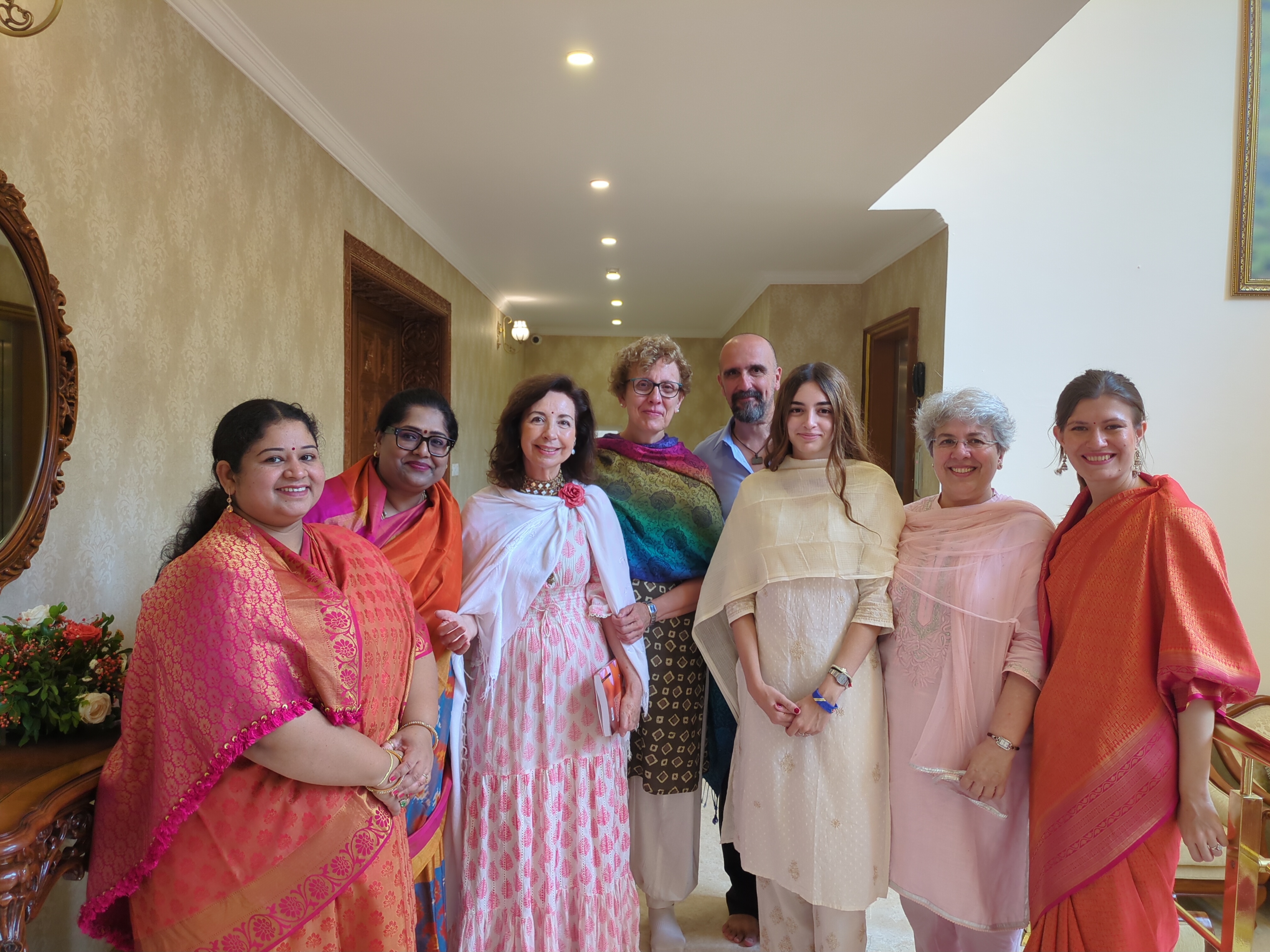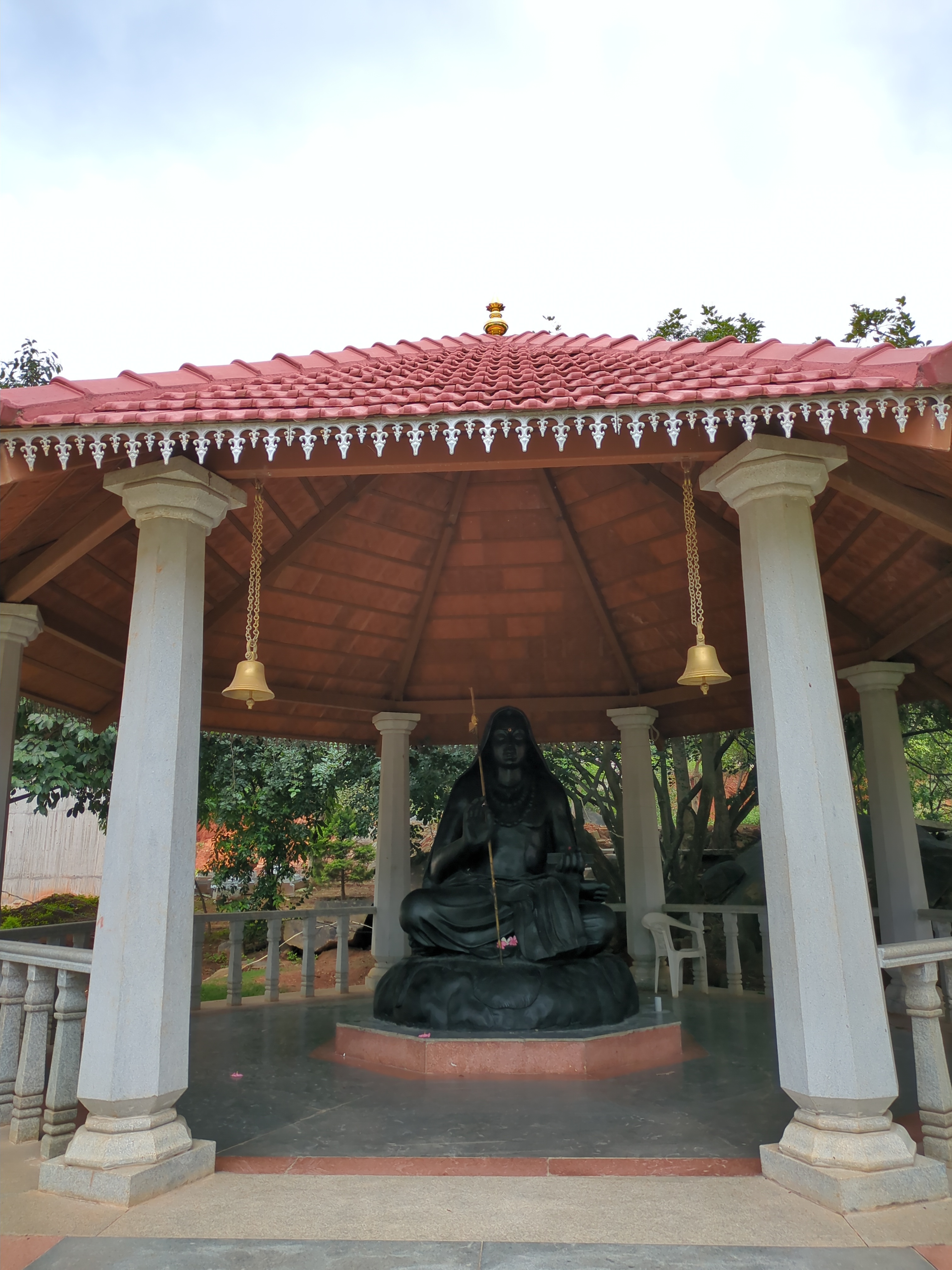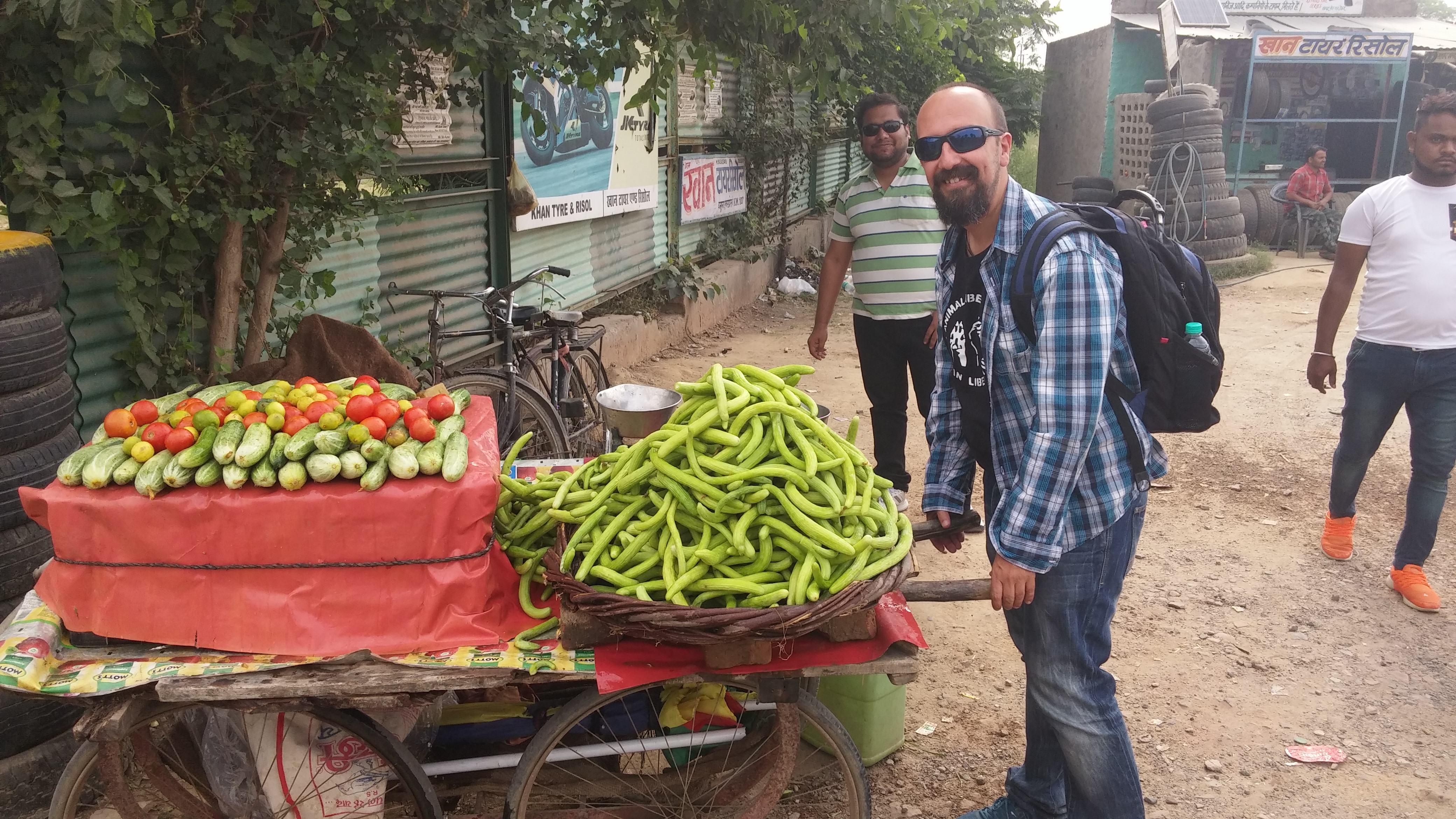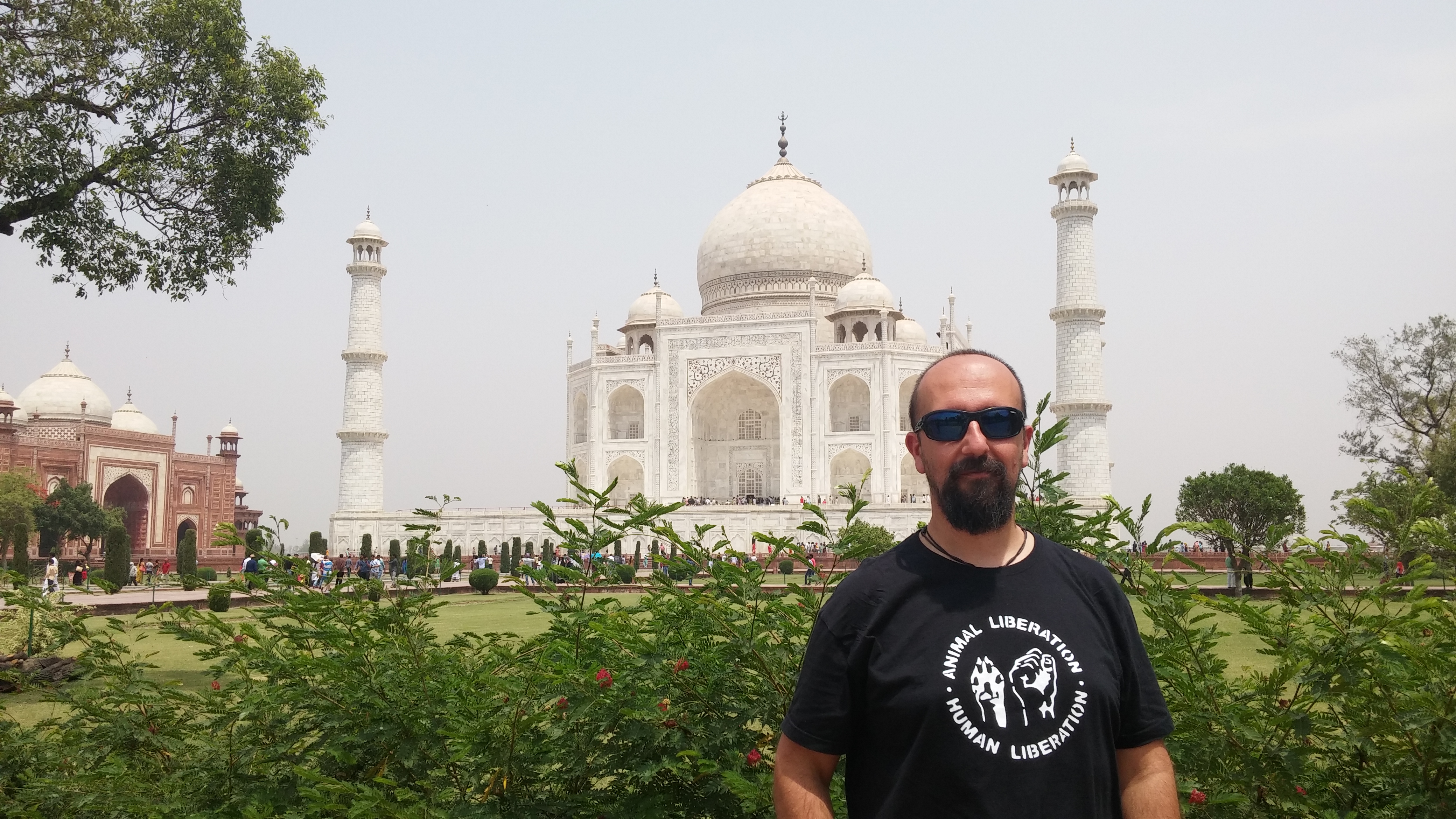
India es especial. Es de esos pocos lugares donde vas a dar una conferencia y sales con una lección de vida. Regreso de India lleno de alegría e ilusión. Regreso con energías renovadas y con experiencias imborrables.
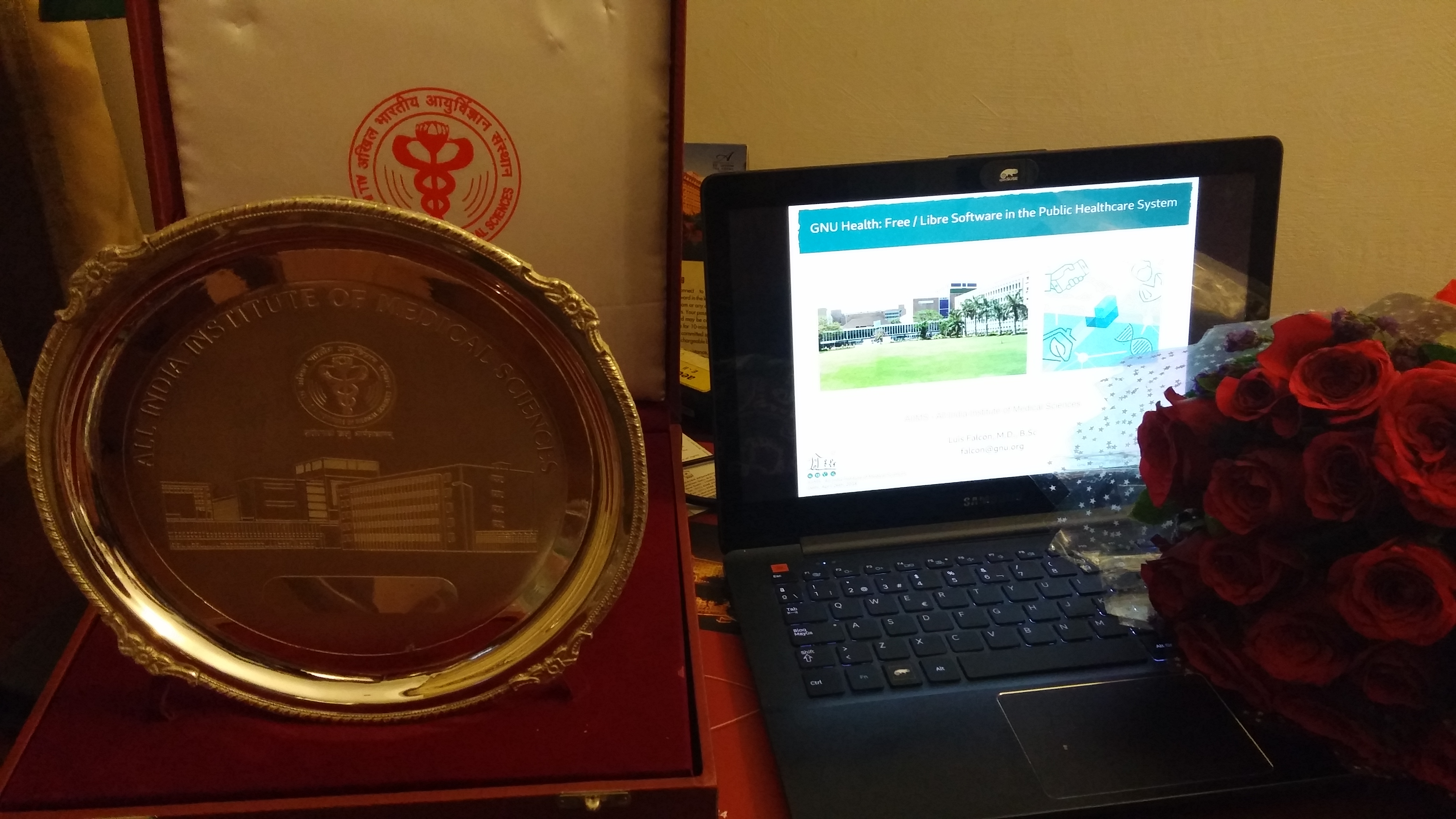
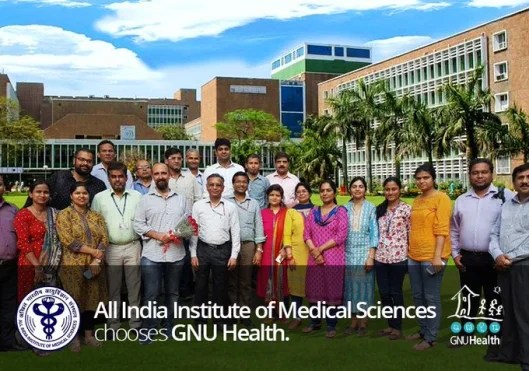
Este es mi tercer viaje a India, siempre en el contexto de la Medicina Social. El primero fue a Kerala en 2017 por Swatantra 17. El segundo a Delhi cuando All India Institute of Medical Sciences (AIIMS) adopta GNU Health en 2018. Este último (agosto 2025) por el World Cultural Festival.
En esta ocasión, el viaje ha sido a Muddenahalli, en el estado de Karnataka. La organización One World One Family – OWOF -, en el contexto del World Cultural Festival, me ha otorgado el premio One World One Family en la categoría de Salud.
Haber sido elegido como el representante de España y particularmente en el área de salud me llena de orgullo. Que este reconocimiento haya sido por mi labor en ciencia abierta y por un sistema de salud universal, de calidad y gratuito hace justicia a los más de veinte años de lucha y de nadar contracorriente por un mundo más justo.
La misión One World One Family trabaja en brindar nutrición, educación y salud a los desfavorecidos en India y en 100 países alrededor del mundo.
Durante mi estadía me alojé en el Ashram de Sathya Sai Grama. Comenzaba el día a las 04:30 de la mañana con meditación y yoga. Pude compartir el World Cultural Festival y escuchar las sesiones de Sadguru Sri Madhusudan Sai, a quien estoy profundamente agradecido por invitarme, por compartir su sabiduría y por brindar nutrición, educación, salud y dignidad a los más necesitados. En noviembre de este año 2025 se inaugurará en el lugar donde me he alojado -Sathya Sai Grama- un hospital de 600 camas, el mayor centro de salud gratuito del mundo, que proporcionará atención sanitaria a personas de India y de alrededor del mundo.
Luis Falcón durante su discurso en el World Cultural Festival en Sathya Sai Grama, Muddenahalli, India Sri Madhusudan Sai haciendo entrega del premio One World One Family a Luis Falcón, junto a B.N. Narasimha Murthy. Agosto 2025
El segundo viaje fue a Delhi, invitado por las autoridades del All India Institute of Medical Sciences (AIIMS) en 2018. Tuve el honor de capacitar al equipo liderado por el Dr. Shariff en los conceptos básicos de GNU Health, el sistema de gestión hospitalaria y de salud de Software Libre. Posteriormente, fueron ellos quienes continuaron de manera autónoma con la implementación del sistema, localizándolo y adaptándolo a las necesidades del hospital público más grande de Asia.
El primer viaje a India fue a Kerala en 2017, donde pasé unos días por Swatantra ’17, la 6ª Conferencia Internacional de Software y Conocimiento Libre.
Kerala, 2017
India es un país que me ha recibido con los brazos abiertos, donde la hospitalidad y cariño de su gente me hace sentir en casa. Es un placer y un honor compartir tiempo y espacio con una comunidad que lucha por los mismos principios de equidad y universalidad en salud, ya sea en Kerala, Delhi o en Muddenahalli.
When it comes to large volume of data management, health in general and health informatics in particular are in the top of the list. In this post I’d like to bring the attention on how we can create scalable models in GNU Health using parallel and distributed computing methods.
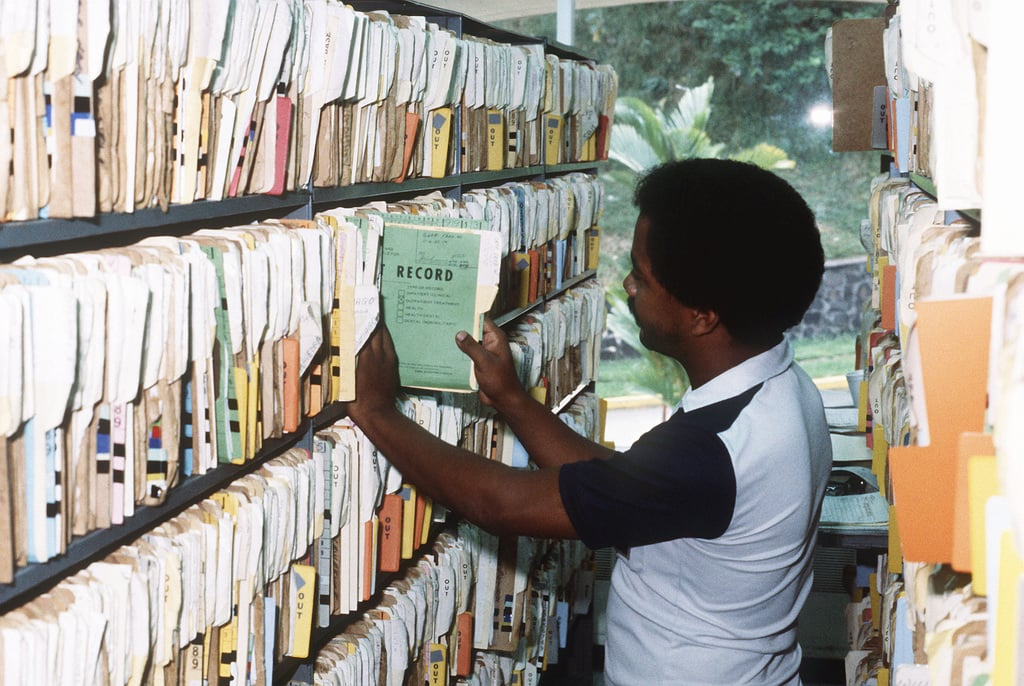
In the old days – and even today – large areas of the hospitals are dedicated exclusively to store patient medical records. Thousands of charts that make millions of pages.
The advent of Hospital information systems (HIS) and Electronic Medical Records (EMR) are transforming those paper based records into bits and bytes. The GNU Health Hospital and Health Information System is one example.
GNU Health has many areas that involves loading, processing, searching and transforming large sets of data. Here are some examples that we use in GNU Health daily:
Medical records: Patient evaluations, hospitalizations, laboratory and medical imaging orders, prescriptions, medication
Coding standards: Datasets that involve coding standards for interventions, procedures (ICPM, ICHI, ICPM..), pathology, health conditions (ICD10, ICD11..)
Genomics: Very large datasets involving DNA sequencing, natural variants, genes, …
Epidemiology: Statistics are key in early warning systems, outbreak detention and health promotion, disease prevention programs. Those reports can involve massive amount of data to be processed.
I would like to stress the importance of a good parallel or distributed computing model for maximum scalability and performance. One of the main problems is that we have the tendency to emulate in computing our linear lives. The society in which we live in make our daily activities are a set of sequential chronological (dull) tasks (wake up -> bathroom -> breakfast -> work -> […] -> dinner -> sleep) put into a loop.
Designing and Building Parallel Programs by Ian Foster. A great book I bought in 1995 for my Parallel and Distributed system class in computer science. The concepts are still very well alive and it’s part of my bookshelf.
Think parallel. Instead of that, I’d like to think in terms of how our body systems work internally. From the macroscopic organs to the minute hormones and neurons, working simultaneously in beautiful synchrony to maintain homeostasis, the internal equilibrium that keep us alive and well. It would be impossible to make a linear, sequential loop to process the events happening in a single second of our lives. Parallel processing makes the miracle. All the “workers”, “processes” and their signaling (“IPC” interprocess communication in computer science terms) make it happen.
A real life example: If we don’t do a good design, the project will not scale. Maybe, at the beginning, with a few records, our system will perform ok. With time, our database will become larger and if initially we had one hundred patients, and all of the sudden, we have reached 1 million. Each person and patient in that million population set has their own medical record, demographic history, lab tests.. you get the idea… doing analytic reporting, exporting or importing data will not scale if we don’t have a good design.
The following is a real life example that involved the migration to the latest version of GNU Health HIS of our community server. checking and syncing the values stored on the datasets residing on the filesystem (for instance, updating to the latest version of the UniProt human genes natural variants) with those in the database. In total, we had near 150,000 records to sync. GNU Health HIS uses Tryton, a great Free/Libre framework on top of Python and PostgreSQL. What it might seem a trivial task, it’s not. When we increase the verbosity, syncing each record involve a lot of tasks such as login in, checking user permissions on the model, status of the record, verify that it was not changed after the last update, etc.. If we had 100 records, we may afford linear processing. With a set of 150K, we must look for a parallel computing solution.
I have experienced similar situations when we have to migrate the medical records from another system to GNU Health. The initial batch input upload might contain thousands / millions of records. Making a good parallel model design will transform days into hours, hours into minutes and minutes into seconds.
Processing time of syncing a set of 500 records comparing and updating the values from the filesystem and the current database record. We compared the time using a sequential loop (first bar), the 8 processes corresponding to the (second bar) and finally 16 processes. The best result was achieved using eight processes (90 seconds). Sequential loop had the worst performance (318 seconds), followed by 16-parallel processes (97 seconds). I used the Proteus library for Tryton 7.0 and the Python 3.13 Multiprocessing package. The test was done on my small laptop running Void Linux, PostgreSQL 16, linux kernel 6.12. Hardware: 12GB of RAM and Intel i7 Thinkpad (8-core)
The GNU Health Federation: Distributed computing for large health networks.
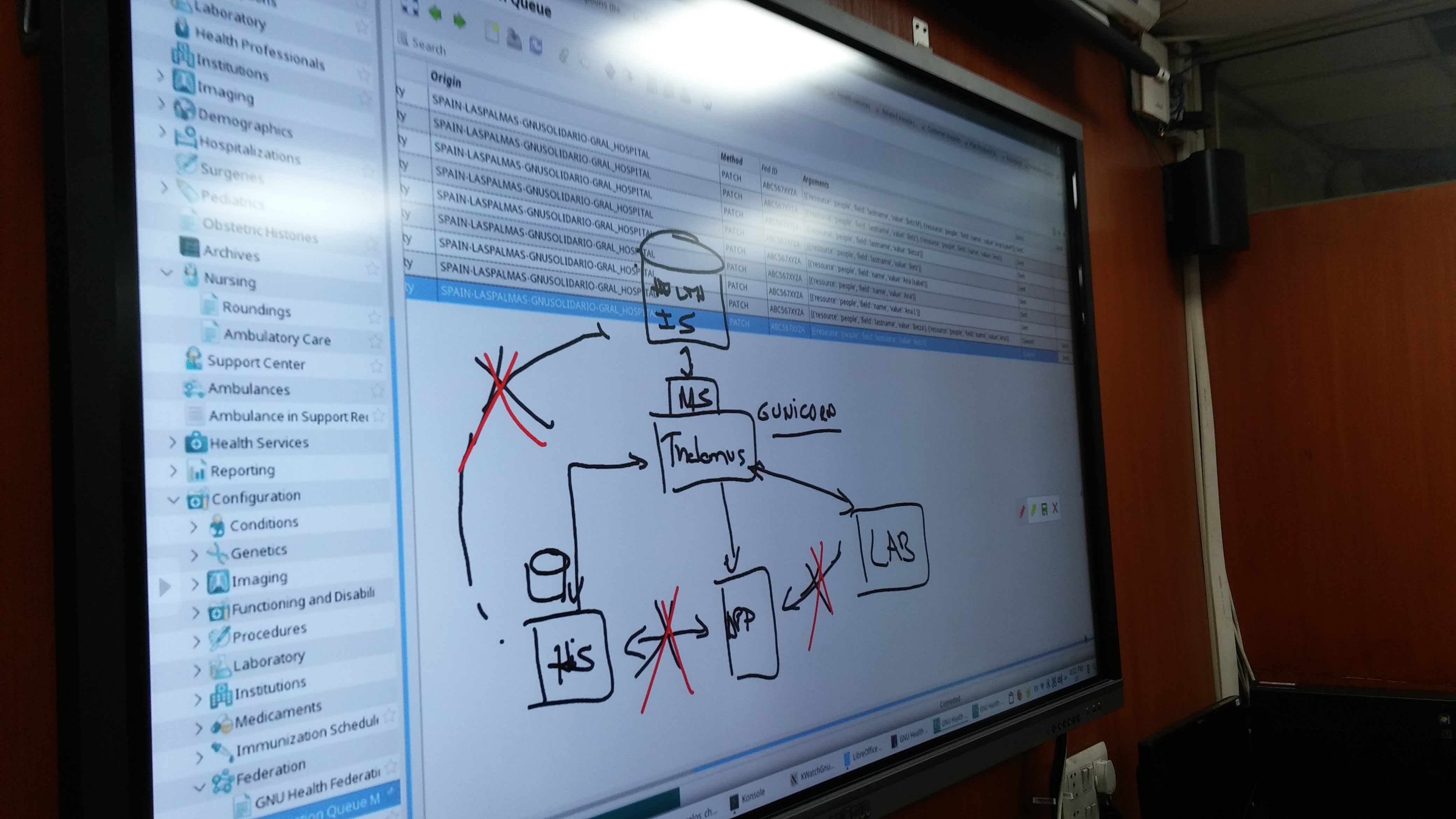
The GNU Health Federation is another example of how to create scalable systems in health. In this case, instead of using multiple processes within a single computer, we are setting multiple “workers” that we call nodes across a province, country or region. A node can be an individual using MyGNUHealth personal health record, a laboratory or a hospital. Each of them work independently and they can communicate via the network. Data aggregation and reporting will happen at the GNUHealth Health Information System server, a special, document-oriented PostreSQL database.
Diagram of Thalamus, the GNU Health Federation message server and the different nodes that make a distributed health network
Summary: Make a big problem small. Think parallel.
In the end, whether you use multiple processes in the same computer or make different nodes in the health network, the concept is pretty much the same. Make a big problem small. The PCAM design methodology is a great start. PCAM stands for Partition, Communicate, Agglomerate and Map. Decompose the initial problem in smaller domains (data) and functional (computational) units, design the way they talk to each other, combine (agglomerate) the tasks and finally map those tasks to processors.
It is also important to know your resources so you can dimension and design the solution to the problem. For instance, in the sync data example, we can see that spawning too many processes will yield in a degraded system. We have saturated our resources and the system spends more time waiting for I/O or trying to make the processes communicate to each other. You may then use use processes, threads or even distributed computing, which are different implementation methods to fit the context and your resources.
Conclusion: As a final thought, I’d like to make emphasis not in the computing power, but in the power of open science and solidarity as a community. Computers can definitely help us achieve our goals, but the most efficient parallel / distributed model resides in the human factor. Today we are living in unjust a world ruled by a very few yet very powerful people and corporations. Concentration of power and computational resources will only benefit a few, creating more inequality and social gradient. Humanity is reaching a new low and we can not normalize the killing of thousands of innocent children that is happening in front of our very eyes. We can not permit our governments prioritizing the macabre business of war instead of the human rights flag. The scientific community must rise up and organize for peace, social justice and equity in our society.
Open science, cooperation, solidarity and empathy are they key to success to any problem, no matter how big they may be.
La Organización Mundial de la Salud define salud como un estado de completo bienestar físico, mental y social, y no solamente la ausencia de afecciones o enfermedades.
Desafortunadamente, esta definición está lejos de cumplirse en nuestra sociedad. En vez de abrazar la salud, estamos inmersos en el sistema de enfermedad, gobernado por un modelo de gestión reactivo, reduccionista e insostenible. El noble arte y ciencia de la medicina está enfermo. Instituciones financieras y gigantes corporaciones tecnológicas están destruyendo el factor humano de la práctica médica, transformando las personas y pacientes en clientes. Están reduciendo el derecho humano no-negociable de la salud a un privilegio al alcance de unos pocos.
Volviendo a la definición formal de la salud, en el actual sistema de enfermedad, poco o nada se tiene en cuenta el bienestar social y mental. Al día de hoy, muchas personas con condiciones de salud mental no sólo tienen que lidiar con los aspectos fisiopatológicos de la enfermedad, sino que deben enfrentarse a la exclusión social y el estigma impuestos por una sociedad enferma de individualismo y carente de empatía.
En cualquier caso, soy optimista. Hay esperanza. La medicina es una ciencia social y GNUHealth es un proyecto social con algo de tecnología. Este sentimiento de optimismo se ha visto reforzado la semana pasada en mi viaje a Argentina y por el equipo humano. Al final del día, la medicina son personas interactuando y ayudando a personas. Esto lo conozco bien, porque hice la carrera de medicina en Argentina, donde los profesores y profesionales de salud anteponían la persona antes que el paciente. Ese profundo respeto hacia la persona que padece lo pude observar en muchos de los centros de salud en los que roté. En Buenos Aires lo vi en la guardia del Rivadavia; en cirugía y en los servicios cuidados paliativos del Tornú; en el neuropsiquiátrico del htal Moyano, por nombrar algunos. El humanismo médico brota por los poros de las mujeres y hombres profesionales de salud en cada salita y centro de atención primara que he visitado a lo largo de estos años en Entre Ríos, como el centro comunitario D’Angelo, situado en el barrio Anacleto Medina, uno de los más carenciados de Paraná. Tuve el honor de entregar en persona el premio GNU Health de Medicina Social en 2022 a su directora, Teresita Calzia.
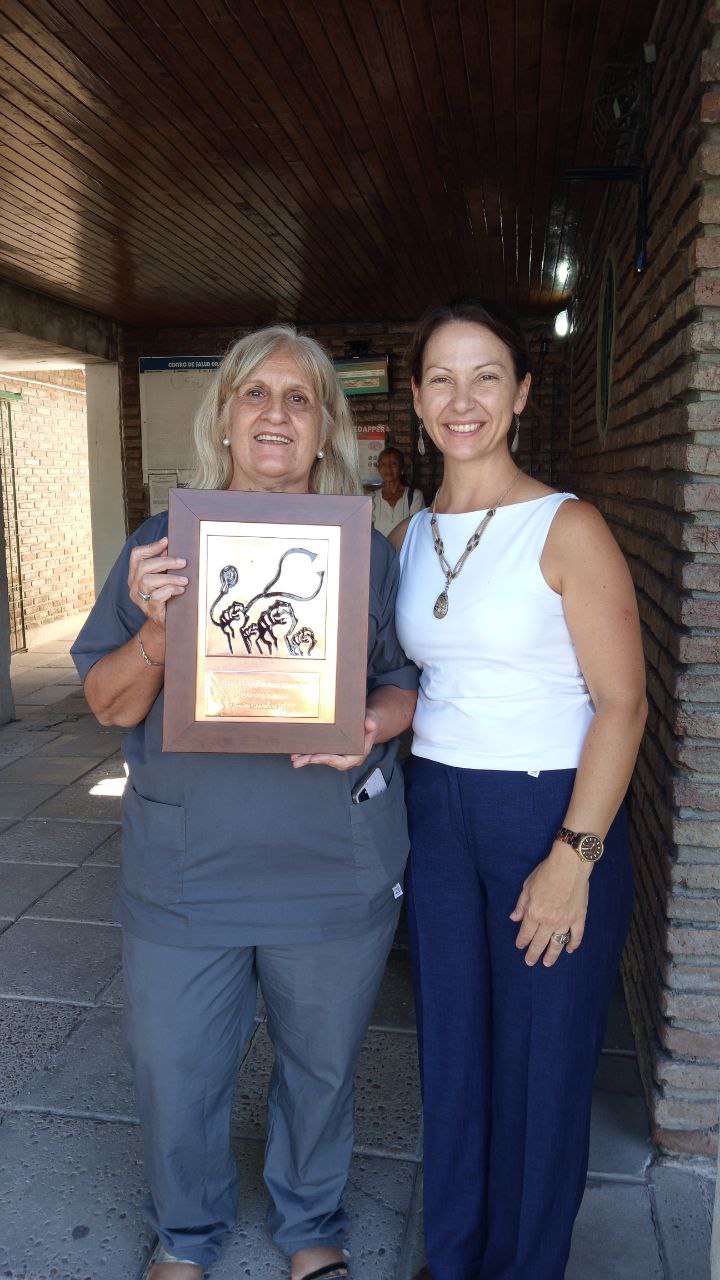
El centro de Salud Humberto D’Angelo lleva 10 años utilizando GNU Health para una gestión integral de la salud comunitaria. En el cuadrante superior izquierdo, Carli Scotta y Fernando Sassetti junto al panel de situación. Debajo foto de grupo. A derecha su directora, Teresita Calzia, junto a Ana María Dominguez, enfermera quien sostiene el premio GNUHealth a la Medicina Social 2022.
El Hospital Escuela de Salud Mental ha elegido GNUHealth para mejorar la gestión de sus recursos, así como para ofrecer la mejor asistencia médica a su comunidad, tanto en un entorno ambulatorio como hospitalario. Ser capaz de identificar inequívocamente y en tiempo real a cada persona que necesita atención, así como conocer la historia socio-sanitaria, médica y su historia clínica será una gran ayuda para los profesionales de salud como para el propio paciente.
La implementación de GNUHealth en el Hospital Escuela de Salud Mental se llevará a cabo por la cátedra de Salud Pública de la Universidad Nacional de Entre Ríos, conjuntamente con el equipo local del centro de salud (psicólogos, enfermeros, médicos, agentes sociales) y apoyada por GNU Solidario. El día de mi visita nos reunimos con el equipo de salud y se presentó el proyecto “Implementación de un sistema informático para la gestión hospitalaria y el cuidado de la salud de los usuarios del Hospital Escuela de Salud Mental de la ciudad de Paraná”, que cuenta con el financiamiento de los Proyectos Federales de Innovación 2022.
Integrantes del equipo de salud del Hospital Escuela de Salud Mental, representantes de la provincia de Entre Ríos y autoridades académicas.
La salud es un equilibrio de los dominios físico, social, mental, espiritual y medioambiental, que son interdependientes e inseparables. Practicar la medicina es intentar mantener el balance cuerpo-mente-espíritu, tanto a nivel individual como colectivo. Este abordaje holístico de la salud está codificado en el genoma de cada enfermera, psicólogo, trabajador social y médico del Hospital Escuela de Salud Mental, así como de cada centro de Atención Primaria que he visitado a lo largo de estos años en Entre Ríos, Argentina. Es un honor y me siento muy afortunado de poder cooperar con ellos.
On Thursday, Feb 23rd, 2023, GNU Solidario and the Spanish NGO Fundación La Vicuña ORL have signed a cooperation agreement to promote and implement the Health and Hospital Management component from GNUHealth in those areas and institutions where Fundación La Vicuña has activities, mainly Spain and countries in Africa.
Fundación La Vicuña is a non-profit organization founded 15 years ago by a group of physicians, mostly ear, nose and throat specialists in Cadiz, Spain.
GNU Solidario and Fundacion La Vicuña share the goal of improving the lives of the underprivileged, through Social Medicine and universal access to healthcare. GNU Health will be a very valuable tool to assess the socioeconomic determinants of health and to minimize the impact in the vulnerable population, both in Spain and in the African continent. GNU Health will improve the management of health institutions and the daily medical practice where Fundación La Vicuña has missions. Patient evaluations, medical records, prescriptions, laboratory, surgeries and inpatient/hospitalization will be some of the areas that will benefit from GNU Health HMIS.
Casimiro García, president and founder of Fundación La Vicuña and Luis Falcón, founder and president of GNU Solidario, formalized the cooperation agreement this Thursday. In the coming weeks, GNU Solidario will train the team from Fnd. La Vicuña in the use of GNUHealth, and a development environment will be rolled out.
We are thrilled and looking forward to working hand in hand with Fundación la Vicuña, to put into practice the philosophy of open science and Libre software in healthcare for the betterment of our societies, delivering Social Medicine and dignity to those who need it most.
We start 2023 with exciting news for the medical and scientific community!
GNU Health has been adopted by he Jérôme Lejeune foundation, a leading organization in the research and management of trisomy 21 (Down Syndrome) and other intellectual disabilities of genetic origin.
Lejeune foundation has its headquarters in France, with offices in Argentina, the United States and Spain.
On December 2022, the faculty of engineering from the University of Entre Rios, represented by the dean Diego Campana and the head of the school of Public Health, Fernando Sassetti, formalized the agreement with the president of the Lejeune foundation in Argentina, Luz Morano.
The same month, I met in Madrid with the medical director and IT team of the Lejeune foundation Spain.
Luz Morano declared “[GNU Health] goes beyond the Foundation, providing the health professionals the specific features to manage a patient with trisomy 21. We are putting a project in the hands of humanity“
[GNU Health] goes beyond the Foundation, providing the health professionals the specific features to manage a patient with trisomy 21. We are putting a project in the hands of humanity
Luz Morano, President of Lejeune Foundation, Argentina
Morano also stated: “GNU Health will pave the road for the medical management, and let us focus on our two other missions: Research and the defense of patient rights“
The agreement is in the context of the GNU Health Alliance of Academic and Research Institutions that UNER has with GNU Solidario. In this sense, Fernando Sassetti explained “It provides tools for an integrative approach of those people with certain pathologies that due to the reduced number are not managed in the best way. This will benefit the organizations and health professionals, that today lack the means to do so in the best way and timely manner. It benefits the patients, in their right to have an integral health record.”
Research and Open Science
The adoption of GNUHealth by the Jérôme Lejeune Foundation opens new exciting avenues for the scientific community. In addition to the clinical management and medical history, GNU Health will enable scientists to dive into the fields of genomics, epigenetics and exposomics, gathering and processing information from multiple contexts and subjects, thanks to the distributed nature of the GNU Health Federation.
The GNU Health HMIS counts many packages and features, some of them of special interest for this project. In addition to the specific customizations for the foundation, the packages already present in GNUHealth, such as obstetrics, pediatrics, genomics, socioeconomics or lifestyle will provide a holistic approach to the person with trisomy 21 and other related conditions.
All of this will be done using exclusively Free/Libre software and open science.
People before Patients
Trisomy 21 poses challenges for the individual, their family, health professionals and the society. The scientific community needs to push the research to shed light on the etiology, physiopathology and associated clinical manifestations, such as heart defects, blood disorders or Alzheimer’s.
Most importantly, as part of the scientific community, we must put a stop to the discrimination and stigmatization. We must tear down the barriers and walls built on our societies that prevent the inclusion of individuals with trisomy 21.
As part of this effort, GNU Health provides the WHO International Classification on Functioning, disability and health (ICF). In other words, is not just the health condition or disorder we may have, but how the environmental factors and barriers influence the normal functioning and integration as individuals in the society. Many times, those physical, artificial barriers present in our daily lives are way more pernicious than the condition itself.
The strong focus of GNU Health in Social Medicine, and the way we perceive medicine as a social science will help improving the life of the person living with trisomy 21, and contribute to the much needed healing process in our societies. We need to work on the molecular basis of the health conditions, but little can be done if without empathetic, inclusive and supportive societies so people can live and enjoy life with dignity, no matter their health or socioeconomic status.
Projects like this represent the spirit of GNU Health and make me immensely proud to be part of this community.
Happy and healthy hacking! Luis Falcon, MD President, GNU Solidario
On a day like this, October 12th, 2008, I registered the “Medical” project at SourceForge. Fourteen years later, GNU Health has become the Libre digital health ecosystem used by governments, hospitals, laboratories, research institutions and health professionals around the globe.
I want to sincerely thank all the professionals who believed in the project since early on… from small clinics in the African rain forest, to many public primary care institutions in Argentina, to the largest hospital in India and Asia (AIIMS).
GNU Health, the Libre digital health ecosystem
Institutions such as the University of Entre Rios in Argentina, Leibniz University Hanover, the United Nations Institute for Global Health, the World Health organization and the European Bioinformatics Institute (EBI), Digital Public Goods Alliance, have helped the GNU Health project, by providing training, implementations or valuable resources in areas related to coding standards and medical genetics.
Many thanks to our sponsors, particularly Thymbra and openSUSE who have been supporting GNU Health since day one, sponsoring our annual congress (GNUHealthCon). In addition, openSUSE has donated raspberry pi devices for development and for implementation projects, as well as packaging GNU Health for their distribution. Thank you Fosshost, for all this years of hosting the GNU Health HMIS and the BigBlueButton for our conferences!
Thank you European Open Source Observatory Repository (OSOR) / Joinup and the Free Software Foundation Europe for your work in making GNU Health a reality in Europe, specially in the Public Health sector.
Immense gratitude to the GNU operating system, particularly, to Richard Stallman -father of the Free Software movement- who in 2011 declared GNU Health an official GNU project. Since that day, all the components of the GH ecosystem are hosted in Savannah.
GNU Health is an official GNU Package
The GNU Health ecosystem would not exist today without the Libre Software community. Excellent Libre projects like Tryton, LibreOffice, PostgreSQL, Flask, Python, GNUPG, Apache, and many others make GNU Health a reality. We’re so happy to count with our sister community Orthanc, a great Libre Medical Imaging project that makes the perfect GNU Health partner in hospital settings and diagnostic imaging.
Last but not least: Thank you to the core team and to the community around the world: Developers, testers, translators, artists, documentation team, podcasters and journalists … I can not name you all… but the success of GNU Health belongs to you.
On a day like this, 14 years ago, the revolution for freedom and equity in healthcare began. And this is just starting…. at GNU Solidario, we’ll keep on advancing Social Medicine, and fighting so health remains a non-negotiable human right, no matter where you live. After all, GNU Health is a Social project with a little bit of technology behind.
The GNU Health community keeps growing, and that makes us very proud! This time, the Spanish non-profit organizationCirugía Solidaria has chosen GNU Health as their Hospital and Lab Management system.
Cirugía Solidaria was born in 2000 by a team of surgeons, anesthetists and nurses from “Virgen de la Arrixaca Hospital”, in Murcia, Spain, with the goal to provide medical assistance and to perform surgeries to underprivileged population and those in risk of social exclusion. Currently, Cirugía Solidaria counts with a multi-disciplinary team of health professionals around Spain that just made its 20th anniversary of cooperation.
GNUHealth Hospital Management client for Cirugía Solidaria
Around a month ago I received a message from Dr. Cerezuela, expressing their willingness to be part of the GNU Health community. Their main missions currently are focused, but not limited, to the African continent.
Source: Cirugía Solidaria
After several conferences and meetings, this August 1st 2022, Cirugía Solidaria and GNU Solidario signed an agreement to cooperate in the implementation, training and maintenance of the GNU Health Hospital Management and Lab Information System in those countries and health institutions where Cirugía Solidaria will be present.
Source: Cirugía Solidaria
This is very exciting. We have many projects in different countries from Africa, and working with Cirugía Solidaria will help to generate more local capacity, to cover the needs of those health professionals and their population.
This is not just about surgeries or health informatics. GNU Health will allow Cirugía Solidaria to create sustainable projects. They will have unified clinical and surgical histories, telemedicine; assess the nutritional and educational status of the population, and many other socioeconomic determinants of health and disease.
I want to give our warmest welcome to the team of Cirurgía Solidaria, and we are very much looking forward to cooperating with this great organization, for the betterment our our societies, and for those that need it most.
About GNU Health
The GNU Health project provides the tools for individuals, health professionals, institutions and governments to proactively assess and improve the underlying determinants of health, from the socioeconomic agents to the molecular basis of disease. From primary health care to precision medicine.
GNU Health is a Libre, community driven project from GNU Solidario, a non-profit humanitarian organization focused on Social Medicine. Our project has been adopted by public and private health institutions and laboratories, multilateral organizations and national public health systems around the world.
The GNU Health project provides the tools for individuals, health professionals, institutions and governments to proactively assess and improve the underlying determinants of health, from the socioeconomic agents to the molecular basis of disease. From primary health care to precision medicine.
The following are the main components that make up the GNU Health ecosystem:
Social Medicine and Public HealthHospital Management (HMIS)
Laboratory Management (Occhiolino)
Personal Health Record (MyGNUHealth)
Bioinformatics and Medical Genetics
Thalamus and Federated health networks
GNU Health embedded on Single Board devices
GNU Health is a GNU (www.gnu.org) official package, awarded with the Free Software Foundation award of Social benefit, among others. GNU Health has been adopted by many hospitals, governments and multilateral organizations around the globe.
We are very proud to announce that the GNU Health project has been declared a Digital Public Good by the Digital Public Goods Alliance (DPGA). GNU Solidario received the announcement this Sunday, April 3rd 2022.
The Digital Public Goods Alliance is a multi-stakeholder initiative endorsed by the United Nations Secretary-General, working to accelerate the attainment of the Sustainable Development Goals in low-and middle-income countries by facilitating the discovery, development, use of, and investment in digital public goods.
Digital Public Good Alliance board members (2022)
Current board members of the DPGA include the German Federal Ministry for Economic Cooperation and Development (BMZ), the Government of Sierra Leone, the Norwegian Agency for Development Cooperation (Norad), iSPIRT, United Nations Development Program (UNDP) , and the United Nations Children’s Fund (UNICEF).
The goal of the DPGA and its registry is to promote digital public goods in order to create a more equitable world. Being recognized as a DPG increases the visibility, support for, and prominence of open projects that have the potential to tackle global challenges.
GNU Health is now at the Digital Public Goods registry
After its nomination to become a Digital Public Good project, GNU Health had to pass the requirements of the DPGA standards. As the DPGA states :
The Digital Public Goods Standard is a set of specifications and guidelines designed to maximise consensus about whether a digital solution conforms to the definition of a digital public good: open-source software, open data, open AI models, open standards, and open content that adhere to privacy and other applicable best practices, do no harm by design and are of high relevance for attainment of the United Nations 2030 Sustainable Development Goals (SDGs). This definition stems from the UN Secretary-General’s Roadmap for Digital Cooperation.
Digital Public Good Standards
At GNU Solidario and GNU Health we are humbled and very happy with this recognition, and accept it with profound commitment, responsibility and determination. It makes us work even harder to keep on fighting for the advancement of Social Medicine, and to give voice to the voiceless around the world.
About GNU Health
GNU Health is a Libre, community driven project from GNU Solidario, a non-profit humanitarian organization focused on Social Medicine. Our project has been adopted by public and private health institutions and laboratories, multilateral organizations and national public health systems around the world.
The GNU Health project provides the tools for individuals, health professionals, institutions and governments to proactively assess and improve the underlying determinants of health, from the socioeconomic agents to the molecular basis of disease. From primary health care to precision medicine.
The following are the main components that make up the GNU Health ecosystem:
Social Medicine and Public Health
Hospital Management (HMIS)
Laboratory Management (Occhiolino)
Personal Health Record (MyGNUHealth)
Bioinformatics and Medical Genetics
Thalamus and Federated health networks
GNU Health embedded on Single Board devices
GNU Health is a Free/Libre, community-driven project from GNU Solidario, that counts with a large and friendly international community. GNU Solidario celebrates GNU Health Con and the International Workshop on e-Health in Emerging Economies (IWEEE) every year, that gathers the GNU Health and social medicine advocates from around the world.
— GNU Health (@gnuhealth@mastodon.social) (@gnuhealth) April 4, 2022
GNU Health is a GNU (www.gnu.org) official package, awarded with the Free Software Foundantion award of Social benefit, among others. GNU Health has been adopted by many hospitals, governments and multilateral organizations around the globe.
GNU Solidario and Leibniz Universität Hannover (LUH) are now partners in GNU Health, the Libre digital health ecosystem.
This agreement makes the German university a member of the GNU Health Alliance of academic and research institutions, to work on the research and development of GNU Health, the award-winning Libre digital health ecosystem.
The partnership was signed on February 2nd, 2022, by Prof. Dr.-Ing. Gabriele von Voigt, head of the Computational Health Informatics department at Leibniz Universität Hannover and Dr. Luis Falcón, president of GNU Solidario.
University of Hanover main building. Source: LUH
We are excited and looking forward to cooperate and research in areas such as privacy, distributed health networks, bioinformatics, hospital management or Personal Health Records. Leibniz Universität Hannover has been using the GNU Health Hospital Management System component for quite sometime now internally, in their health informatics department. This agreement will boost even more the adoption of the libre health ecosystem.
Some of the components from the GNU Health digital health ecosystem
Leibniz Universität Hannover is a reference for the adoption of GNU Health in European universities, serving as a model of open science and free/libre software in public academic institutions. Moreover, being part of the GNU Health Alliance of Academic and Research Institutions opens up horizons to collaborate with other universities around the world.
We are positive that this agreement will help promoting the adoption of GNU Health and Libre Software within the healthcare system and biomedical research in Europe.
The logo of Leibniz University is a visual Leibniz quote. It shows the binary number system as first outlined by Gottfried Wilhelm Leibniz in his New Year’s letter of January 1697 to Duke Rudolf August of Wolfenbüttel.
About Leibniz Universität Hannover:
The Leibniz University Hannover, long form in German Gottfried Wilhelm Leibniz Universität Hannover, is a public research university located in Hanover, Germany. Founded on 2 May 1831, it is one of the largest and oldest science and technology universities in Germany. It has nine faculties which offer 190 full and part degree programs in 38 fields of study.It was named University of Hannover in 1978. In 2006, it was named after Gottfried Wilhelm Leibniz, the 18th century mathematician and philosopher. In 2018, Leibniz University Hannover was adopted as the official English name.
Leibniz University Hannover is a member of TU9, an association of the nine leading Institutes of Technology in Germany. It is also a member of the Conference of European Schools for Advanced Engineering Education and Research (CESAER), a non-profit association of leading engineering universities in Europe. The university sponsors the German National Library of Science and Technology (TIB), the largest science and technology library in the world
The GNU Health Alliance of Academic and Research Institutions is a GNU Solidario program comprising a global network of academic and research institutions around the world with the mission of provide a sustainable solutions to the current social and biomedical challenges, using GNU Health and Free Software components.
Yesterday, yet another devastating earthquake hit the southern area of Haiti.
Immediately knowing about the earthquake, we contacted our representative in Haiti, Pierre MichelAugustin, and started an emergency humanitarian response in coordination with our team in the country .
Haiti suffers from recurrent natural disasters (hurricanes, earthquakes). In the last years, Haiti has also been a victim of structural poverty and civil unrest. Haitians are strong, resilient, noble people. Haiti is the land of the free and the brave (see my post “My trip to Haiti, the land of the Free and the Brave” ), yet it seems like the world has forgotten about Haiti.
We need emergency response now, but we also need to work on Social Medicine, and tackle the socioeconomic determinants that are the root cause of the structural poverty in Haiti. Only then, our Haitians brothers and sisters will be able to recover the dignity that they deserve, and grow in prosperity. We need to create the conditions, working the local community in the country to strengthen the public health and education system. GNU Health is part of this program.
Our local representative, engineer Pierre Michel Augustin, has been working in the localization of GNU Health, and by the end of 2021, we will have the GNU Health node fully operational in Limbé. The Haiti GNU Health office will provide training and support to the local and regional health professionals and institutions.
The GNU Health project focuses on helping health professionals delivering Social Medicine and health informatics.
Natural disasters have a profound impact in the short, medium and long period in any nation. The situation gets much worse when they hit impoverished nations. So, in the short term, we will put all the effort to tackle this emergency and save lives. For the medium and long term, we will continue the GNU Health node in Haiti and building the GNU Health Federation in the country, in cooperation with the local team, academic and health institutions.
Creating local capacity is key to make the project sustainable. Resources will be dedicated to build the infrastructure (hardware, network..), but the main focus and effort will be on building local capacity, and training the local team to make them independent and build a sustainable and ethical model.
In the end, technology is just a medium, and GNU Health is a social project that uses really cool Free/Libre technologyand open science, for the betterment of our societies.
Please consider helping GNU Solidario humanitarian campaign in Haiti, by visiting the following link:
GNU Solidario is a non-profit humanitarian organization focused on Social Medicine. We have missions around the globe, and our projects has been adopted by health institutions, multilateral organizations and national public health systems around the world.
GNU Solidario is the organization behind GNU Health, the award winning Free / Libre digital health ecosystem, that provides a Hospital Management System, a Lab Information System, a Personal Health Record and a distributed, Federated health network.
GNU Health is a GNU official project ( see www.gnu.org), licensed under the GNU General Public License, GPL v3+
You must be logged in to post a comment.